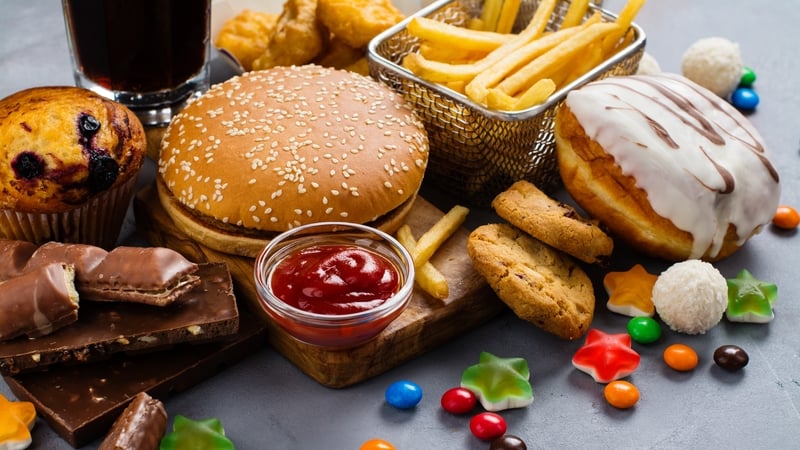

Children see unhealthy food marketing every four minutes online, while teenagers view food-marketing posts from influencers for five times longer than traditional paid adverts, according to new research from Safefood.
The study - entitled 'Our Kids' Exposure to Unhealthy Food Marketing Online' - indicates children see an average of 15 to 19 junk-food marketing posts every hour.
It estimates that a child spending two hours a day on social media is exposed to 10,950 unhealthy food-marketing posts annually, while for those engaging for 4.5 hours daily the figure rises to over 30,000 adverts.
The research highlights that almost 96% of the nutrient-profiled foods presented to children did not meet the criteria for marketing to children under World Health Organization guidelines.
Safefood said the findings indicate that children "frequently respond to digital food-marketing examples with feelings of hunger or thirst, and with pleasure, enjoyment or enthusiasm", and that parents are "largely unaware of this high level of exposure, often believing their children are largely immune to the effects of such marketing".
We need your consent to load this rte-player contentWe use rte-player to manage extra content that can set cookies on your device and collect data about your activity. Please review their details and accept them to load the content.Manage Preferences
The research also suggests teenagers view food marketing posts from influencers for substantially longer than other food content - an average of 15 seconds more per post - and that they engage with influencer food-marketing posts much more frequently than other food content (44% of influencer posts compared to 7.5% of paid ads).
The study included screen capture, which involved recording the screens of 38 children aged 13–17 while they scrolled through social media.
Safefood Chief Executive Joanne Uí Chrualaoich said it "shows for the first time on the island of Ireland the volume of unhealthy food marketing children see online".
"These findings are concerning, as this daily influence is undermining efforts to foster healthy eating habits and poses a serious threat to children's long-term health," she said.
In relation to the study suggesting influencer advertising captures children's attention for five times longer than traditional paid ads, Director of Nutrition at Safefood Aileen McGloin said: "Children don't identify this as marketing but rather see it as engaging or fun content from someone that they trust.
"This is a clear example that the child's interests and interactions online drives the amount of this unhealthy content that they are exposed to."
Young people struggle to spot advertisements
The research also found that many young people, including older teenagers, struggle to distinguish advertising from general social media content - even when material is labelled as an 'ad'.
According to Safefood "they often do not fully interpret it as commercial persuasion" and that "this challenge is particularly evident in influencer and native-marketing formats, where advertising is seamlessly integrated into everyday content, blurring the boundaries between entertainment and commercial intent".
In Ireland there is currently no legislation regulating the targeting of children by unhealthy food marketing in the online and social media space, however, the industry operates a voluntary code of conduct.
Organisations such as the Irish Heart Foundation (IHF) have called for regulation of digital marketing where children can be directly targeted by junk-food adverts.
The IHF said Ireland "restricts broadcast advertising to under-18s of food high in fat, sugar and salt - but only on TV up to 6pm", and according to the IHF, children here are "increasingly active on digital media, with most nine to 16-year-olds now going online via a smartphone".
For the Safefood research, interviews and focus groups were carried out in urban and rural areas around Belfast and Galway with 175 children aged 4-17, as well as 49 parents of children in that age bracket.
The study was conducted by the Open University in conjunction with the University of Galway, the University of Liverpool, University College Dublin, Ulster University, and Deakin University in Australia.
Safefood, an all-island body set up to promote awareness of food safety and nutrition, said researchers analysed the social media campaigns of high-sales food brands and held confidential interviews with 15 advertisers (almost all senior executives).
According to the research, the findings align with those from similar studies conducted in Australia, Canada, and Mexico.