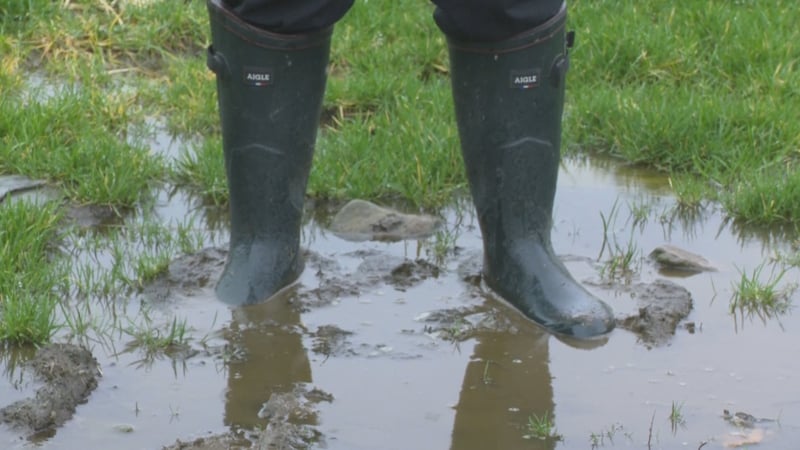

Farmers in the east of the country hit by significant wet weather in recent weeks have said they are struggling with slurry storage capacity, as they are unable to spread slurry on saturated ground.
The situation is likely to lead to a considerable build-up in tanks, with environmentalists warning it increases the risk of watercourses becoming polluted once farmers start to spread slurry again when conditions allow.
Jonathan Williams is a dairy farmer on the Wicklow-Wexford border with 130 Montbeliarde cows that have not been outside in some time due to much of his farmland being saturated.
According to Met Éireann, some areas in the region have experienced up to five times the average amount of rainfall in the past week.
The situation has led to issues with slurry storage, as the ground is too wet to spread it and tanks are starting to overflow.

However, the Wexford farmer is in a better position than many, having just finished building a new tank that has increased his capacity by a third.
"We just got the tank completed in challenging conditions towards the end of January and we were able to start moving slurry from the other tanks.
"I wasn't planning on seeing slurry in that tank until next winter, but if we didn't have the extra storage the current slurry level in existing tanks would be up around the top of the slats," Mr Williams said.
"People are getting out (slurry) with umbilical pipe systems but you won't travel with a tanker ... you'd have to try and get out somewhere with it but conditions aren't ideal," he added.
Mr Williams is in the midst of calving season, and normally the new additions would be put out to grass.
But with the ground as wet as it is, that is not possible.
Huge challenge mentally for farmers - FRS
Farmer-owned co-op FRS surveys farmers about issues facing them.
In recent surveys it noted slurry capacity has featured heavily.
Head of Agriculture with FRS Neil Keane said as it is the busiest time of year for many dairy farmers with cows calving, "it's a huge challenge for the farmer mentally, it's a challenge for animal welfare, you've slurry coming potentially above the slats in places.
"We are seeing a lot of farmers being creative, they are transferring slurry into other tanks in other farms and trying to find windows of weather where it's possible to get slurry out."
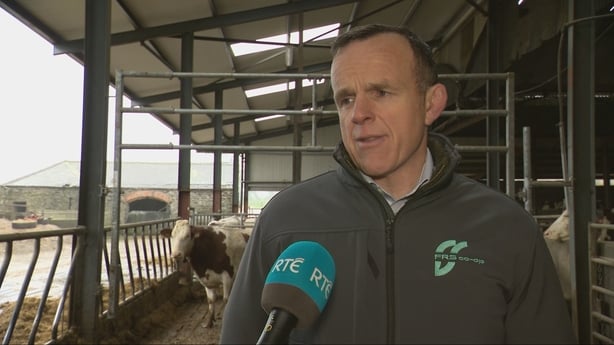
Mr Keane also said that due to rising fertiliser costs, farmers are "trying to be more strategic with their slurry use ... and it's important to get slurry spread at this time of year to help grass growth".
Research from Teagasc just over a year ago pointed to a significant slurry-storage deficit on dairy farms, saying capacity needs to increase by around a quarter.
Ireland's latest Nitrates Action Programme will require farmers to add storage, but not before 2028.
Until then, environmentalists warn that overflowing tanks due to excessive rainfall increase the risk of pollutants getting into watercourses.
Farmers in an impossible situation - An Taisce
Director of Advocacy with environmental charity An Taisce, Dr Elaine McGoff, said farmers find themselves in an "impossible situation.
"The weather we've had has been abnormal levels of rain, we have flooded land all over the country, and slurry tanks are full.
"Farmers are facing into really difficult decisions where they have to go and spread on the driest fields they can find in suboptimal conditions.
"What we're seeing here is what happens when we get the perfect storm"
"That will inevitably cause environmental impact," Dr McGoff said.
She added: "We're going to have slurry flowing off yards potentially from overflowing tanks, flowing off land where slurry is spread into our lakes, rivers, and estuaries.
"When the weather heats up we'll likely see more algae blooms, and more nutrient pollution."
Dr McGoff also believes the situation with slurry capacity "really underscores the lack of resilience in our system.
Slurry issues after recent wet weather a 'perfect storm', says An Taisce
"We know from climate science that we're going to have wetter winters and more extreme rainfall events.
"What we're seeing here is what happens when we get the perfect storm.
"More slurry storage will address some of this but we need to ask if we can cope with the future we have baked in with climate change," she added.
The Department of Agriculture has said that "in recent weeks farmers have moved slurry between tanks in their own farmyards to avoid the need to spread slurry in sub-optimal conditions.
"Others have been able to spread small volumes on their driest land during short favourable weather windows."
The Department's advice to farmers facing storage-capacity issues is "in the first instance ... to engage with their farm advisor.
"Where slurry tanks are near capacity and conditions are inappropriate for land spreading, farmers are encouraged to assess all the options available to them.
"This may include utilising space in tanks on nearby farms where appropriate, or in other cases, farmers may need to remove excess liquid from tanks and spread it at a low application rate on their driest ground where there is no potential for run-off to watercourses."
It added that "there is a significant focus on water quality across the entire agri-food sector, which includes recognition that slurry is a valuable source of nutrients when it is used effectively but also the need to manage its application in a way that avoids nutrient loss to water".
We need your consent to load this rte-player contentWe use rte-player to manage extra content that can set cookies on your device and collect data about your activity. Please review their details and accept them to load the content.Manage Preferences