
New figures from the Central Statistics Office show that the inflation growth rate eased slightly last month.
The Consumer Price Index shows that prices rose by 2.7% in the year to the end of January.
It compares to an annual increase of 2.8% in the year to December, while the figure is also lower than the 3.2% recorded in November.
The rate of inflation across the eurozone also eased further last month, falling to 1.7% from 2% a month earlier.
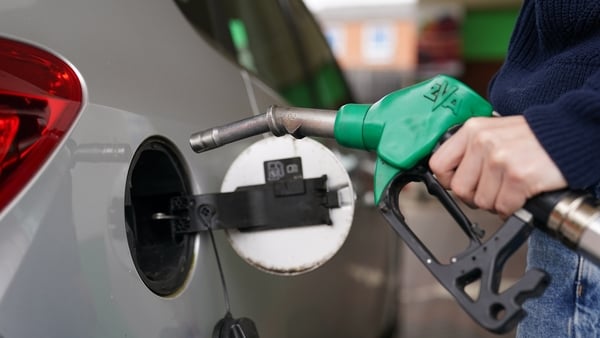
The CSO said energy prices were broadly flat, while transport prices fell slightly.
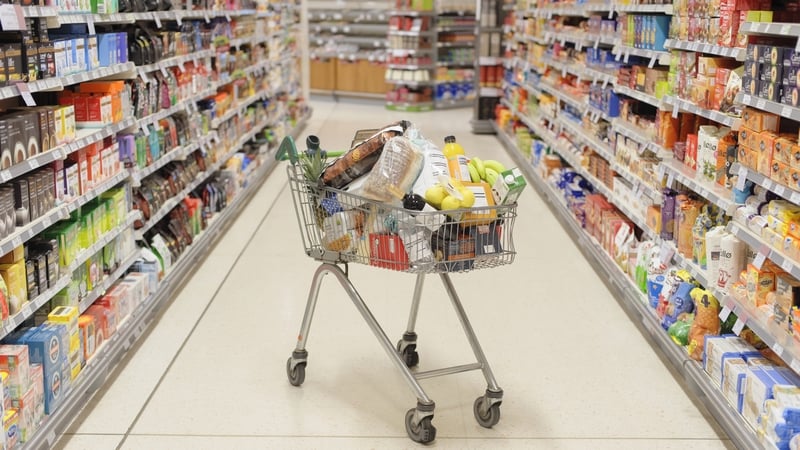
However, food prices were up 3.9%, with insurance and financial services rising by 6.1%.
Overall, the rate of inflation is now back to where it was in September 2025 but still well above the rate seen in January of last year, when it stood at 1.9%.
The most significant increases in the 12 months to January were seen in Education, which increased by 8.9%, and clothing and footwear, which rose by 7.3%.
Furnishings, household equipment and routine household maintenance and transport were the only divisions to show a decline when compared with January 2025, down by 0.6% and 0.1% respectively.
The CSO also today published its National Average Prices for selected goods and services for January.
There were price increases during the year for Irish cheddar per kg (up 45 cent), a pound of butter (up 34 cent), 2 litres of full fat milk (up six cent), an 800g loaf of white sliced pan (up four cent) and sirloin steak per kg (up €4.68).
There were decreases in the price of a 2.5kg bag of potatoes (down 22 cent) and an 800g loaf of brown sliced pan (down a cent) when compared with January 2025.
Gerard Brad, Chief Economist at Ibec, said while there was a rise in inflation in the latter half of 2025, peaking at 3.2% in November, "this has moderated quickly and will continue to do so in the year ahead".
"On a monthly basis, prices which fell by 0.9% in January, are now at the same level as they were in July 2025."
He said the business group now expects an overall inflation rate of "2.3% for 2026".
Thomas Pugh, Chief Economist at RSM Ireland and RSM UK, said inflation has slowed in the last couple of months, after peaking in November, "as more favourable base effects helped to weigh on food and energy inflation".
He said the euro has appreciated by around 13% and 5% against the dollar and sterling respectively, "which has helped to weigh on import prices".
"Unfortunately, the recent rise in oil prices will filter through to the pumps in the coming months meaning that fuel inflation will rise again, despite being negative currently.
"Furthermore, we think inflation is likely to remain above 2.0% throughout 2026 as domestically generated price pressures remain elevated," he added.
Chris Beauchamp, Chief Market Analyst at IG, said the slowing annual inflation in Ireland, and the sharp month-on-month drop, "provides some good news for the economy, confirming that November's 3.2% reading marked the peak for the time being".
"It mirrors yesterday's UK inflationary data that suggests consumers on both sides of the Irish sea can look forward to some easing of price pressures for the time being."