
A new Government initiative to financially back a return of more flour mills in Ireland has been announced.
At present, Ireland has only one industrial‑scale flour mill, located in Portarlington, run by Odlums, which is owned by Valeo Foods.
There are two in Northern Ireland, James Neill's Flour Ltd and Andrews Flour.
Enterprise Ireland will oversee and administer the initiative and will engage directly with firms considering new or expanded milling operations of scale.
The new scheme will help up to four projects with potentially up to €5 million of subvention, for which the Government said is a very significant commercial incentive to get the sector back up and running again.
We need your consent to load this rte-player contentWe use rte-player to manage extra content that can set cookies on your device and collect data about your activity. Please review their details and accept them to load the content.Manage Preferences
Head of Food with Enterprise Ireland Tom Cusack, said the initial plan is to support three or four mills.
He said: "The Irish bakery sector is a really important sector in Ireland. There's over 700 businesses operating within the sector, employing 8,000 people, and there's over a billion in revenues and quite a big export business as well. So, it's a really important sector for us, and the initiative we're announcing today is a really important initiative to strengthen the supply chain of the industry and improve competitiveness."
Minister for Enterprise, Tourism and Employment Peter Burke said: "This initiative is a powerful display of our intent to become more self-sustaining as an economy and will improve the competitiveness within Ireland’s food and drink sector. The Irish bakery market is worth an estimated €995 million annually with exports of more than €200 million."
Minister for Agriculture Martin Heydon TD added: "It is Government policy to grow and develop the tillage sector, and I believe in the importance of developing new added value opportunities to enhance its long-term sustainability and competitiveness. With collaboration from industry and support from the marketplace, domestic production of milling wheat can play an important role in providing a new value-added opportunity in the supply chain for Irish tillage farmers."
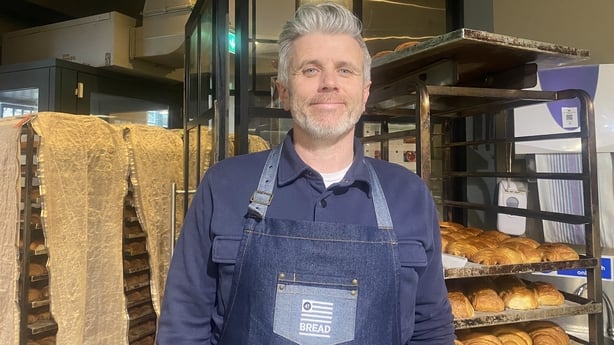
'We want to work with a small cohort of growers and producers'
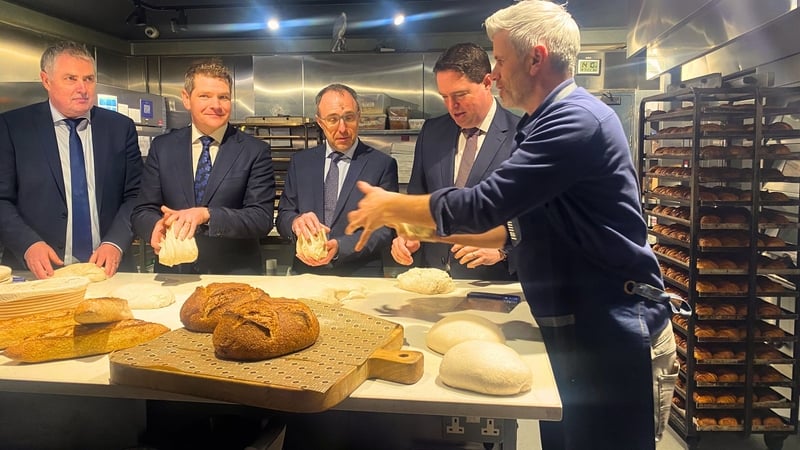
Bakery chain Bread 41 based in Dublin and Wicklow, would like to source more of the flour that they bake with from Ireland, but with just one industrial-scale mill here, it is not currently possible.
However, they hope that a gradual return of the flour milling industry here could deliver huge benefits.
The company's CEO, Eoin Cluskey, is also eyeing up his own milling project in Clondalkin in Dublin.
"We want to work with a small cohort of growers and producers," he said.
He said the feedback he has had from farmers is that there can be a lot of cleaning and processing involved in the wheat crop here, and without nearby mills to send it to they are not as incentivised to grow wheat.
He said his vision and dream is for Ireland to have its own home-grown industry from field to mill.
"It is to get a co-op of growers to come together to grow the wheat for us, to give us the wheat, and we'll take care of the milling, and that will come through Bread 41," he said.
"With all our breads, currently, we use such a small percentage of Irish wheat, and we hope over next couple years to grow that in small steps. There's no point me saying next year we're gonna have 100% Irish wheat, because we're quite a big bakery, and we don't want to just strangle the farmers. We want the farmers to be able to grow and a long-term relationship is much better," he explained.
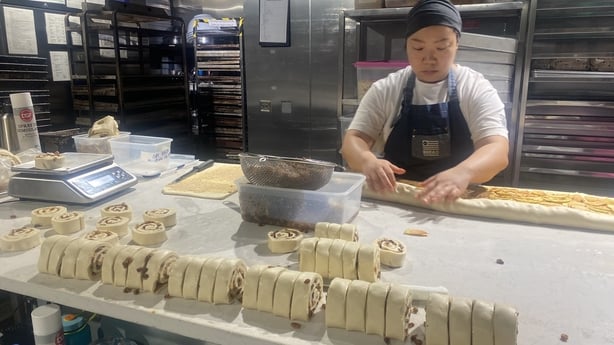
Opportunity to add more mills
Mr Cusack added that he hopes farmers, particularly in the south-east of the country, will be interested in growing wheat in the years ahead.
"Once we have the milling capacity in Ireland... we believe there is an opportunity to add two to three more (mills) in terms of the demand that exists in the Irish market," he said.
240,000 tonnes of flour are currently imported into Ireland each year, more than half of it from the UK.
The Irish baking market grew significantly following the Covid-19 pandemic, as supermarkets ran low on both bread and flour, as the trend for home-baking and buying sourdough increased.
The Government hopes the country can in the future become more self-sufficient and more food secure, as part of its plans under the Food Vision Tillage Report, which explored opportunities for milling wheat in Ireland.
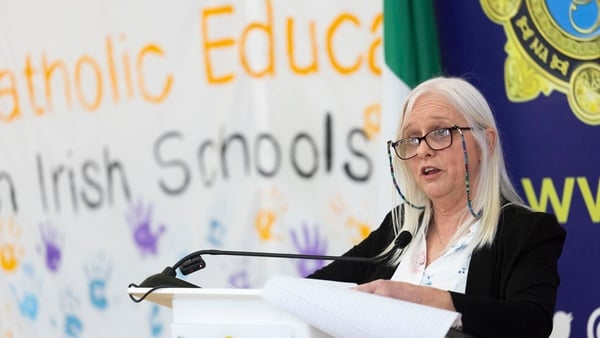
Speaking at the launch of today's initiative, Mr Heydon said: "The value-added piece for farmers and for driving more income into farm families, the 120,000 of them down the length and breadth of this country, is industry working with our farmers."
He said the absence of flour processors here had been a big impediment to farmers getting involved in the tillage sector.
He added that tillage farmers who had made huge investments had not been getting the return in recent years because of the dependency on world market rate prices.
"We want to have the value added piece. We want to take more control back with that, so initiatives like this are important."
Mr Burke said the money being made available by the Government could potentially underwrite the growth of thousands of jobs in the sector, which is already worth €1.2 billion.