A consultant in the neonatal intensive care unit at the Rotunda Hospital in Dublin has said the decision to overturn planning permission for a €100 million critical care unit at the hospital is devastating.
The new wing would have provided 80 extra hospital beds and an additional operating theatre.
The Rotunda Hospital is the oldest continuously operating maternity hospital in the world, delivering babies for almost 300 years.
However, doctors said the infrastructure is archaic and not fit for purpose.
The neonatal intensive care unit in the Rotunda is where some of the sickest and most premature babies in Dublin and across the country are being treated.
Doctors said the room is too small, and the space between beds is inadequate to stop infection spreading.
Consultant Neonatologist Dr Mike Boyle said: "We are talking about the most vulnerable infants that do not have a robust immune system, and they are vulnerable to infections. If they are in cramped conditions and beside lots of other patients, it's very challenging for us to keep that bubble of security around them."
He said: "To expect us to continue in these conditions for another 20 or 30 years while something might be built somewhere else is just unconscionable that we would expose the women and babies to sub-standard care."
Watch: Dr Mike Boyle says it is 'unconscionable to expose women and babies to sub-standard care'
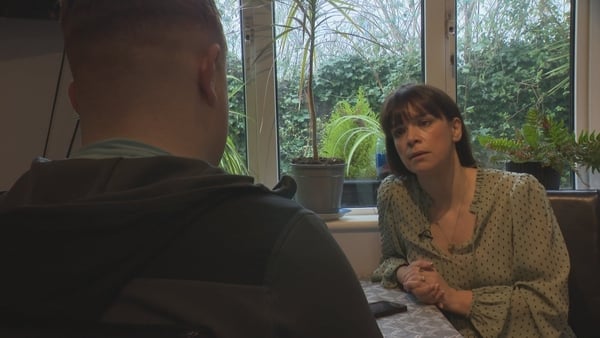
Leah Murphy, who is the mother of a baby being treated in the unit, said conditions were cramped.
She said: "It's quite tight so if you are trying to hold your own baby with the assistance of the nurse, like kangaroo care, where she is placed onto your chest, you're in a reclining chair and you can't really recline that chair because there is a baby right beside you, sometimes parents have to go around and they are bumping into each other."
Management said An Coimisiún Pleanála's decision to overturn planning permission for a €100m critical care unit at the hospital will have devastating consequences for babies.
Master of the hospital Professor Sean Daly said: "Everybody in the Rotunda in the Hospital is devastated. We desperately needed this new unit primarily for the tiny babies we take care of.
"This was never meant to be anything other than a hospital site. It's the 21st century and now we need to provide 21st century care for babies who will be born as early as 18 weeks early and will weigh less than a pound who are extremely fragile and that is why we are devastated."
General Manager at the hospital Jim Hussey said the decision was a shock.
"Every couple of months we have been holding town halls and have been keeping staff updated on what was happening with the development, we were confident that we had put in a good submission and provided good information to the planners and were confident this would happen."
He said: "This was an essential development to address the high clinical risk that is urgently needed. It was very much dictated by time limits and an urgency to address those risks, and those risks are very much premised around the most vulnerable cohort of patients in the country which are neonatal infants."
Watch: Leah Murphy says conditions at Rotunda were cramped
The 80-bed unit at the Rotunda Hospital was turned down after objections on conservation grounds by the Dublin Civic Trust and by a local resident.
They said it would have a negative impact on the character of the Parnell Square area and its Georgian architecture.
Opposition parties said that a proposal in 2015 to co-locate the Rotunda with Connolly Hospital in Blanchardstown was "nonsensical" and had been used as an excuse not to invest in the hospital.
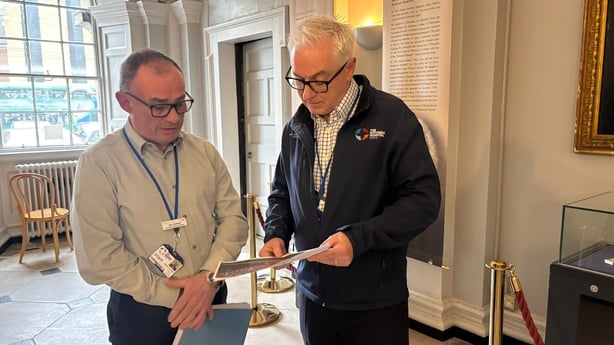
CEO of Dublin Civic Trust Graham Hickey said: "I think it is particularly unfortunate to the dedicated staff at the Rotunda who I think both figuratively and literally have been left holding the baby on this, for what are effectually failures by successive governments and by the HSE and the department of health to properly plan for the co-location of the Rotunda, with a level four acute hospital, which is enshrined in the maternity strategy, but critically is that this advances the best interests of women and children to ensure the best clinical outcomes."
The refusal now leaves an uncertain future for the Rotunda Hospital, which is now examining the possibility of taking a judicial review to challenge the decision.