


Taoiseach Micheál Martin has rejected calls for an apology for the conduct of the State during the Troubles.
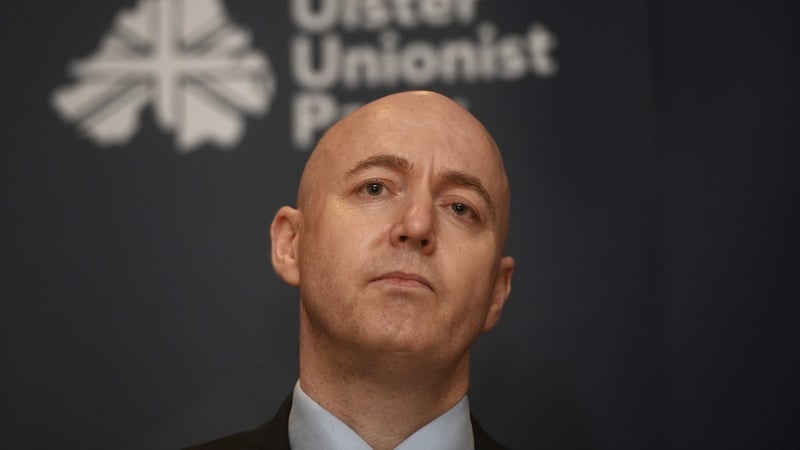
The apology was called for by the new leader of the Ulster Unionist Party (UUP) John Burrows at the weekend.
The Irish Government should make "a major statement" about the past along the lines of the British apology over Bloody Sunday, Mr Burrows told the Irish Times.
Asked about the UUP leader's call for a State apology, Mr Martin said: "I wouldn’t accept that".
The Government had contributed to the Smithwick Enquiry and was continuing to contribute to the Omagh Bombing Inquiry.
Speaking in Tralee at a centenary exhibition on the foundation of Fianna Fáil, Mr Martin said that throughout "the terrible war that the Provisional IRA waged in this jurisdiction" in which garda and others were killed, the Irish Government had "fought tooth and nail against the Provisional IRA".
"That is not something we would be apologizing for."
But what they would be doing was trying to bring closure, and should there be any assertions of collusion here, there would be absolute transparency and proper investigation, he said.
Ulster Unionist Party Jon Burrows had called on the Government to apologise for failing to extradite terrorist suspects during the Troubles.
Mr Burrows said that the Irish Government should admit that some of its conduct during the Troubles was unjustified and unjustifiable.
He rejected criticism of a parallel he drew with an apology given by then-British prime minister David Cameron for the killing of 14 unarmed civilians by the British Army on Bloody Sunday.
"The comparison is not necessarily with the act. The comparison is with the act of reconciliation following it," he said.
Speaking on RTÉ's Morning Ireland, Mr Burrows said that an apology would be an act of "reconciliation".
We need your consent to load this rte-player contentWe use rte-player to manage extra content that can set cookies on your device and collect data about your activity. Please review their details and accept them to load the content.Manage Preferences
"During the Troubles, when there was terrible suffering inflicted on the people of Northern Ireland by terrorist groups from both sides, loyalist and republican, many terrorists after they committed acts, including murder, fled to the Irish Republic," Mr Burrows said.
"There was a failure of the Irish State to extradite them back to the United Kingdom, back to Northern Ireland to face justice. There was virtually a blanket refusal to extradite them.
"Not only did that deny justice for victims, but actually it helped preserve the capability of those terrorist groups, principally the Provisional IRA. That has caused a real lasting hurt and harm in Northern Ireland.
"I think an acknowledgement of that and an apology for that will go a long way to building reconciliation."
'Paramilitaries and those who endorsed them should apologise'
Mr Martin said parties like Sinn Féin should apologise specifically for the Provisional IRA's role.
"The Provisional IRA got it wrong," Mr Martin said.
It was time now to hear from the paramilitaries representatives "and those who endorsed the paramilitaries of the past," he said
The Kenova report and debate last week had detailed how the Provisional IRA had been "a scourge on their own community".
Sinn Féin should apologise for the activities of the Provisional IRA "specifically", not general apologies of regret that people lost their life, he added.
"The Provisional IRA got it wrong, did terrible atrocities" and they should bring closure to the victims, he said.
There had been correct focus on state collusion with loyalist paramilitaries and British State forces, and miscarriages of justice in Bloody Sunday and so on.
"But equally, now, the time has come for those who were apologists for the Provisional IRA and loyalist paramilitaries to bring closure to their victims and apologise specifically for what they did," Mr Martin said.
Earlier, also on Morning Ireland, Minister for Foreign Affairs Helen McEntee rejected the calls for a State apology.
"I don't agree with his comments," she said, "but I don't want to get into a back and forth on air".
"I actually think we've made really positive progress in recent months, in particular in relation to legacy matters," the minister said, detailing some recent progress.
"So look, there's a lot of conversations to be had. I do wish him well and I look forward to meeting with him but I don't agree with those comments and I think we need to meet to work collectively, support each other and what are really positive progress that's been made on the legacy issues at the moment."
But Mr Burrows insisted that the Irish Government should apologise, despite effectively upholding its own constitution at the time.
"Because something had a legal basis doesn't mean it was right. It doesn't mean it was a sound legal basis, and it is clearly, plainly, wrong," he said.
"I think a lot of your younger listeners would be aghast if they thought that somebody who was blown to smithereens, their family would be denied justice because the Irish state would not allow the extradition of that suspect in Northern Ireland."
