
A first meeting of a taskforce set up as a result of the loss of one third of Ireland's fishing quota this year, estimated to cost the fishing industry €105 million, will take place at Howth Harbour this morning.
Industry groups have warned that the reduction of fishing opportunities following the EU December Fisheries Council could impact 2,300 jobs in coastal communities.
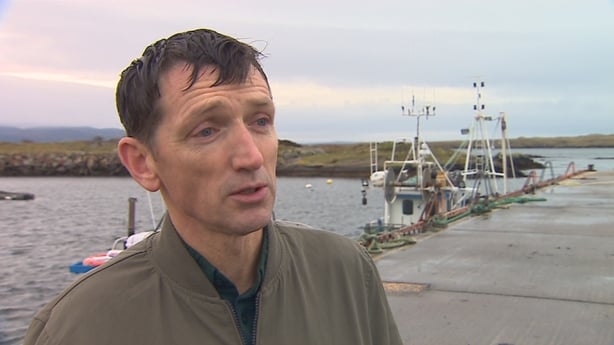
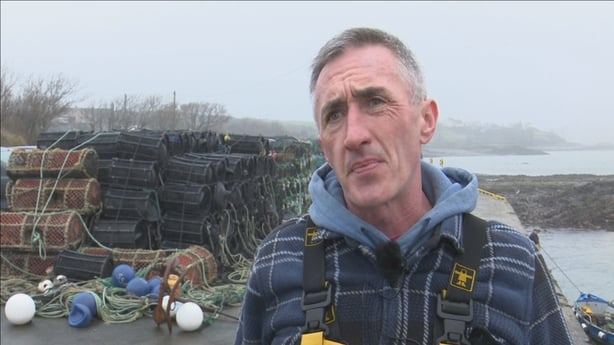
Standing on Ailt an Chorráin Harbour in west Donegal, fisherman and vessel owner Ciarán Doherty said he has two or three fishing trips left this year - a stark reflection of a crisis gripping Ireland's seafood sector.
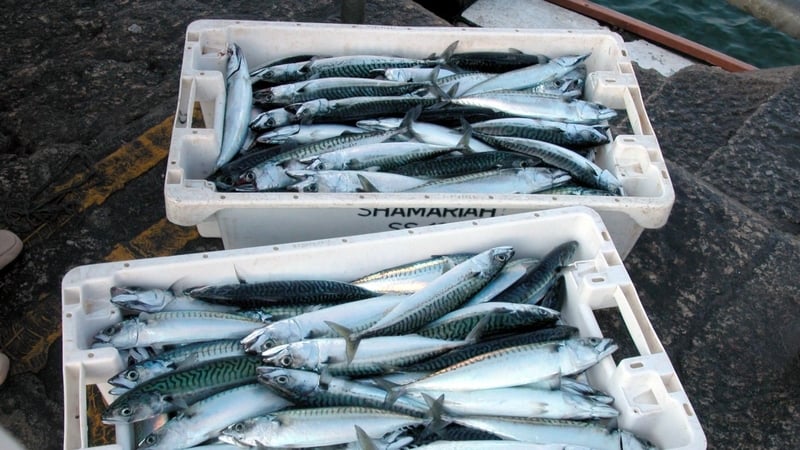
"Every vessel has caught their mackerel quota for 2026 in one trip. Some boats are still fishing horse mackerel.
"Personally, we have a trip and a half of blue whiting, and one trip of boarfish left and that's it until next January. We’ve no more quota."
"The taskforce needs to listen to the fishing organisations from inshore to offshore. They know the problems," Mr Doherty added.
The inaugural meeting of the Food Vision Seafood Sector Group will be preceded by a joint launch including Minister for Agriculture, Food and the Marine, Martin Heydon together with Minister of State for Fisheries and the Marine, Timmy Dooley.
Mr Dooley previously told RTÉ News that fish stocks have reduced dramatically in the Atlantic Ocean because of the overfishing by non-EU coastal states.
He said the Government is pressing the EC to target these countries while the taskforce will seek to provide measures to support coastal communities as stocks recover.
The Food Vision Seafood Sector Group will examine the challenges facing catch fisheries, aquaculture and seafood processing with the aim of developing a framework of measures within EU funding and state aid rules.
Former General Secretary of the Irish Farmers' Association Michael Berkery, who has been appointed as an independent Chairperson, is tasked with drafting a report by June.
The Food Vision Seafood Sector Group membership, which will operate under Food Vision 2030 includes industry representatives and relevant Government departments and state agencies.
A department spokesperson said a vibrant and sustainable seafood sector is central to maintaining coastal communities as well as Ireland’s food security and climate objectives.
Industry organisations who spoke to RTÉ News welcomed its establishment under the chairmanship of Michael Berkery.
CEO of the Irish Fish Producers Organisation (IFPO) Aodh O’Donnell said it was timely and welcome as the Irish fleet faces an "escalating crisis" amid a 57,000-tonne quota reduction in 2026.
Mr O’Donnell said urgent action is required to address what he described as "the escalating crisis facing Ireland’s fishing fleet, processors, and service industries."
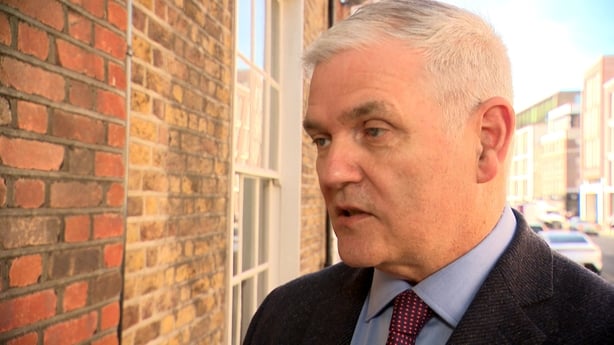
He believes the taskforce must deliver solutions and a vision in a sector worth €1.3 billion to GDP that supports 16,500 jobs.
"Without intervention, over 2,300 full-time equivalent jobs could be lost."
The IFPO Chief Executive said there is "a real urgency," to accelerate the process, amid quota reductions in key stocks including mackerel, Dublin Bay prawns, and whitefish.
Mr O’Donnell has called for the taskforce to examine fleet modernisation, the regulatory framework and quota optimisation.
While acknowledging Mr Dooley’s support, he called for strong cross-party leadership and decisive national and EU measures to address the challenges at hand.
"Ireland has a promising future in seafood, but only if we secure a genuine level playing field and defence of our resources against third country overfishing of shared species.
"Our message is clear - Ireland’s fishing communities are prepared to adapt and operate sustainably, but they cannot continue to bear disproportionate economic losses while others benefit".
The National Inshore Fishermen’s Association (NIFA) said it will engage constructively with the taskforce and wants outcomes to reflect the realities of the coastal fleet.
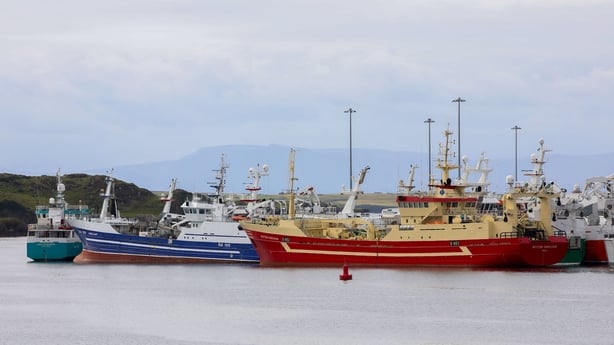
The organisation said inshore vessels under 18 metres make up around 80% of the industry and support thousands of livelihoods in small harbour communities.
It also said a single boat can sustain a harbour economy, but smaller vessels are weather dependent and exposed to market volatility, causing weekly income to fluctuate sharply.
NIFA Chairperson Michael Desmond recently told an Oireachtas Committee that the inshore sector has been pushed to the brink as he urged politicians to consider a Basic Income Stabilisation Payment.
"We are not asking the State to make fishermen wealthy," he told the committee.
He said boats were losing 80-100 days a year to climate-driven conditions while bait prices are becoming unsustainable and boats cannot diversify due to closed fisheries.
"We are asking the State to recognise that a climate-exposed primary food sector cannot operate with zero income stability while every comparable sector has support mechanisms in place for them," Mr Desmond said.
"We are not going broke in one year - we are slowly being squeezed out," he added.
He also believes the taskforce should examine the reopening of selected inshore fisheries with appropriate conservation safeguards as well as quota distribution as stocks recover.
In terms of membership of the Food Vision Seafood Sector Group, nominations have been sought from the Killybegs Fishermen’s Organisation, the Irish Fish Producers Organisation, the Irish South and East Fish Producers Organisation, the Irish South and West Fish Producers Organisation, the National Inshore Fishermen’s Association, six Regional Inshore Fisheries Forums, IFA Aquaculture, co-operative representatives, Irish Islands Marine Resource Organisation and the Irish Fish Processors and Exporters Association.
State agencies on the taskforce include Bord Iascaigh Mhara, Marine Institute, Bord Bia, Teagasc Enterprise Ireland, Fáilte Ireland, Údarás na Gaeltachta, Southern Regional Assembly, Northern & Western Regional Assembly and the Western Development Commission.
Officials from the Department of Agriculture, Food and the Marine and the Department of Public Expenditure, Infrastructure, Public Service Reform and Digitalisation will be in attendance while officials from seven other departments will be asked to attend as required by the chairperson.
Meanwhile, back in Ailt an Chorráin, a once thriving harbour, Ms Doherty echoes what others in the sector have repeated on many occasions.
Mr Doherty believes the core issue - a lack of quota - requires action at European level.
"We’re looking at Norwegian vessels 70/80 miles west of Burtonport, fishing blue whiting.
"You’ve the Spanish, the French, everybody is out there. The fish is there; our share isn’t and that’s the problem."
He warned that without action at European level, the mackerel dispute could worsen, which will add unnecessary pressure, leaving the taskforce with much to consider over the next four months.