


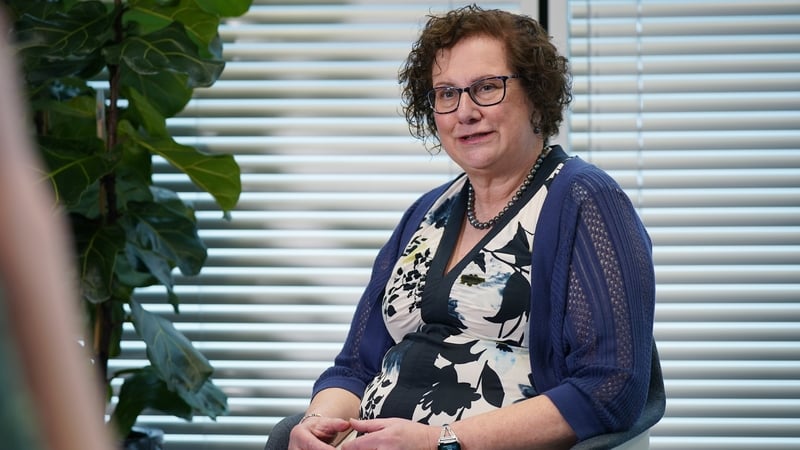
The expert who led the review into children's gender healthcare in the UK has said young people have been "weaponised" and misled about the realities of transitioning by social media.
Dr Hilary Cass, whose review of NHS gender care for under-18s led to sweeping changes including a ban on puberty blockers, welcomed the draft published by Britain’s Department for Education earlier this week but accepted it is impossible for it to be "completely foolproof".
Dr Cass told the BBC’s Sunday with Laura Kuenssberg: "There are a tiny number of people who will never be comfortable with their biological sex, with the gender associated with their biological sex.
"And for them, a medical pathway is the only way they're going to live their life comfortably.
"And we don't understand why that is, but we have to try and help those people thrive as much as the young people who are going to grow out of this," she said.
Dr Cass also warned of "unrealistic images and expectations on social media" when it came to the realities of "what transition would really mean and how hard it would be", including "quite intensive medical treatments" and "sometimes quite brutal surgeries".
Asked if children had been let down by the adult-led debate on gender reassignment, Dr Cass added: "Absolutely ... (they) were also caught up in all the issues about single-sex spaces and sports and safe areas for women which were actually not to do with the children but they were somehow part of a football within it.
"That's a real shame that children have been weaponised."
Asked why the number of children who have gender dysphoria is increasing, Dr Cass said social media and gender stereotypes had both contributed to the rise of cases.
"I think what has kind of misled children is the belief that if you are not a typical girl, if you like playing with trucks, or boys who like dressing up or that you have same-sex attraction that means that you're trans and actually it's not like that but those are all normal variations," she said.
"I think children and young people were being given a narrative that it's not OK to be anything but absolutely typical of the other girls on Instagram," Dr Cass said.
The proposed guidance, published late on Thursday, states that British schools should consider avoiding "rigid rules based on gender stereotypes" and should take time to understand children's feelings while being aware of "potential vulnerabilities" such as them facing bullying or needing mental health support.
If a child or their parent makes a request for them to socially transition, schools should take a "careful approach", the guidance says, discussing it with families and taking account of any clinical advice that may have been received.
Schools should seek parents' views, with only "rare circumstances where involving parents or carers would constitute a greater risk to the child than not involving them" cited.
Dr Cass told the Press Association earlier this week: "When I was doing my (NHS) review, the default seemed to be to not contact parents, whereas this (guidance) is saying that you should contact parents unless you really think there's a significant risk to the child if you do so.
"So it has turned it completely the other way around. So I think there'll be much less risk of the sorts of things that I was hearing of children being socially transitioned without their parents knowing as a routine."
The updates, which have been put out for consultation for the next ten weeks, have been proposed after the 2024 Cass Review and last year's Supreme Court ruling on biological sex.
