
A jury in the trial of a superintendent and four serving gardaí who are accused of perverting the course of justice will resume their deliberations at Limerick Circuit Court on Monday.
The jury of eight men and four women deliberated for two hours and six minutes this afternoon and told the court that they had not yet reached a verdict following the trial, which has lasted eight weeks.
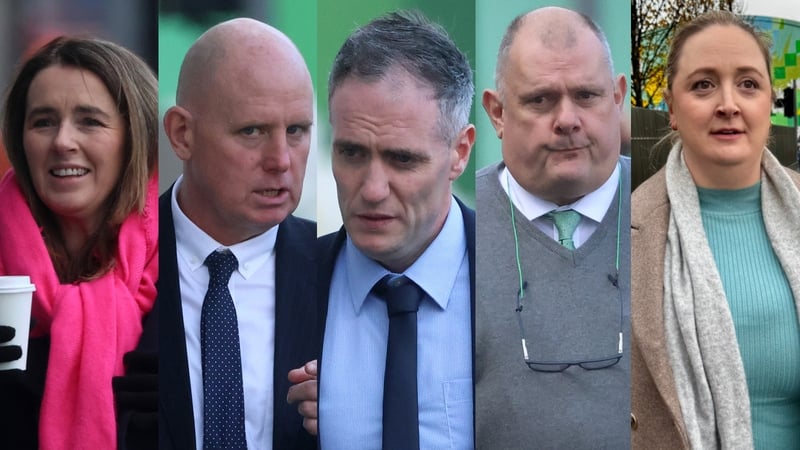
Former superintendent Eamon O'Neill, Garda Tom McGlinchey, Garda Colm Geary, Sergeant Michelle Leahy and Sergeant Anne-Marie Hassett have pleaded not guilty to a total of 39 charges of engaging in conduct tending or intended to pervert the course of justice.
The alleged traffic offences include speeding, holdiing a mobile phone while driving, having no insurance and not wearing a seatbelt.
It is the prosecution case that motorists contacted Mr O'Neill seeking advice and he forwarded the requests to Mr McGlinchey, Ms Hassett and Mr Geary, who in turn contacted the detecting garda in each case.
The case against Ms Leahy relates to two summonses she had withdrawn during her work as a court presenter at Limerick District Court.
Jury in garda trial consider lack of driver prosecution
Earlier, the jury heard the closing statement of John Byrne SC, representing Garda McGlinchey, who questioned the absence of any prosecution of the drivers who allegedly committed road traffic offences and made representations to Mr O'Neill.
"Why is it that none of them have been prosecuted?" he asked.
Mr Byrne told the court that this was a gap in the prosecution case that none of the motorists, bar one, gave evidence during the trial. "It might have been helpful if they had been called to give evidence," he said.
The use of garda discretion and its role in community policing has been a focal point in the trial.
Mr Byrne told the jury that Mr McGlinchey was not exercising his discretion when he contacted detecting gardaí about alleged speeding offences, because he did not know the motorists involved. "All he did was, in good faith, pass on a request by Eamon O’Neill," he said.
In his closing statement on behalf of Ms Leahy, Andrew Sexton told the jury that his client was before the court for withdrawing two cases.
One was a speeding offence for a motorist alleged to have been caught driving at 93km per hour in an 80km zone, and another for a speeding offence for a driver alleged to have been caught driving at 60km per hour in a 50km zone.
Ms Leahy had received a text message from Mr McGlinchey, who had made the request on behalf of Mr O’Neill.
He reminded the jury of the investigating gardaí who gave evidence that she was cooperative and "completely truthful" when questioned during the probe.
Mr Sexton asked if it was the case that Ms Leahy is "a kindling stick at the funeral pyre" of Mr O’Neill.
"You have to stand back and ask, what exactly is going on in this case?"
In his closing statement on behalf of Ms Hassett, Jim O’Mahony SC said his client had engaged in text conversations with colleagues.
"Could you honestly convict Anne Marie Hassett for texting a colleague to get the name of a garda?" he asked.
He asked how Sgt Hassett could know that the kind of communications here could amount to a crime.
The jury will resume their deliberations at 9.30am on Monday.