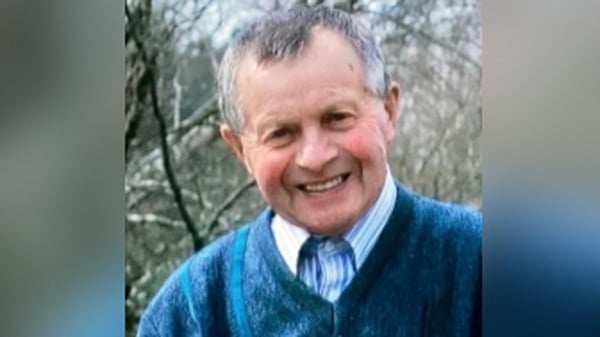

The death has taken place of former independent and Fianna Fáil MEP Brian Crowley.
He was aged 61 and had been unwell for some time.
Mr Crowley died early this morning at Cork University Hospital, where he had been receiving treatment.
He was elected to the European Parliament five times and was one of the biggest vote getters in the country.
He topped the poll in each of the European elections he contested in 1994, 1999, 2004, 2009 and 2014.
He failed to secure Micheál Martin's support for the Fianna Fáil nomination to run for the presidency in 2011.
He retired from active politics in 2019.
A wheelchair user, he was paralysed from the waist down following an accident when he fell off a building at the age of 16.
His life was plagued by ongoing surgeries arising from complications from that accident, and he spent several years being treated in hospital.
He is survived by his mother, Sally, and by his brother and sisters.
Taoiseach Micheál Martin paid tribute to Mr Crowley, saying it was with "great sadness" that he learned of his passing. He described Mr Crowley as a "hugely impressive individual".
"His vote was testament to the truly strong bond between him and the people he represented. Without question he was one of the great vote getters of the modern political era. He had no equal," he said.
The Taoiseach said Mr Crowley demonstrated "incredible personal resilience and strength of character".
"With great natural musical ability and a fantastic outgoing personality, he was the life and soul of many Fianna Fáil Ard Fheiseanna and thrilled many on the musical scene in Shanleys in Clonakilty for many years.
"Brian was also a person of deep personal faith, which was profoundly important to him as he struggled with the complications arising from his disability in his later years," he said.
"Brian was deeply committed to his community and his country. His loss will be felt deeply by his mother Sally, his family, his large circle of friends and all his former colleagues."
We need your consent to load this rte-player contentWe use rte-player to manage extra content that can set cookies on your device and collect data about your activity. Please review their details and accept them to load the content.Manage Preferences
Fianna Fáil MEP Billy Kelleher said Mr Crowley was a "real hands-on politician" who was very in touch with his community and the people that represented him.
"He was extremely loyal, he was so loyal it is hard to believe - in the European Parliament there are still people that worked with him you know many, many years ago that still would ask me - how is he?"
He added that Mr Crowley was a "phenomenal vote getter".
"The one thing you can think about Brian was he had a great presence. You know he had a great presence when he was in a room; you knew he was there. He had that vibrancy and just that dynamism.
"But equally from the point of view of the public they voted for him in their droves for election after election, so he was a formidable vote getter as well."
Speaking on RTÉ's News at One, he said that it would have been easier to "weigh his votes than count them".
"It simply was a sight to behold when you go to the count centre and you just look at the number of people in sheer volumes that went into polling stations across Munster to vote number one for Brian Crowley."
Mr Kelleher added that he felt this was an indication of the "affection people held for him" and the work he did.
He said Mr Crowley insisted that his accident would not define him, but equally was a "person that said it wouldn’t be an obstacle to his progression".
"He really showed that with society and governments and supports in terms of making things accessible that you know barriers can be removed for people with disability and I think he really sort of wanted to push that concept that the barriers are not with the individuals the barriers are being put up by the lack of investment in accessibility and other supports that people that have a challenge need from time to time."