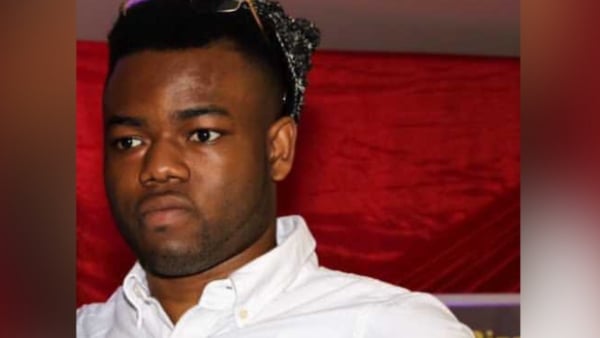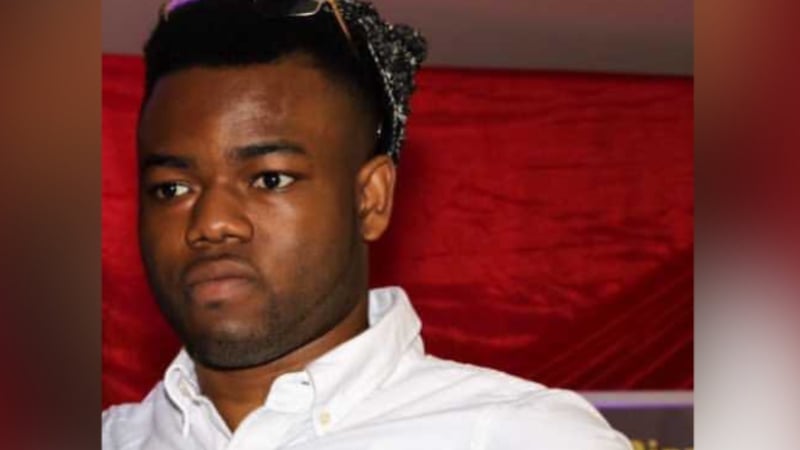

Two gardaí attached to the Armed Support Unit (ASU) have told an inquest into the death of George Nkencho that once they arrived at the scene they were informed by a garda that there was "nothing else they [gardaí] could do" and "it’s over".
Gardaí Stephen P. Walsh and Stephen Walsh arrived at the scene at approximately 12.38pm and were told a man had been shot after he had tried to stab gardaí with a knife.
They separately told the Dublin District Coroners Court that when they arrived at 15 Manorfields Drive a large crowd was already gathered outside the property.
Garda Stephen P. Walsh said he observed Garda A and Garda B, also members of the ASU, in the front driveway and that Garda B was performing chest compressions on Mr Nkencho.
Garda Stephen P Walsh said he took over administering CPR on George Nkencho from Garda B in accordance with best practice and with minimal disruption.
He told coroner Dr Myra Cullinane that he counted four gunshot wounds in the centre of George Nkencho’s chest and that there was a possible fifth shot close to the nipple area.
Garda Stephen P. Walsh told the inquest that after he was relieved by Dublin Fire Brigade, he observed a knife with a black handle and silver rivets on the ground and that the blade was concealed by the grass.
He also saw a can of pepper spray and a piece of small green plastic, which he believed to be a taser cartridge.
In 'fear for my own safety'
Under questioning from Eanna Mulloy, SC for the Nkencho family, Stephen P. Walsh described the scene as "a very hostile environment".
He said that there were people shouting at him and his colleagues from the upstairs rooms of the property, that people were coming and going and that he was in "fear for my own safety" at times.
His colleague Garda Stephen Walsh told the inquest that Garda A, who the inquest has heard discharged the shots, appeared to be "deeply concerned" for the welfare of George Nkencho. Garda A told Garda Stephen Walsh that a male had attempted to stab him and that he did not know if he had been stabbed.
When Garda Walsh asked to check Garda A over for possible injuries, he refused.
Garda A had insisted that the attention was focused on helping George Nkencho because he was "deeply concerned for the welfare of the male" Garda Walsh told the inquest.
'No guarantee' taser would be effective
Earlier, the inquest heard from retired Garda Sergeant James Ryan that four taser rounds were discharged at George Nkencho in quick succession over 21 seconds at 12.35pm.
Mr Ryan said that if a suspect is wearing bulky clothing, there is no guarantee that the taser will be effective because ideally the taser probes need to make contact with the skin.
The inquest previously heard that George Nkencho had got back up on his feet after the taser was discharged and that it appeared to have little effect on him.
James Ryan was in charge of firearms training to members of the ASU and told coroner Dr Myra Cullinane that officers receive scenario type training to deal with and identify people who are vulnerable and suffering from mental health conditions. "They [ASU] would have been trained to react depending on the level of threat" he said, and to use different force options depending on the level of threat.
He added that all ASU members are trained to have autonomy and work as a team in a developing situation where there is a threat to themselves and to the public.
Detective Garda Brendan O'Hora told the inquest that he made several attempts to de-escalate the situation with Mr Nkencho as he was making his way home
He told coroner Dr Myra Cullinane that he recalled speaking to Mr Nkencho in a soft, low and calm voice and asked him what was wrong.
He said Mr Nkencho told him to "arrest the people at the shop".
Detective O'Hora said Mr Nkencho looked "angry, determined and focused" and that he knew that he was dealing with something very serious and with someone who ‘’was going through some form of an episode’’.
He said that he tried to appease Mr Nkencho and that his actions were not making any sense.
"It wasn’t normal what he was doing," he said.
Detective O’Hora also recalled telling females at the front door of 15 Manorfields Drive.
Eanna Mulloy, Senior Counsel for the Nkencho family, asked: "You didn't notice that they were black like George?"
Detective O’Hora said he did.
"Did you put two and two together, that they were related to George?" she asked.
"I couldn’t put two and two together at that stage," replied Detective O’Hora.
He said that his first duty was to protect life and he did not hear them shouting that Mr Nkencho was their brother and that he had mental health issues.
He said that even if he had heard them, he would still have ordered them back inside for their own safety.
The inquest continues tomorrow.