
A couple whose convictions for the female genital mutilation (FGM) of their one-year-old daughter were quashed by the Court of Appeal, have begun an application to have their cases declared a miscarriage of justice.
The husband and wife were found guilty in 2019 of carrying out FGM on their daughter at an address in Dublin in September 2016, in the first trial of its kind in this country.
However, their convictions were subsequently overturned on appeal.
The man and woman are originally from a French-speaking region of Africa, and the Court of Appeal ruled their first trial had been unfair because of serious problems with the translation of testimony in the trial.
A jury was unable to agree on a verdict following a retrial in 2023, and the Director of Public Prosecutions subsequently dropped the charges.
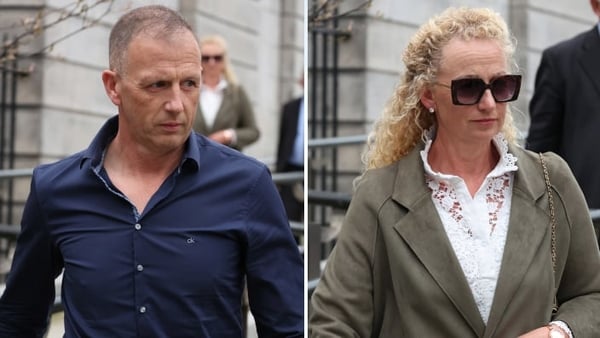
The couple cannot be named to protect the identity of the child.
The case has been the subject of an RTÉ Documentary on One podcast, "First Conviction" as well as an RTÉ Investigates television documentary.
The man was sentenced to five and a half years in prison in January 2020, and the woman to four years and nine months following their convictions by a jury.
The convictions were quashed in November 2021.
Another jury at the Dublin Circuit Criminal Court in 2023 failed to agree on verdicts.
The first trial heard evidence that the parents had attended a hospital with their daughter and asked for help because she was bleeding from the genital area.
They had claimed the child had sustained her injuries by falling onto a toy while not wearing a nappy.
Senior Counsel, Hugh Hartnett, for the man, told the appeal court that the couple had been wrongly convicted for a crime they did not commit.
He told the court an expert report from Professor Birgitta Essén, a leading international expert in FGM, completed after an examination of the child when she was nine years old, showed no FGM had in fact taken place.
He said the case had been presented to the jury on the basis that the child's clitoris had been removed in an act of FGM, but the subsequent reports by Professor Essén and by prosecution expert Dr Cecilia Berger showed it was in fact intact.
Mr Hartnett said no crime had been committed and there was no basis for the prosecution.
He said the prosecution had not sought to cross examine Professor Essén, and her evidence had not been challenged.
Mr Hartnett said the prosecution was relying on the evidence of medical witnesses at the original trial in 2020, and they had not been asked to update their evidence in the light of the new reports by the experts and videos by Professor Essén.
Mr Hartnett also told the court that a video of an examination of the child carried out in 2019 had not been disclosed at the first trial.
He said the defence had asked that Professor Essén be allowed to carry out a physical examination of the child before the 2023 retrial, but that was not permitted at that time.
She was subsequently examined at the Mater Hospital with the permission of her parents in advance of a possible further trial, before the charges were dropped.
Mr Hartnett said the matter was simple - it was not a just and correct conviction.
We need your consent to load this rte-player contentWe use rte-player to manage extra content that can set cookies on your device and collect data about your activity. Please review their details and accept them to load the content.Manage Preferences
Asked by Presiding judge, Mr Justice John Edwards, if the decision by the DPP not to continue with the prosecutions could be interpreted as a recognition of innocence, Prosecuting counsel, Brendan Grehan, said this was not a function of the DPP.
Mr Grehan said the DPP could only act within the strictures of the office.
She had decided not to continue with the prosecutions because she was not satisfied with the evidence or the prospects of conviction.
And he said the man and woman were entitled to a full presumption of innocence. He said it was not part of the function of the DPP to express a view on their innocence.
Mr Hartnett said the new reports should have been sent to the original doctors who gave evidence at the first trial. And he told the court one would have thought the DPP would have an interest in what went wrong.
He pointed to previous comments by the Attorney General, Rossa Fanning, on the State’s obligations to act in the public interest in litigation involving the State.
In response, Mr Grehan for the DPP said he wanted to reiterate that nothing said in arguments before the court should undermine the vital message that child protection was paramount.
He said FGM was a serious crime not only in this country but in many others. And he said it's an offence which involves the protection of children who are vulnerable, because they can’t speak for themselves.
He said it was vital that medical professionals and others who come across circumstances which cause them concern should continue to be vigilant and he said they should not be afraid to report suspicions.
Mr Grehan said the couple were fully entitled to be considered innocent and enjoyed the presumption of innocence and there would be no further legal proceedings against them.
But he said there had been a full, credible basis for the bringing of charges against the couple in the first place. And he said he rejected criticism of the DPP for the manner in which the charges were dropped.
He said the DPP did not go back to the original doctors who treated the child with the new reports, because it was important that everyone knew as soon as possible that the prosecution would not be continuing.
Mr Grehan said he was arguing on behalf of the DPP that the cases could not be certified as a miscarriage of justice, because they did not meet the statutory requirement in relation to newly discovered facts.
Mr Grehan asked if there was new evidence at all, or just a stronger stating of views already stated by Professor Essén before the original appeal. And he also argued that newly discovered facts in a miscarriage of justice case must be connected to the reasons the convictions were quashed. He pointed out that the convictions in this case were quashed on the very clear grounds of defective translation and the court did not rule on the medical issues.
The court will continue hearing submissions on the case tomorrow and is likely to give its decision at a later date.