On the first day of the World Economic Forum in Davos, Switzerland, US Treasury Secretary Scott Bessent warned European countries against retaliatory tariffs against the US.
The warning came after President Donald Trump threatened eight countries with new tariffs for failing to support his plan to buy Greenland.
If such tariffs came into effect on 1 February, it could trigger €93bn worth of reciprocal tariffs against the US from Brussels.
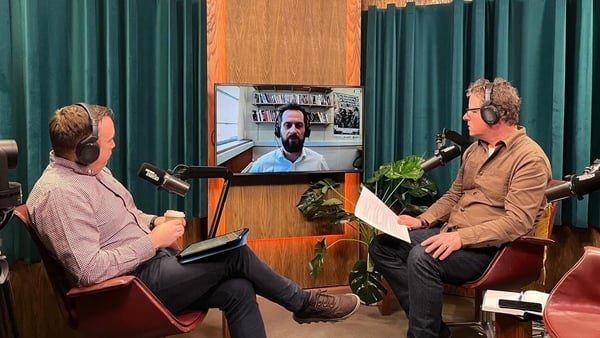
Chief economist at the Institute of International and European Affairs Dan O'Brien told Behind the Story a tariff war would mean the end of an EU-US trade deal, reached last July at Turnberry in Scotland.
"If he goes ahead and implements these tariffs, Turnberry is dead," he said.
"This was always a risk. Many people in the EU said the Turnberry deal was not a good idea because you couldn’t trust Trump, he was always going to come back for more".
Mr O’Brien said the EU could retaliate with specific tariffs, which were ready since last year in case there was no Turnberry trade deal, to hit President Trump’s supporters in Republican electoral districts.
"They can target tariffs on those industries that are going to affect the Republican party most," he said.
"The logic of that is they hope the Republican Senators and Congresspeople will see jobs in their constituencies are at risk, and they will put pressure on the White House not to do these things".
Mr O’Brien said it is hard to see Ireland not being impacted by any such escalating trade war.
"The question is whether, when the European Union strikes back, all 27 countries will impose a tariff on US goods – will Donald Trump then add on the countries, like Ireland, who aren’t being tariffed now?
"I suspect he will, and the risk is that we get into a retaliatory cycle".
Mr O’Brien added that due to Ireland’s heavy reliance on US companies and trade, a big rupture in the transatlantic economy "could easily push the Irish economy into a recession".
"There’s an awful lot at stake here but sometimes economics have to take a secondary row, and when it comes to sovereignty and territorial integrity most countries are prepared to pay a high economic price".
You can listen to Behind the Story which is available on the RTÉ Radio Player.
You can also find episodes on Apple here, or on Spotify here.