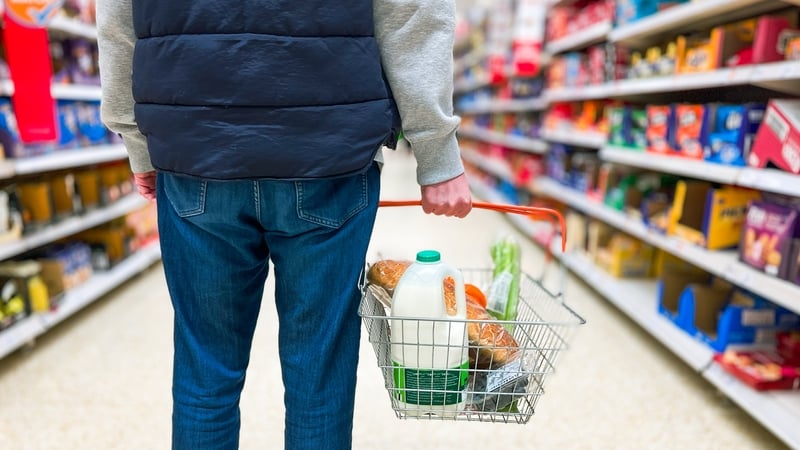

Irish consumers have faced soaring food costs in recent years, with prices for dairy and beef surging at some of the fastest rates across Europe.
The upward trend has affected everyday staples such as milk, cheese and beef, and has placed significant pressure on household budgets.
Could Mercosur be good for Irish shoppers in the long-term?
''What we’ve seen over the last 12 months is that Ireland has the second highest rate of change in terms of the price of butter compared to the rest of the EU, coming second only to Sweden and is seventh [highest] in terms of rate of change in prices when it comes to beef," said Anthony Dawson, Statistician in the Prices Division at the Central Statistics Office.
Data from the most recent Consumer Price Index shows that the retail price of beef has increased by 44% in the last five years and is up 24% in the last 12 months.
Dairy prices have also risen over that period; butter and milk prices jumped by around 45% in the last five years. In the last 12 months alone, butter is up by 10% and milk prices rose by 5%.
And that's just for regular, everyday items.
"The average price of a kilogram of diced beef has increased by €4.10 in the last five years, and between November 2024 and 2025 we can see the price of a kilo of sirloin steak is up by just over €5," Mr Dawson said.

The Consumer Price Index has shown that the average price of two litres of whole milk has increased by 73c in the last five years. Over the last 12 months, the average price of a pound of butter has increased by 55c and a kilogram of Irish cheddar cheese has increased by 62c.
"Food prices rose by 4.2% in the 12 months to November 2025 and was about 30% higher than the overall inflation rate of 3.2%," Mr Dawson added.
"Overall, food prices increased by 27% in the last five years compared to 24% overall for the Consumer Price Index."
Read More: Ireland, France to vote against EU-Mercosur trade deal
Under the deal, the EU will allow increased imports of key agricultural goods from Mercosur nations - including beef, honey, sugar and soybeans - products that have seen sharp price hikes in recent years.
Price changes may not be immediate
Consumer experts, policymakers and consumers alike will be closely monitoring the price trends in the coming year, although significant shifts may not materialise immediately.
‘"Short term, within a year, things will largely look the same because the changes are set to be implemented over a number of years," said Dr Julian Worley, Post Doctoral Researcher at the University of Galway, who has studied the impact of climate change on food production.
However, consumers may notice one key difference - a broader variety of goods becoming available in supermarkets.
Looking ahead, Dr Worley anticipates that Irish beef prices will remain largely stable with no significant change in beef prices overall.
"However, if the standards [from Mercosur countries] are not maintained and the protections are not in place or enforced, there could be lower prices for beef, but this would come at the cost of possible lower quality and labour standards and significant environmental impacts," she said.
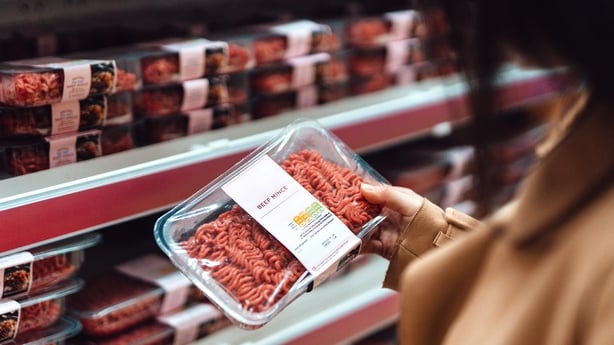
Consumer experts say that given shipping and environmental compliance costs it is unlikely that the everyday dairy products will become cheaper or more of a staple over Irish agricultural goods.
Ireland does not currently import a lot of dairy produce from the Mercosur countries, and that is unlikely to change with the implementation of the Mercosur deal.
Deal should bring greater selection and competition
Other consumer experts say there is likely to be a better selection of products on the shelves if the deal is approved.
''However, that is not going to kick in for a while because supply chains have to be reformatted," said Damian O'Reilly, Lecturer in Retail Management at TU Dublin.
"Supply chains are very delicate and take time to readjust. We're not going to see the price reductions any time soon on the shelves in supermarkets, but it will happen and we will have better choice and competition because of the Mercosur deal," Mr O'Reilly said.
He expects that a range of products from the Mercosur area will eventually come down in price and be more competitive on the shelves.
"That includes cosmetics, leather goods, textiles, rice and soya. All of these will benefit because we have different sources for it and should reduce prices. For example, typical Argentinean wine, the malbecs, should be cheaper in price as will Brazilian coffee. The consumer should benefit in the long run from the Mercosur deal," Mr O’Reilly added.
We need your consent to load this rte-player contentWe use rte-player to manage extra content that can set cookies on your device and collect data about your activity. Please review their details and accept them to load the content.Manage Preferences
Coffee has been increasing steadily in price over the past number of years and in the last year in particular the rate of price change is about 18% on average, according to the CSO inflation figures.
"The price of coffee has jumped because of the impact of climate change on production which means harvesting the product has become more difficult.
"It needs a humid climate for the beans to grow and they’re having to move these further up in the mountains where the coffee is grown and that has put more pressure on supply chains and as a result that is pushing up prices," Mr O’Reilly said.