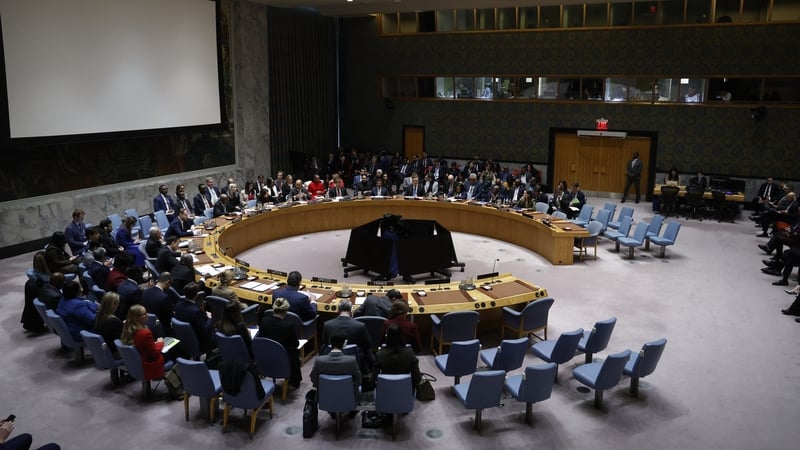

On the way into the Security Council emergency session most diplomats looked stony-faced.
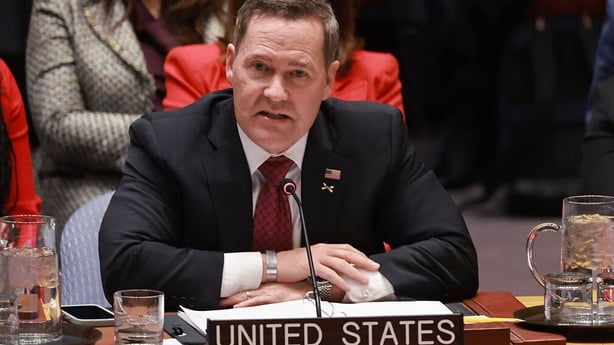
None stopped to chat to the waiting reporters, but US Ambassador to the UN Mike Waltz threw a few words.
"It's good to see justice," he said.
Around the same time, in a nearby Manhattan court, Nicolas Maduro and his wife Cilia Flores were pleading not guilty to drug-trafficking and narco-terrorism charges at the beginning of what’s likely to be a lengthy judicial process.
As the audacious capture by US special forces of the leader of Venezuela gripped the world, the mood here at the headquarters of world diplomacy was dark.
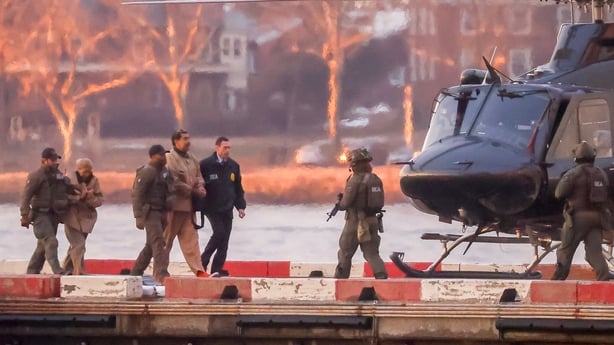
Not because there’s much love lost among most member states for the Maduro regime, but because of the precedent it sets.
The UN Charter is clear on the inviolability of national borders.
But this is a moment when the world’s major powers are increasingly prepared to cast aside international law in order to pursue their own strategic or economic interests.
And there’s very little that smaller, less powerful nations can do as those principles on which the global multilateral system is built appear to crumble.
'Clear violations of the sovereignty'
Leonor Zalabata Torres, the ambassador of Colombia - a country that the US President warned could be next - told the council that US actions represented "clear violations of the sovereignty, political independence and the territorial integrity of Venezuela".
"There is no justification whatsoever, under any circumstances, for the unilateral use of force to commit an act of aggression," she added.
She said sovereign states must have full authority over their territory "including their natural resources".
Russia and China, key allies of Venezuela, joined the condemnation.
"The assault against the leader of Venezuela compounded by the deaths of dozens of Venezuelan and Cuban citizens, in the eyes of many, has become a harbinger of a turn back to the era of lawlessness and US domination by force chaos and lawlessness, which continues to afflict dozens of states in various regions of the world," said Russian Ambassador to the UN Vasily Nebenzia.
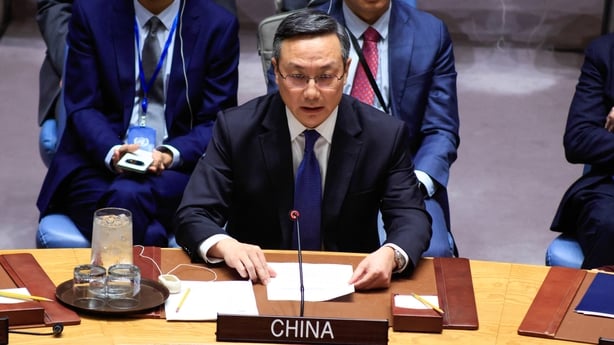
"China is deeply shocked by and strongly condemns the unilateral, illegal and bullying acts of the US," said China’s Ambassador Sun Lei.
But when it was time to the US to take the floor, the message was one of defiance.
Nicolas was a "narco-terrorist" being brought to justice, US Ambassador Mike Waltz told the council.
"As Secretary Rubio stated just yesterday, this is the Western Hemisphere," he said.
"This is where we live and we're not going to allow the Western Hemisphere to be used as a base of operation for our nation's adversaries and competitors and rivals of the United States," he said.
"You can’t turn Venezuela into the operating hub for Iran, for Hezbollah, for gangs, for the Cuban intelligence agents and other malign actors that control that country," he said.
"You cannot continue to have the largest energy reserves in the world under the control of adversaries of the United States, under the control of illegitimate leaders, and not benefiting the people of Venezuela, and stolen by a handful of oligarchs inside of Venezuela," he added.
The UN Charter and the principles underpinning it did not get a mention.
For the Europeans at the meeting, the ongoing threats against Greenland were at the forefront of their minds.
Although no direct mention of Greenland was made, the message from the Danish Ambassador Christina Markus Lassen was clear.
"Denmark recalls the foundational principle of international law that forbids states from threatening or using force against another state's territorial integrity and political independence," she said.
But there’s little faith among the Europeans that those rights will be respected.
As one European diplomat put it to me: "the mood is stone cold sober - international law has been thrown under the bus".