
Many environment and climate-related stories hit the headlines in 2025.
Here at home, we had the record-breaking Storm Éowyn, one of the most powerful and widespread wind events to hit Ireland since the so-called "Night of the Big Wind" in 1839.
Globally we had confirmation that average temperatures throughout the past three years exceeded 1.5C of warming, and each of the past three years was either the hottest, the second hottest or the third hottest year on record.
More than 150 major extreme weather events were registered.
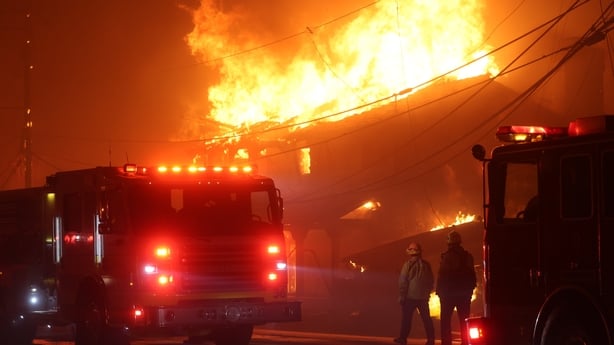
Horrendous images of heatwaves, floods, droughts, storms and wildfires were everyday events on our news bulletins.
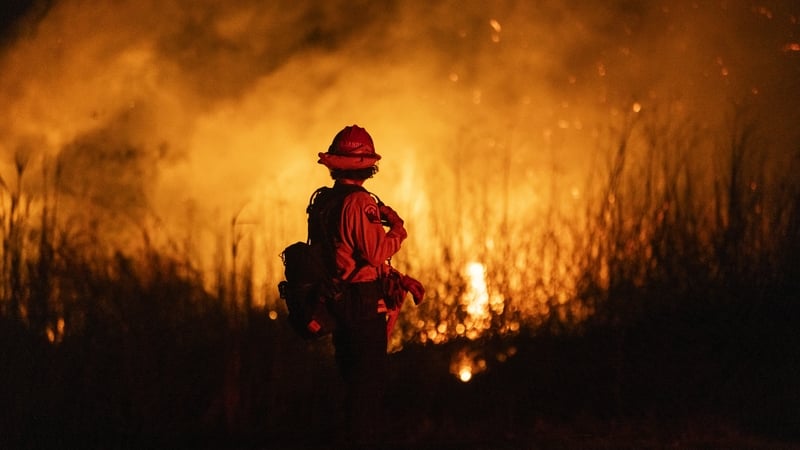
We witnessed the costliest wildfire on record devastating coastal communities in Los Angeles last January.
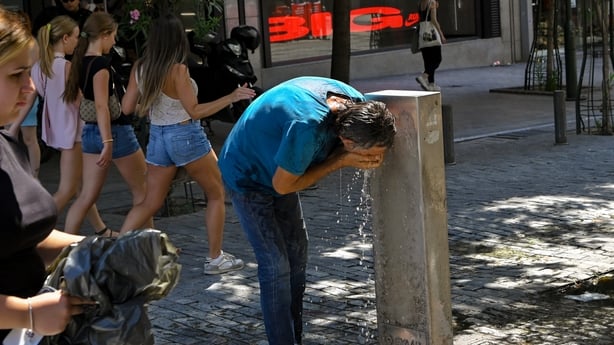
Monsoon floods displaced millions again in Pakistan, marine heatwaves caused extensive bleaching to more than 80% of coral reefs, and Europe was impacted by multiple heatwaves with record June temperatures of over 46C in Portugal and Spain.
All big stories, and there were many more too.
But one story is head and shoulders above all others when it comes to the most consequential environment event of 2025.
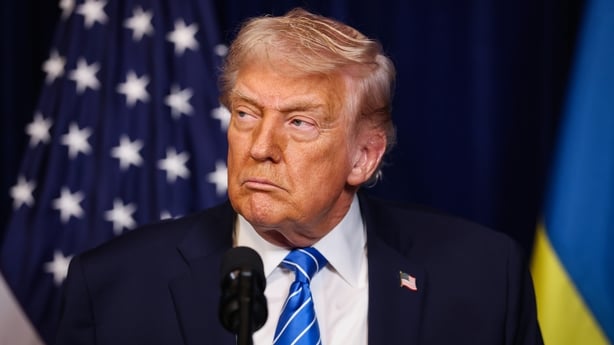
It is the inauguration of Donald Trump as US President last January.

The zeal with which he and his Republicans have torn up America's long established climate policies is a huge blow to global efforts to mitigate climate change.
On his first day back in office Mr Trump made a huge deal out of publicly signing an executive order to withdraw the United States from the Paris Climate Agreement.
He has repeatedly claimed climate change is a hoax.
His withdrawal from the Paris Agreement has substantially undermined trust in multilateral efforts so essential to tackling climate change.
It sent a very strong signal that any promises and commitments made by the biggest polluters and the richest countries can not be relied upon.
If the United States can change its position after every election, then all other countries become less willing to make painful concessions and commitments to decarbonise their economies and societies and reduce greenhouse gas emissions now.
This is a huge issue for developing countries, the so-called Global South, where population growth is strongest and the need for economic progress is desperate.
Many poorer African and Asian economies jump to mind.
They are constantly urged not to use cheap and easily available coal, oil and gas to power their economic development.
Instead, they are promised access to hundreds of billions, and possibly trillions of dollars, in annual climate finance from richer nations to enable them to by-pass fossil fuels and base their development and growth on alternative clean energy and decarbonisation projects.
Trust in such promises had already been undermined after the delivery of far smaller amounts of climate finance, promised in the 2015 Paris Climate Agreement, proved to be very slow in coming, extremely difficult to access, indebted the countries that accessed it, and came with significant strings attached.
US signals strong opposition to all climate action
But now the government of the richest and most powerful country in the world, has pulled out of the Paris Agreement, embraced Mr Trump’s "drill baby drill" oil exploration strategy, and signalled strong opposition to all climate action.
This hasn’t just blown a hole in the trust that is so important for effective multilateral climate action. It has obliterated it.
The United States is the country responsible for by far the greatest amount of human-induced greenhouse gases warming our atmosphere.
Historically it has burned the most fossil fuels. It has become richer and more powerful than any other country by doing so.
But the message Mr Trump sent to the world throughout 2025 was that his government doesn’t care about that.
Instead, it plans to promote the burning of fossil fuels at home and abroad for years to come.
It has torn up America’s climate policies and commitments, defunded climate agencies, cancelled federal support for clean energy projects.
Now, exiting the Paris Agreement means the US will not play its part in providing access to the climate finance previously promised to the rest of the world.
All of this had a huge impact at the COP30 Climate Negotiations at Belem in Brazil last November.
It created a very significant power gap in the negotiating process.
There were reports of American officials blocking participation and engagement in certain scientific meetings in the run up to COP30.
Some countries felt less pressure to agree harder transparency rules that would enable national climate action commitments to be properly checked for delivery.
No significant progress was made at COP30 on global climate finance commitments.
While the Brazilian COP30 Presidency openly lamented the US absence it was clear that fossil fuel aligned countries were emboldened and ensured no progress was made on the issue of a roadmap for transitioning away from fossil fuels.
Paris Climate Agreement under severe strain
What all this means is that the Paris Climate Agreement, the most important weapon the world has in the fight against climate change is under severe strain and will remain so throughout 2026.
It seems very unlikely that more ambitious targets to curtail greenhouse gas emissions can be agreed while President Trump is in power.
Without American involvement it is going to be very difficult to make meaningful progress when it comes to climate finance for poorer countries.
When the global climate negotiations (COP31) take place in Turkey in November this year, the core focus will have to shift away from climate finance and toughening up national climate action plans.
This is because it is so hard to make progress on such issues without American involvement.
Instead expect a far greater emphasis on climate adaptation than heretofore.
Climate adaptation is all about what countries need to do to protect people and infrastructure, health systems and economies from the devastating impact of climate change.
Of course, a greater focus on living with climate change is long overdue. So, it is a good thing.
The sad part is that it will happen because the Paris Climate Agreement with its global ambition to mitigate and slow the pace of climate change has been weakened, and even damaged, by the anti-climate policies aggressively pursued by US President Donald Trump in 2025.
And we are unlikely to see much change in any of that during 2026.