


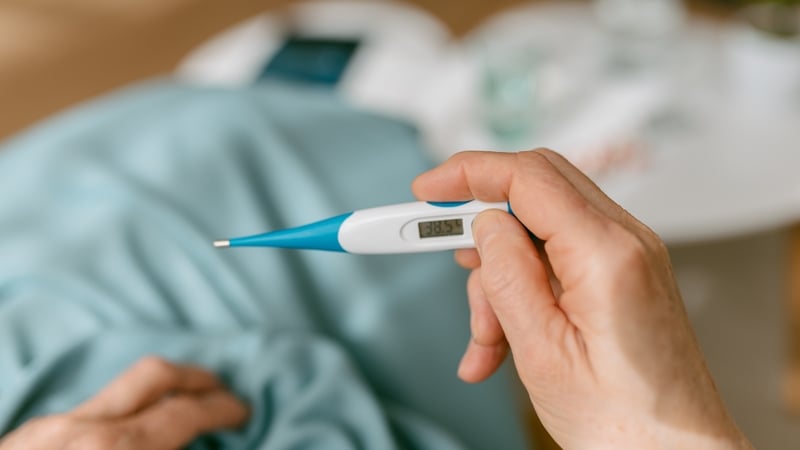
The chief clinical officer with the Health Service Executive has said despite flu season reaching its peak this week, ongoing pressures on services are expected to remain.
The HSE previously warned that cases of flu would peak during Christmas week due to gatherings, with particular concern for those aged under 14 and over 65.
A total of 677 people are in hospital with respiratory illness, which includes flu, Covid-19 and RSV.
Speaking on RTÉ's News At One Dr Colm Henry said: "What has happened though is the impact of these cases hasn’t translated through to the levels of harm we have seen in previous years and that conversion rate of cases out in the community through to people requiring hospitalisation because they are so sick hasn’t been as severe."
The HSE chief said this may well be an indicator of a relatively high-level of vaccine uptake in older groups as well as an end-to-end response in GPs, with extra clinics and senior decision making in hospitals and diagnostics also contributing.
"The effect of this really has been, thankfully, fewer trolleys and particularly, more importantly, reduced lengths of stay while people wait for admission, which can cause great harm for patients," he added.
Dr Henry said sometimes a peak is seen through January through other variations of the flu.
"It hasn't had the severe impact we feared earlier on in the flu season," he said.
We need your consent to load this rte-player contentWe use rte-player to manage extra content that can set cookies on your device and collect data about your activity. Please review their details and accept them to load the content.Manage Preferences
However, due to the expectation of ongoing pressures he is urging people to maintain vigilant, particularly people who are sick.
He is asking them to avoid contact with people who are vulnerable.
"It’s very late in the vaccine season but nevertheless it is not too late if people want to avail of the vaccines. We are still offering them through GPs and pharmacists," he said.
Dr Henry said those who are ill should consider the different ways to access healthcare.
This includes additional GP clinics, out of hours GPs and the local injury units that can see minor head injuries, fractures, burns, scrapes and other minor injuries.
On advice over New Year’s celebrations, Dr Henry said most people understand the difference between a cold and a flu, with the flu having much more severe symptoms.
"The advice we give to people is to take paracetamol, ibuprofen, lots of fluids, stay inside, stay at home, avoid contact with people who may be more vulnerable than you," he said.
"For those people who are vulnerable, who have underlying illness, chronic illness, or whose immune suppression isn’t working so well, to make early contact with the health services."
He said this was to "make sure they are getting the appropriate advice in the event that they deteriorate".
