
Up to 1,000 additional blood platelet donors are needed in the coming year to meet demand.
The Irish Blood Transfusion Service (IBTS) has said there are currently 2,000 regular donors who supply 24,000 platelet donations annually to patients.
''The donations saves lives because there is no substitue for platelets'' said Dr Andy Godfrey, Medical and Scientific Director, IBTS.
''If we don't get platetlets from donors then we can't support the healthcare in Ireland the way we need to.'' Dr Godfrey added.
Platelet transfusions are vital donations that are needed for heart surgery, organ transplants and bone marrow transplants. Doctors also need platelets for patients with blood disorders, critical or ill newborn babies and patients having surgery on burns.
The IBTS says a constant supply is needed and has encouraged more donors to sign up in the coming year.
Watch: Hundreds of additional blood platelet donors needed to meet demand
We need your consent to load this rte-player contentWe use rte-player to manage extra content that can set cookies on your device and collect data about your activity. Please review their details and accept them to load the content.Manage Preferences
''This is not just to relieve the pressure on the donors that we have but we do sometimes get requests for rare types of platelets for those that are matched to the patients that is going to be receiving them.
"The more donors we have the better the match we can make. We would like 3,000 or more donors ideally on our panel and we always need more blood and platelet donors,'' Dr Godfrey told RTÉ News.
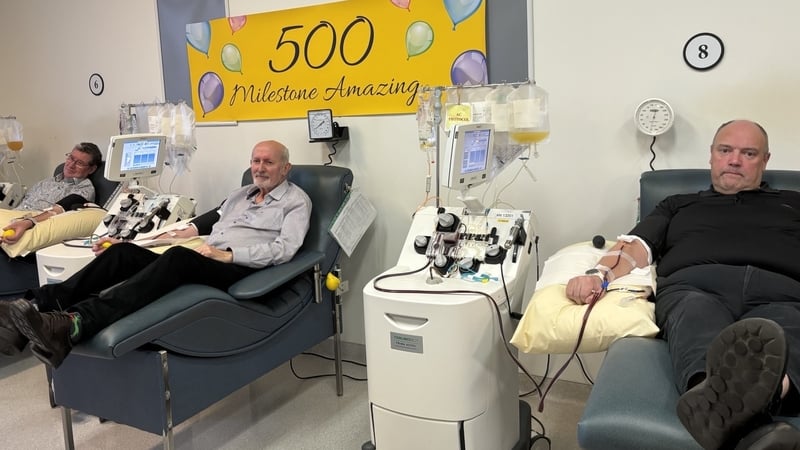
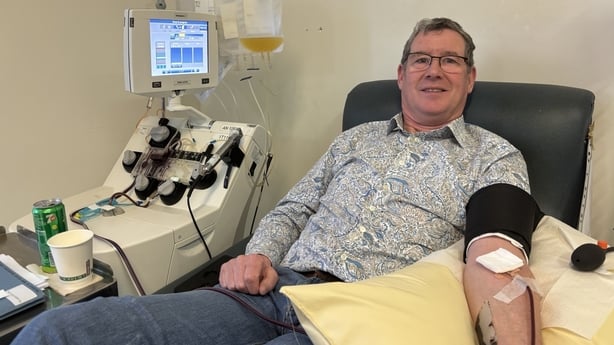
The process of giving platelets is slightly different to giving whole blood. As platelets are a component of blood, donors are connected to a machine that takes the whole blood, separates it, retains the platelets and returns the red cells and plasma back to the donor.
Not everyone is suitable to be a platelet donor
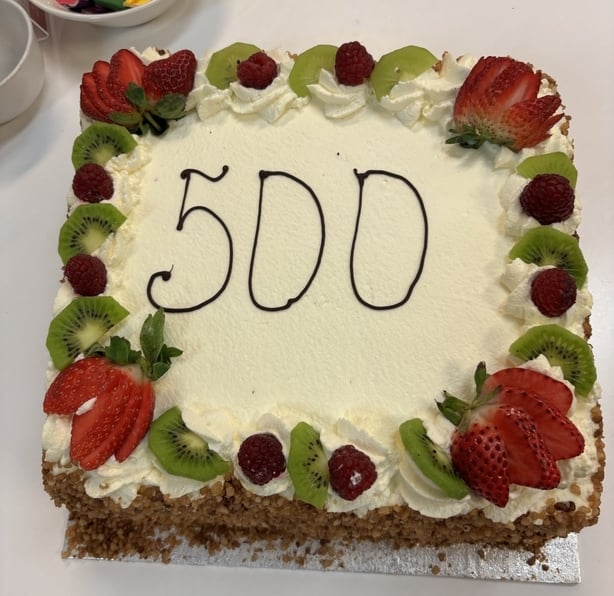
Three regular donors have been honoured for reaching their 500th platelet donation at the National Blood Centre in Dublin.
''You give platelets every month, which is a big commitment, because you're here every month to do it, whereas whole blood is every three months,'' said Paul McDunply from Portmarnock who has been giving blood since he was a teenager.
''Every now and again, it comes back to you how important it is as a life saving procedure. You know how important platelets are in saving lives. And that comes back to you, and it kind of gets you going again,'' Mr McDunphy said.
Garda Marcus Hand from Lucan in Dublin started giving blood in 1988 and transitioned to giving platetlets several years ago.
''There is a machine here that separates the platelets from the blood, and it's used for burn victims and cancer patients and for children as well,'' Mr Hand said.
Garda Hand said there is a ''sense of pride'' in reaching the milestone.
''You feel that you're helping people. And it's very easily done, you just come in, you get the needle in your arm for about an hour and the staff are fantastic.''
There are two collection centres in the country at the National Blood Centre at St James's Hospital in Dublin and another centre in Cork.
Platelets last just seven days and red cells last 35 days. This spurred on another donor, John O'Halloran from Co Offaly, to donate his platelets.
''It's a very rewarding thing because you are actually helping people,'' Mr O'Halloran said.
''There's a feel good factor and it's just my day out, I come up and do it. It is my getting away from work, getting away from business, whatever. Just to relax.''
Platelet donors are asked to donate every month, while whole blood donors can only donate every 90 days.
Doctors say that not everyone who is a blood donor is suitable to be a platelet donor.
When a member of the public registers to be a blood donor they can ask to be screened for platelets and medical staff will assess the donor's suitability.
Interested members of the public can also fill in a questionaire on the IBTS website to determine eligibility.