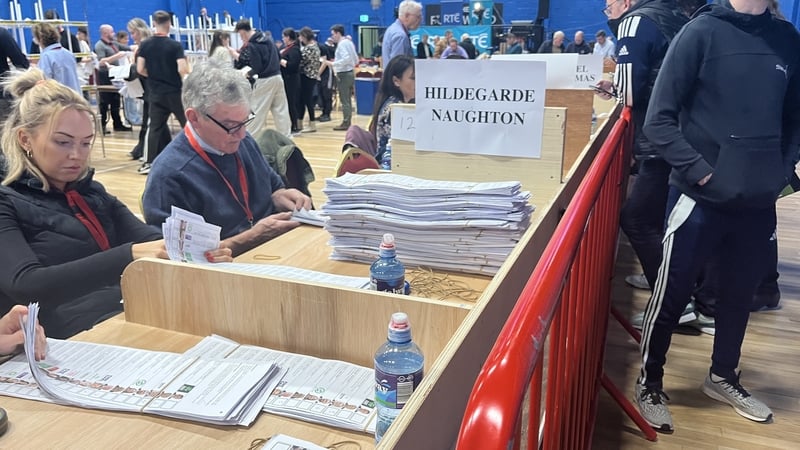

Next year's Galway West by-election should give an interesting snapshot of how a broad range of parties and individuals might be able to combine forces ahead of the next general election.
The writ for the poll, to fill the seat vacated by Catherine Connolly’s elevation to President, must be issued by early May.
At the time of writing, it's still far from clear who the potential candidates will be and whether lofty talk of a new left-wing dispensation in Irish politics will materialise as votes tumble out of the ballot boxes.
A degree of self, or party, sacrifice will be essential if that's to happen, and in the cut-throat world of electoral contests, it would be foolhardy to bet on things playing out that way. It didn't take long for the utopian idea of a united left candidate to evaporate after October’s election, with business as usual resuming soon afterwards.
And while by-elections are a different beast, with different permutations and different considerations, let’s play a seasonal parlour game, as we look at the lie of the land in this vast, five-seat constituency.
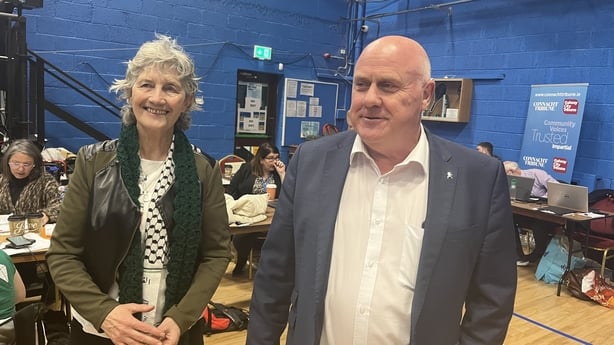
Taking in Galway city, Conamara, Oileáin Árann, Clifden, Oughterard and Maigh Cuilinn, it has a mixed population with some common concerns.
Those haven't shifted much since the last time voters went to the polls for a Dáil election, in November 2024.
Housing, living costs and the traffic gridlock that has become synonymous with the city, still loom large on the minds of those on the electoral register.
The population skews towards the main urban centre, meaning a city-based candidate has a probable head start on those based further west. But the absence of a Conamara resident in the Dáil at present is also a real issue for many voters.
Sinn Féin’s Mairéad Farrell topped the poll in the General Election and was elected on the 11th count, along with Catherine Connolly. Fianna Fáil’s John Connolly followed on the 12th count, before current Minister for Education Hildegarde Naughton was returned on Count 14.
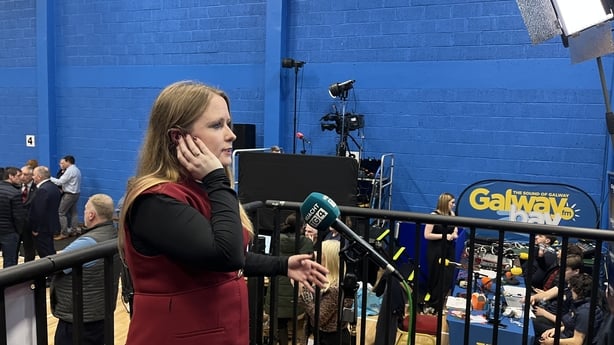
Her fellow Cabinet colleague, Minister of State and Independent TD Noel Grealish took the final seat, but not before being well rattled by the performance of Independent Ireland’s Noel Thomas.
The former Fianna Fáil councillor polled particularly well and remained in contention until the final count.
He was first out of the traps to declare for the by-election and will be hoping he can build on a solid base around his home patch of Maigh Cuillinn to put him in contention this time round.
He says the support he received in 2024 meant he had no option but to run again and that he’s doing so fully with the intent of winning the seat. To be in with any chance, it’s felt his party will have to develop a stronger presence in the city over the coming months, and hope to draw on this come polling day.
Labour will field city councillor Helen Ogbu. She also ran in the General Election but was far from being in the mix for a seat. It’s hard to see that changing in 2026. Her party’s fortunes here have tanked spectacularly since the days when Michael D Higgins was routinely returned here.
Green Party candidate Niall Murphy is in the same boat. The former councillor is highly unlikely to make a significant dent in the proceedings.
And the decision of Social Democrats councillor Alan Curran to sit this one out leaves that party with a dilemma. It plans to contest the by-election but it's not yet clear who it will field.
The Social Democrats’ standard bearer in the last General Election, Eibhlín Seoighthe, has left the party and now sits as an Independent on Galway City Council. She says she'll make a decision as to whether to contest the by-election in January.
After being heavily involved in the campaign to elect Catherine Connolly, Cllr Seoighthe was impressed by the cross-party momentum that was generated. But she says she's also been struck by how quickly political parties got back to normal in the aftermath of the presidential election.
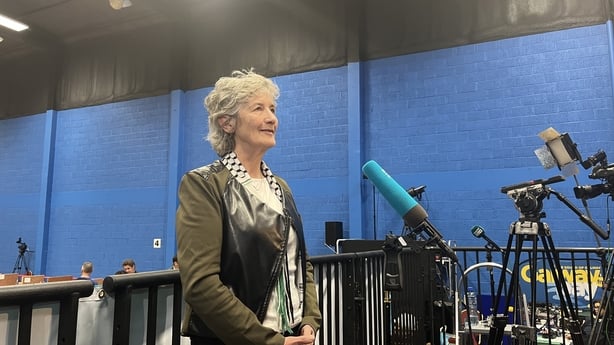
Sinn Féin will be hoping its candidate might capitalise on anti-government sentiment, bringing it a second seat in Galway West.
The party’s only councillor in the constituency, city-based Aisling Burke, won't seek the nomination when members gather in late January for their convention.
Former councillor and constituency chairperson Mark Lohan says Sinn Féin has a robust organisation locally and is excited about the opportunity presented by the by-election. But that hunger to win is complicated by a lack of an obvious candidate. Mr Lohan himself could be an option, but there’s also talk about the merits of putting forward a Conamara candidate instead.
Elsewhere, Independent Mike Cubbard may be in the frame as well. The current Mayor of Galway says he will make his intentions clear early in the new year. He has made no secret of his desire to move to the national stage and is likely to try and build on the 2,000 plus first preferences he garnered in the last General Election.
Independent county councillor Thomas Welby is also considered a likely participant.
The Oughterard politician is closely linked to Mr Grealish and would hope to capitalise on his colleague’s established support base across Galway West, if he were he to have a tilt in the by-election.
Fine Gael has historically struggled to hold two seats here, and difficulties for incumbent government parties in by-elections don't aid its case.
Similarly, Fianna Fáil is far past glory days of old in Galway West.
But of the two coalition partners, Fine Gael looks in better stead.
Speculation about its prospective ticket centres on former TD and sitting Senator Seán Kyne, with city councillors Eddie Hoare and Clodagh Higgins also mentioned.
The former might be best placed to capitalise in a crowded field, as an established presence, with constituency-wide recognition. But there is also merit in picking someone with a large urban base, in the densely populated western parts of Galway city.
The party will hold consultations in early January, before moving to the formal selection process in the weeks that follow.
At this stage, things are less clear for Fianna Fáil. Its candidate strategy in the last General Election saw broadcaster Gráinne Seoige run alongside John Connolly. She failed to generate momentum to put her in contention and won't be a candidate this time round.
Talk of former minister Éamon Ó Cuív returning to the fray has been discounted by the man himself and several other potentials have ruled themselves out too, giving the party something of a headache.
Oranmore-based councillor Cillian Keane is mentioned as a possible contender for the nomination, and there has even been talk of the party running a second candidate, from further west in the constituency.
That would be a bold and almost unheard of move. It's also understood to be getting a less than lukewarm response at national level.
Privately, many in Fianna Fáil suggest the by-election could work best as an exercise to blood someone, with an eye to the next general election.
The great unknown is what might happen out of the former Catherine Connolly camp. The President is obviously above the fray now but the organisation that backed her in Galway West over local, general and presidential elections, across more than 25 years, is still in place.
The former TD took almost 7,000 first preferences in 2024. The destination of those votes this time round will be key to the final outcome.
Sheila Garrity, who was centrally involved in President Connolly’s electoral efforts in Galway West over the last two decades, says a number of like-minded supporters have had a few meetings in recent months, to consider how they might be involved in the by-election.
That process might crystallise over the coming weeks and is one to watch.
With a scattering of niche right wing candidates, Aontú, People Before Profit-Solidarity and maybe a couple of single-issue independents in the mix too, the stage is set for a fascinating contest.
Could one of the coalition partners buck the age-old trend of government party fortunes in by-elections? Transfers between them would need to be rock solid for this to happen, but a strong first preference haul could put a Fianna Fáil or Fine Gael candidate in a good position.
With a recent combined share of between 35% and 40% of first preferences, this can’t be discounted.
Alternatively, could a centre ground independent capitalise by offering voters a chance to give the Government a bloody nose, by emphasising local concerns and attracting constituency-wide support?
Or is the safer bet one that sides with a 'candidate of the left' prevailing?
The parties that backed Catherine Connolly in the Presidential election, (Labour, Social Democrats, People Before Profit, Sinn Féin and the Green Party) secured almost 25% of first preferences here in 2024.
When President Connolly’s own votes are factored in, that figure rises to 36%. On those numbers, a united left candidate would have been well placed to lay foundations for wider gains come the next general election.
Instead, a looser 'vote left, transfer left' appeal to voters is likely.
An analysis of transfer patterns from the General Election shows potential scope in this regard.
Some 91% of People Before Profit votes went to left candidates.
64% of Green Party votes went the same way, followed by almost 66% of Labour preferences, before 68% of the Social Democrats bundle, when its candidate was eliminated.
Collectively, these helped push Mairéad Farrell and Catherine Connolly over the quota.
Events over the coming months will show if an 'esprit de corps' among the left candidates can firstly emerge, and then resonate with voters. If it does, we might have some indication of a template for the next general election.
Ultimately, this is a parlour game with no conclusion at present.
But it all makes for a captivating battle that will unfold over the first few months of the new year.