


Many of the big health issues that dominated this year have been with us for some considerable time.
A number are likely to be the subject of major inquiries and official reports in 2026.
Children's Spinal Surgery
For the first time in a very long period, Ireland will likely see a Tribunal of Inquiry next year on issues relating to spinal surgery in children.
The topic was one of the most dominant this year in health and the spotlight has been on Children's Health Ireland, which has responsibility for providing services for children and young people across the country.
Nine-year-old Harvey Morrison Sherratt had spina bifida and scoliosis and died in August this year.
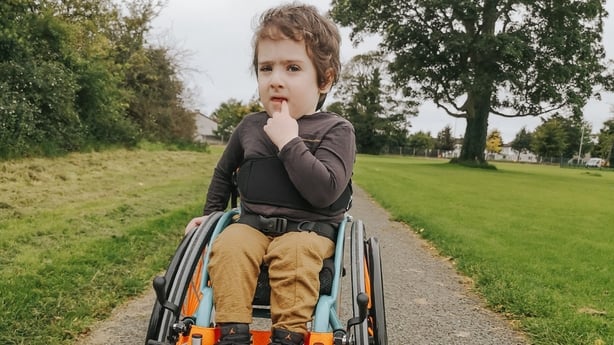
He had waited years for spinal surgery and had been taken off the waiting list, without the consent or knowledge of his parents Stephen and Gillian.
Harvey eventually had his operation in November 2024, when the curve in his spine had reached 130 degrees.
A whistleblower has recently made a disclosure alleging that Harvey was classified as a palliative patient and this may have contributed to him not being taken off the waiting list and operated on earlier.
The Government has agreed that a facilitator will help scope out the areas and terms of reference for a public inquiry into spinal issues next year.
This will be done in consultation with families and others involved.
Tribunals of Inquiry - with statutory powers to compel witnesses to attend and for documents to be produced - are relatively rare.
We have seen fewer of them in recent times, often due to concerns about the legal costs and how long they can run.
Interestingly, there have been two previous Tribunals of Inquiry covering health issues – both of which I covered.
The first was the Finlay Tribunal set up in 1996 to examine the infection of pregnant women with the Hepatitis C virus by the Blood Bank.
The second was the Lindsay Tribunal set up in June 1999 into the infection of haemophiliacs with HIV and Hepatitis C.
Children's Health Ireland will be at the centre of this inquiry.
The scope of it and terms of reference are to be worked out in consultation with families and others who will be involved.
Long waiting lists for spinal surgery remain despite some improvements.
The most recent figures for the end of October showed 223 patients on CHI spinal surgery waiting lists.
There were 446 spinal operations conducted this year up to the end of October, including operations done outside of the CHI, with some of these performed abroad.
Eventually CHI as a statutory entity will disappear after this lengthy period of controversy.
It is to be subsumed into the HSE by 2027 and legislation will be needed to allow for this.
Separately, the first part of an independent report by a UK expert is due early next year into aspects of orthopaedic surgery at Children's Health Ireland Temple Street.
This report was commissioned by the HSE from Mr Selvadurai Nayagam, Consultant in Orthopaedics & Trauma at the Royal Liverpool University & Children's Hospitals.
It is examining concerns identified by CHI relating to poor surgical outcomes in spinal surgery, the use of a certain spinal surgical technique and the use of unauthorised implantable devices.
The surgeon involved remains on leave.
New Children's Hospital
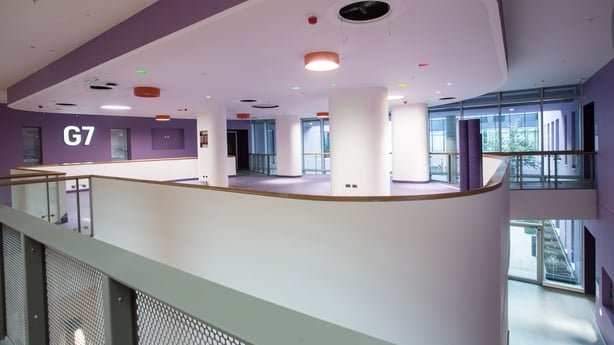
Will 2026 be the year that the new National Children's Hospital finally opens, after so many delays, cost overruns and political controversy about the best location?
The Minister for Health said she hopes patients will be in the new hospital by next Christmas.
During the year, the war of words between the State and the builders BAM escalated.
At one point, Minister for Health Jennifer Caroll MacNeill said that BAM was underusing funds for the hospital development and that they had significantly reduced the number of contractors on site.
This was challenged by BAM who said the project was over 99% complete.
It has been difficult for people to keep track of the project, with so many substantial completion dates missed and arguments on both sides as to what has been the cause.
It is likely that legal claims for extra costs will continue in the courts many years after the facility finally opens.
The current official Government approved budget for the project is €2.24 billion, but it is expected to be much greater than that. It had an original budget of €650 million.
Early access to the hospital is supposed to happen this month to begin the work of commissioning. That could take six to nine months but there are efforts to try and reduce this timescale.
A fresh date for the substantial completion of the new hospital is awaited and it will be sometime next year, after 16 target dates have been missed.
Commissioning will include getting equipment installed and calibrated, as well as hospital-wide cleaning after the completion of construction.
The new hospital will be effectively paperless and have full electronic health records.
It is possible some patients may be admitted late summer or autumn of 2026 but if the completion date and commissioning timescale drifted into winter next year, that could pose a clinical challenge in moving sick children during colder weather.
So potentially the full opening of the new hospital could be in 2027.
Overcrowding
Jennifer Carroll MacNeill began as the new Minister for Health last January.
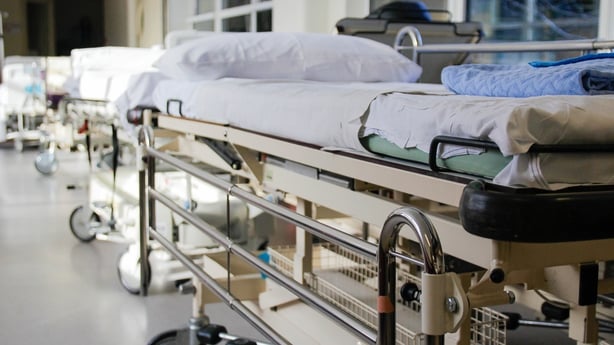
One of her early targets was reducing overcrowding and hospital trolleys.
Linked to this was a move to ensure the recent public only consultant contract was being implemented by having consultants rostered on Saturdays and having more senior decision makers around to help discharge patients and free up beds.
Overcrowding numbers have reduced in a number of hospitals and we have not seen the huge numbers yet normally associated with winter.
Trolley numbers have trended about 400-500 a day and sometimes less.
The Irish Nurses and Midwives Organisation said that 9,036 patients were treated on a trolley, chair, or in another inappropriate bed space in November.
It found that the highest trolley figures in the month were seen in: University Hospital Limerick, University Hospital Galway, Sligo University Hospital, Cork University Hospital and St Vincent's University Hospital.
Overcrowding at University Hospital Limerick has eased somewhat with the opening of the new 96-bed block in October.
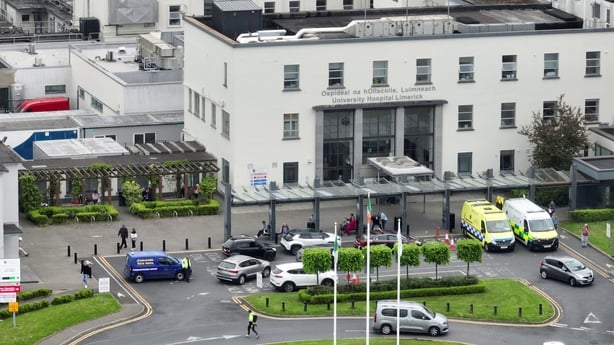
There has been much controversy about UHL, with inquests identifying missed opportunities in the cases of four women who died there since 2019.
UHL has said it is committed to providing the best possible care in the face of rising demand, in what is Ireland's busiest emergency department. It also says that on average, over 300 patients attend the emergency department each day.
A Government decision was made this month on foot of the recent HIQA report on acute services in the Mid-West, which suggested three options, including building a new hospital with a second emergency department.
The three elements are additional beds at the hospital site, a new building at a nearby site, and in the longer term a major new hospital with its own emergency department.
The Government decision is to progress all three.
However, it is very unclear how many years these changes will take, what it will cost, and where exactly the money will come from. The third option, building a new hospital with another emergency department all that entails, could take up to 10 years or more.
The recent increase in flu cases this winter season is having an impact on trolley numbers and admissions to hospitals. As people mix over the festive season, the flu case numbers are expected to rise, adding to existing pressures on hospitals.
Rising case numbers are being driven in particular by the newly emerged AH3N2 variant.
Overall, there appears to have been some progress on trolley numbers this year, however any sustained trend will take some time to establish.
The Minister for Health has indicated she wants to see the progress reflected evenly in all hospitals.
Evaluation of Ireland's handling of Covid-19
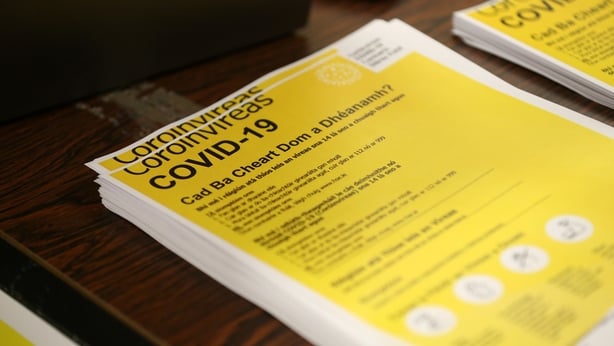
The Government established an independent evaluation late last year of how Ireland responded to the Covid-19 pandemic. It is chaired by Professor Anne Scott.
It opened a public consultation process in May and over 7,000 responses were received.
The terms of reference and progress of work can be viewed on the website covid19evaluation.ie.
The initial preliminary findings from the survey identified high levels of negative impacts across education & development, civil liberties, human rights and trust and mental health.
People also reported difficulty making ends meet during the pandemic.
The Evaluation Team says that early findings also suggest mental health strains overall were most linked with issues such as Covid-19 exposure and loneliness, or isolation.
It will be interesting to see what Ireland's evaluation establishes in terms of excess deaths during the pandemic, how lockdowns were decided upon and managed, and also how many lives may have been saved with the vaccination programme which began in late December 2020.
A recent report from the National Cancer Registry of Ireland found no evidence of a lasting impact on early cancer survival or mortality here due to the disruption caused by Covid-19.
This is not a public inquiry unlike the UK probe.
Some of the early official findings from the UK inquiry were summed up by its chairperson, Heather Hallett who said "too little, too late".
She found that 23,000 fewer people would have died in England during the first wave had the government introduced a lockdown one week earlier.
Overall, she found that the Government was underprepared for a pandemic, failed to grasp the significance of it and had a toxic and chaotic culture.
The UK inquiry has been going since 2022 and is likely to cost the taxpayer there up to £200m.
A report from the Irish inquiry is likely towards the end of next year and it should be an important study on the lessons for any future events of such magnitude.
