
It's that time of year again when the presents have all been opened, the traditional Christmas movies have all been watched, you've finally accepted you shouldn't have had that second plate of turkey, and - hopefully - the rows over what happened at Christmas dinner have all been forgotten, at least for now.
So, what better way to relax in the down days between Christmas and the New Year than by having a look back at previously hidden insights into what Ireland and the world was like 30 years ago.
Every January, the National Archives of Ireland releases tens of thousands of documents transferred to it by government departments, which showcase what was really going on behind the scenes in past generations. And every December, they give media outlets a sneak peak at what's on offer.
Known as the State Papers, the files include letters, communications, private briefing notes, secret government documents, fax messages and e-mails relating to stories that were known at the time and others that somehow didn't see the light of day until now.
The files are made public under two existing laws - the National Archives Act 1986, and the National Archives (Amendment) Act, 2018.
The 1986 law effectively says that once an official document is 30 years older or more, it must be released to the National Archives and therefore made publicly available.
This means that government files from 1995 will be released in the coming days, as well as some other files from earlier years which have either been misfiled over the years or relate in some way to incidents in 1995.
The 2018 law is slightly different, and was introduced in order to ensure that the Republic of Ireland's file releases kept pace with those of Britain during the sensitive paramilitary ceasefires, peace talks and eventual peace process era.
Under this second law, Anglo-Irish records relating to Northern Ireland can also be released if they are 20 years old or more, meaning files from up to 2005 can be made public.
Among the documents being released this year are those from the Department of the Taoiseach, Department of Foreign Affairs, Department of Justice, and the Office of the Attorney General, among others.
But enough of all that technical mumbo jumbo, let's talk about what you really want to know: what revelations are in the files this year. After all, nothing says Christmas more than a little bit of scandal being dragged up from the past.
As part of RTÉ's coverage of the files on our online, radio, social media and TV platforms, we will be publishing and broadcasting the most eye-catching stories from this year's State Papers haul over the next four days - Saturday, Sunday, Monday and Tuesday.
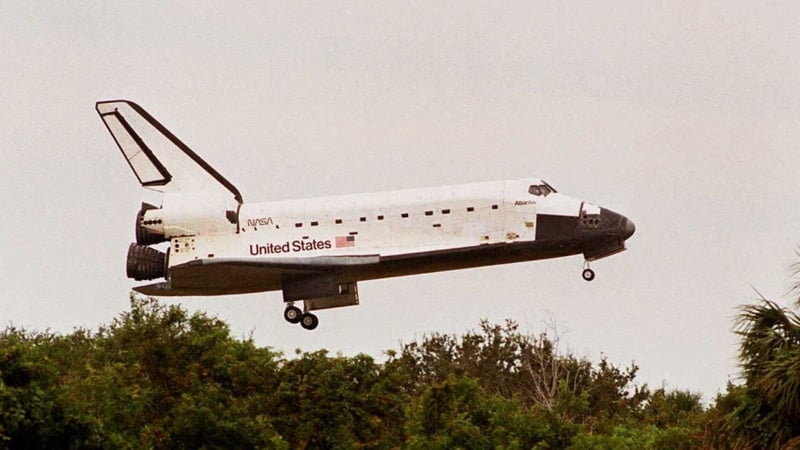
Among today's files under the 30-year rule are officials' somewhat panicked response to NASA's decision to "ask" Ireland to designate Shannon Airport as an emergency crash landing zone for the space shuttle (2025/124/266); US officials' reluctance for then US president Bill Clinton to shake Sinn Féin leader Gerry Adams' hand in 1995 (2025/115/827) as well as claims Mr Clinton's Irish heritage was "a fantasy" (2025/166/11; 2025/124/3; 2025/124/5; 2025/124/391); and a belief Princess Diana might try to "upstage" Prince Charles visit to Ireland with one of her own later in the year (2025/124/160).
Separately, today's 20-year rule Northern Ireland files include briefings on how British officials believed the "top man" behind the Northern Bank robbery was "too clever" to be caught (2025/127/90); discrimination concerns over British plans to introduce ID cards in Northern Ireland (2025/125/161); and a previously unknown diplomatic incident after musician Christy Moore was locked in a room during questioning while travelling to England (2025/127/1).
Further file releases relating to the divorce referendum, paramilitary activity, spying, World Cup tickets, the Lansdowne Road riot, Stakeknife, the late 1994 collapse of the Fianna Fáil-Labour government and how Ireland became embroiled in an international row over a panda (no, we're not kidding) will be reported on over the coming days.
And importantly for anyone out there who wants to see the records for themselves, we have good news:
All stories include the folio number relating to each file they are based on.
This means that when the archives are formally made available for public inspection at the National Archives offices in Bishop Street, Dublin 8, from Friday 2 January, you will be able to see the original notes, scribbles and in some cases poorly chosen words for yourself.
Provided, of course, you have applied for a reader's ticket from the archives office itself and agree to act within the rules and conditions (don't worry, they're friendly and it's painless).
Happy hunting.