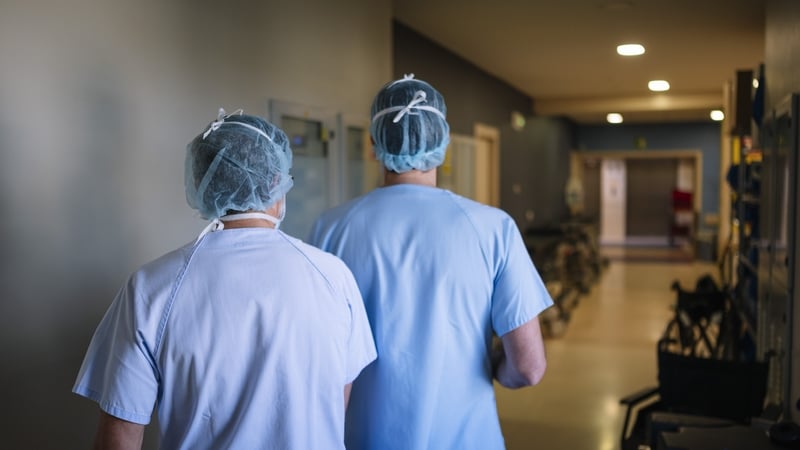

While many families will sit down for Christmas festivities, whether it is the traditional dinner, the movies or television specials and even some board games, there are thousands who will be short at least one member for a portion of the day, as they work in the country’s hospitals.
Thousands of doctors, nurses, midwives, paramedics, chefs, laboratory attendants, chaplains and support staff are on hand throughout the day, with more making themselves available on-call when needed.
They give up spending time with their own family, so they can help the families of loved ones who need hospital treatment on the day, whether it is for a sudden illness, regular treatment such as dialysis or for the arrival of a new baby in one of the maternity hospitals.
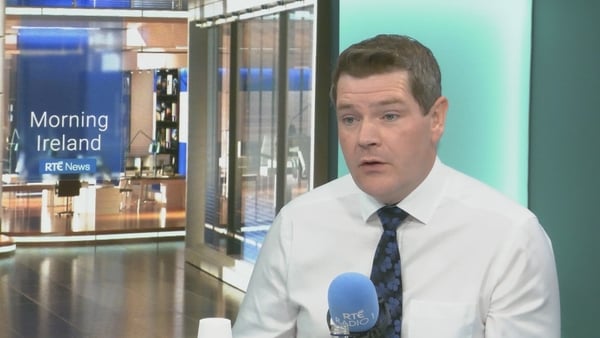
Dr Frank Ward, nephrology and general medicine consultant at Tallaght University Hospital in Dublin, is one of the thousands who will be working on Christmas Day.
"There is a sacrifice for the staff to be there, obviously, to look after those patients, but really there's a lot of solace in supporting those patients during that time when they're sick in hospital and in need," he told RTÉ's Morning Ireland.
He added: "There's a camaraderie around the hospital. It’s like a second family, even if the healthcare workers can't be at home with their own families for that period of time.
We need your consent to load this rte-player contentWe use rte-player to manage extra content that can set cookies on your device and collect data about your activity. Please review their details and accept them to load the content.Manage Preferences
"There's lots of activities going around the hospital. Simple things from boxes of chocolates on the wards to the Christmas tree competition that runs between the wards - there's a nice atmosphere around the hospital."
Dr Ward said the level of required care levels remain the same across the board, which for some patients can be quite difficult.
"Some may be quite well but just aren't in a position to get home. Others are very sick and like every other time of the year, they're patients who are getting their end-of-life care," he said.
"For many patients around Christmas Day and the holidays, they may have plenty of visitors, families, friends calling in if they're in the vicinity.
"But there are many who don't have anyone calling in and really their interaction with the other patients and their interaction with the healthcare staff is really probably what helps get them through the holiday period."
'The babies don't know that it's Christmas'
Clare Smyth, Clinical Midwife at The Coombe Hospital in Dublin, works on Christmas Day every second year and has done so since she started working in healthcare in 1998.
"I put on Paul Brady's song [Working At Christmas]. That's my personal Christmas tradition driving up the road, coming into work," she said.
She says she would rather be at home; however, she acknowledges it’s just part of her job.
"It is magic. Babies are deadly. They're just deadly"
"You'd prefer to be at home with Santy coming to your own kids, instead of trucking up the road to do 12 hours in work," she added.
"At the same time, you have to be here. The babies don't know that it's Christmas."
She has children of her own, adding it has got easier to work on Christmas Day as they have got older.
"They're much more understanding of what I do and when I have to do it," said Ms Smyth.
"When they were little, it's hard to explain to a small Santy-recipient that mam has to go and mind the other babies now and that's not easy."
She adds that working in a maternity hospital for Christmas does have its upsides.
"It is magic. Babies are deadly. They're just deadly.
"They make you earn parenthood but they're magic, and everybody is in good humour because we're all trying to be as positive as possible because we have to be in work on Christmas."
"You see a wonderful sense of generosity, a wonderful sense of giving, which is really what the Christmas message is about"
Staying in hospital over Christmas can be a difficult time for patients and families, and especially for those who are in end-of-life care.
"To be sitting at the bedside where a patient is dying, or when a patient has died on Christmas Day, it does affect you," said Father John Kelly, healthcare chaplain at Tallaght University Hospital.
"I will be recalling many patients that I've journeyed with, worked with over the years and their family members.
"You couldn't but be touched because it is a significant day and I think of those families very often," he added.
He says one of the heartwarming aspects of Christmas Day, which he has worked for 25 of the last 26 years, is how the staff are to patients who might not have a family or support network.
"They will bring in gifts for the patients and, on occasion, I've seen staff bring in washing for patients who may have nobody to visit them, nobody to be there for them on Christmas Day," he says.
"You see a wonderful sense of generosity, a wonderful sense of giving, which is really what the Christmas message is about."