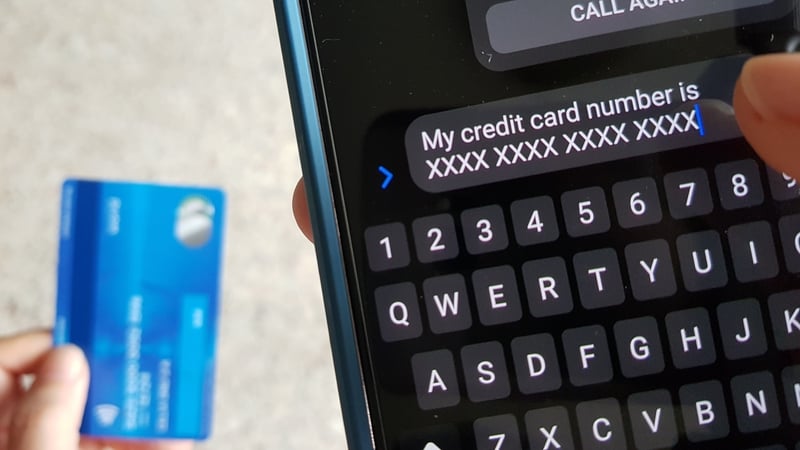

Bank customers are being warned to be vigilant of increasingly sophisticated scams circulating this Christmas.
In some cases, scammers are using real recordings from some of the pillar banks' existing contact lines and using them to try and convince customers - who are prompted to call the numbers via text messages - that they are legitimate in a bid to get them to give over personal financial details that can be used to defraud them.
Like many of the scams going around, the jumping-off point is usually a text message you receive on your phone, with this particular one purporting to be from a bank.
I've seen different versions. In some cases, the scammers pretend to be from PTSB, other times it's Bank of Ireland, and also AIB.

The content of the text message is the same each time, warning that a transaction to Tesco on your bank card has been declined and the card has been placed on hold.
It says "contact us immediately if it wasn't you" and a phone number is provided.
This is a common scam tactic; creating a sense of urgency, with the hope people don't think properly about what they're doing and potentially making them more vulnerable.
The advice is not to call these numbers. Any suspected scam message should be reported to your bank or even gardaí and should then be deleted.
If you make the call, you're letting the scammers know your number is active and it can be sold on to other scammers as such, and you could even get more scam messages and calls.
We need your consent to load this rte-player contentWe use rte-player to manage extra content that can set cookies on your device and collect data about your activity. Please review their details and accept them to load the content.Manage Preferences
But as I'm researching scams - and as I was curious - I made the call (recording the call without the knowledge of the scammer).
The first thing that stood out was the sophistication. The number I called was pretending to be from PTSB.
You hear a welcome message at the start from the bank (that's been copied directly from a PTSB customer phone line), so it can sound legitimate from the outset.
Then when you get through to a human, they also sound quite convincing.
'How can I help?'
My scammer called himself 'Adam' and he had an Irish accent. He reassuringly opened up with "How can I help?".
I explained that I received a text message warning me of an attempt to use my bank card.
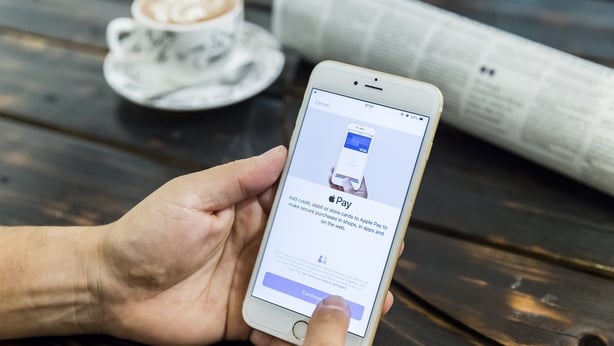
Before I handed over any personal details, Adam told me "we did find activity on your card ... there was a declined transaction for €137.50 at Tesco. So we do believe that your card was added to an Apple Pay".
My scammer even seemed curious as to how this might have happened. "Have you clicked on any suspicious links, or have you used a public Wi-Fi network while logging into your online banking?".
However, I was told "they don't have your card details ... they only have the Apple Pay, but they logged into your application, so we are going to remove the Apple Pay manually and then I am going to remove the hold".
In case you're unsure, all of what 'Adam' was spouting is nonsense - it's just a tactic to make me think my money is compromised and that I need to act.
"Do you have the card to hand and I'll remove it manually," he asks.
When I challenge him by asking "Do you not have those details on file already?", he doesn't miss a beat and replies "We only have the last four digits".
I ask him to confirm that he is from PTSB and also where he is based.
He says he is from the bank and that they are located in Smithfield in Dublin (PTSB later confirmed to me they have no office in Smithfield).
At this point I decide to end the charade, mainly because I have no card details to provide 'Adam' with - and also because I wasn't even sure how to guess any PTSB card details (I'm not a customer of the bank).
A short time after the call, a colleague sent me a screenshot of a text they received with the same scam message, although this one purported to be from AIB (it wasn't) and it was a different phone number.
So, to further my research I called the number.
This time I was greeted by a pre-recorded AIB message, which the scammers likely recorded and copied by calling a legitimate AIB customer line.
I spoke with a woman calling herself 'Samantha' who went through the same spiel as 'Adam' and was equally as reassuring and confident.
She even put me on hold at the beginning of our interaction. "Give me two seconds sir. Please stay on the line."
"It's a game of cat and mouse"
When she returned, I was asked for my name, phone number, and my Open24 number (this is a PTSB term and nothing to do with AIB). This was all being done to "go through some security checks," I was told.
I got a confusing response when I asked Samantha if she was located in Ireland. "Yes sir, we are across all borders of all branches."
At this point I told Samantha I was a journalist researching scams and asked if she had any response to banks confirming to me that her phone number was not a legitimate contact line associated with any of them.
The call abruptly ended.
Financial scams like this are a growing problem for banks and their customers.
Figures earlier this year from the Central Bank showed €160 million in fraudulent payments were made in 2024, which was a 25% jump on the previous year.
Banks are investing a lot of time and money to combat them, but it's a tricky task with new ones cropping up all the time.
We need your consent to load this rte-player contentWe use rte-player to manage extra content that can set cookies on your device and collect data about your activity. Please review their details and accept them to load the content.Manage Preferences
'A game of cat and mouse'
Chief Operations Officer with PTSB Peter Vance said "it's a game of cat and mouse".
To illustrate this point, PTSB managed to have the phone number I called 'Adam' on blocked, but the scammers just moved to a new number (eg, the one I later called 'Samantha' on).
Though technology is helping to counter scammers, and PTSB says it's seeing strong results with its 'PTSB Protect' initiative.
When enabled on a mobile device, PTSB Protect aims to identify and flag any incoming potentially risky texts or fraudulent websites that are known to the bank.
According to Mr Vance, it's led to a "significant reduction in the number of customers clicking those (dodgy) links to the tune of 80%, and led to a 64% reduction in account exposure.
"We've also introduced a new enhancement to PTSB Protect whereby we can actually identify fake fraudulent numbers that are contained in text messages."
He added that Christmas is a busy time for the bank's fraud team, which received over 100 calls last year around this time.
The PTSB COO also points out that "we will only ever ring you from one particular number and you should only ever contact the fraud number that is available on our website".
Watch: Bank customers urged to stay vigilant amid ongoing calls from scammers
Act quickly to get your money back – BPFI
If you're unlucky enough to be scammed, the best chance of getting your money back is to act quickly.
That starts with reporting it to your bank right away. They deal with these situations all the time, so if they know quickly, they might be able to stop it.
"Don't click on the link if you think you've fallen victim to it. The first thing you need to do is call your bank by using the number on the back of your card"
Head of Financial Crime with the Banking & Payments Federation Ireland Niamh Davenport says that "especially with card payments, you're quite likely to get your money back, but you really do need to act quickly.
"If you think you've fallen victim, contact your bank".
Ms Davenport also said BPFI has "seen a change in the last number of months" where more scam texts originate from mobile numbers.
"Your bank is not going to text you from a mobile number, and if there's a link in it or if it's asking you for personal information - that's a complete red flag.
"Don't click on the link if you think you've fallen victim to it. The first thing you need to do is call your bank by using the number on the back of your card.
"Don't ever use contact details that are in the actual communication itself," she adds.
Another way of checking out weblinks you think may be scams is via the scamchecker.ie website.
Some banks have also called for the introduction of a law to allow a text-message scam filter to be deployed, which would help stop such fraud attempts before they happen.
Such a filter would operate like an email spam filter by detecting and blocking dangerous links or content.
Finally, it's worth noting that scam victims are dealt with on a case-by-case basis by banks, so depending on how it happens and how promptly it's reported, you could get some or all of your money back if you've been scammed.