


Morgan Stanley is emerging as a leading contender for a key role in SpaceX's blockbuster initial public offering, as the bank's close ties to CEO Elon Musk give it an edge in his decision, according to three people familiar with the matter.
A selection process, or "bake-off," for the IPO is still underway, with a select group of banks, including Morgan Stanley, Goldman Sachs and JPMorgan, vying for roles, four people familiar with the matter said.
Though there is no certainty Morgan Stanley will secure the coveted "lead left" underwriting position, the sources said.
Musk's ties to Morgan Stanley run deep, dating back at least 15 years, leaving it widely viewed as the leading contender to run the syndicate of underwriters, three of the people said, though no banks have been selected yet and the discussions remain fluid.
The sources spoke on condition of anonymity because the discussions are confidential. Morgan Stanley, Goldman Sachs and JPMorgan declined to comment, while SpaceX did not respond to a request for comment.
SpaceX is one of the world's largest private companies and its potential IPO would be highly complex. While Musk has not yet picked the lead banks, a decision could come before the end of the year, with the full syndicate likely to be finalised afterward, two of the people added.
The people cautioned that while plans are progressing, the IPO remains contingent on market conditions, and SpaceX could choose to delay or abandon the offering altogether.
Morgan Stanley, which has advised Musk for years, was among the banks that took Tesla public in 2010, alongside Goldman Sachs, the lead left, JPMorgan and Deutsche Bank. Morgan Stanley later advised Musk and led the financing for his 2022 acquisition of Twitter, now X.
Musk recently tapped one of his Morgan Stanley bankers on that deal, Anthony Armstrong, to become chief financial officer of his artificial intelligence venture xAI. The connection runs even deeper through Musk’s family office in Austin, Texas. Another former Morgan Stanley banker who advised Musk on various Wall Street dealings over the years, Jared Birchall, built and runs Excession, which manages his personal assets, Reuters previously reported.
In a staff memo sent last week, SpaceX Chief Financial Officer Bret Johnsen informed staff that the company was preparing for a public offering in 2026.
"Whether it actually happens, when it happens, and at what valuation are still highly uncertain, but the thinking is that if we execute brilliantly and the markets cooperate, a public offering could raise a significant amount of capital," Johnsen wrote.
Reuters has previously reported that SpaceX is seeking to raise more than $25 billion in an IPO that could come next year, a sum that would make it one of the biggest public listings ever globally.
The decision to go public caught some by surprise, given SpaceX's status as one of the world's largest private companies. While Musk has long expressed a preference for keeping SpaceX private, people familiar with his thinking indicated that the company’s growing valuation and the success of its Starlink satellite-internet service have prompted a shift in strategy.
SpaceX, long known for its dominant rocket launch business, has become the world's largest satellite operator through Starlink, a network of nearly 10,000 satellites beaming broadband internet to consumers, governments and enterprise customers.
While there had been previous speculation about Starlink going public on its own, these people say the IPO could include both businesses, though the plans remain subject to change.
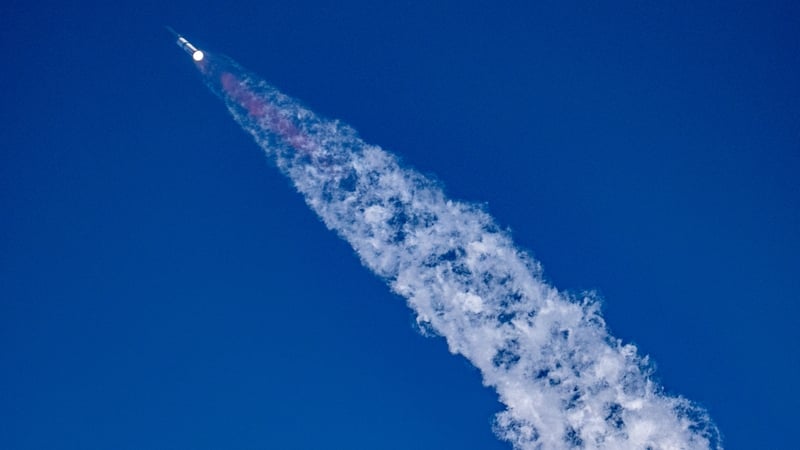
SpaceX, Johnsen wrote in his email, would use the capital raised from an IPO to increase the flight rate of its next-generation Starship rocket under development and deploy AI data centers in space, an effort complementary to its Starlink business that would more closely tie the company to the AI boom.
The company would also build "Moonbase Alpha," a base on the lunar surface that Musk has mentioned. SpaceX is a core contractor in NASA's Artemis moon programme with a $4 billion contract to land astronauts on the lunar surface using Starship.
Sending humans and robots to Mars has been Musk's long-held vision for SpaceX, with revenues from Starlink contributing to development of Starship, which is also envisioned to serve as a Mars transportation system. Musk, during his stint as a government efficiency czar with US President Donald Trump, had pushed for a greater American focus on Mars and advocated for a former associate, Jared Isaacman, to lead NASA. Isaacman became NASA chief on Tuesday.
Starlink remains SpaceX's top revenue-generating business.The company is expanding the satellite network into the wireless market with Starlink Mobile, which it trademarked in October.
