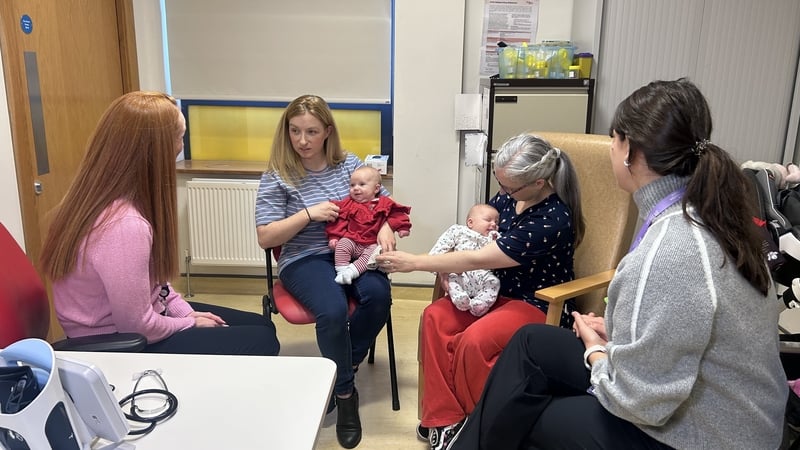

Dublin's maternity hospitals have begun operating postnatal hubs in the Greater Dublin Area to help reduce the number of visits new mothers have to make into city centre hospitals.
The Coombe began operating services in southwest Dublin and Kildare in recent weeks, with Holles Street and the Rotunda due to open hubs in other parts of Dublin and Wicklow in the coming weeks.
The five postnatal hubs established by the Coombe in Celbridge, Newbridge, Tallaght, Crumlin and Clondalkin provide midwifery-led postnatal care for six weeks after birth, including scheduled appointments, drop-in appointments, group support and education sessions and access to women's health physiotherapy for up to six months.
The Rotunda and Holles Street will open similar hubs in parts of Dublin and Wicklow in the coming weeks, with the latter hospital due to open postnatal hubs in Shankill, Arklow and Wicklow in early 2026.
The hubs will offer supports to mothers for issues such as feeding, wounds and baby weight and are designed to prevent women having to travel into the capital’s city centre hospitals in the weeks after they have given birth.
Twins Brenda Maye and Yvonne Byrne from Kildare, who gave birth to their baby girls Réaltín and Gráinne just one week apart, have been among the first to avail of the services of the Coombe's postnatal hub in Newbridge.
Brenda from Kilcullen, who has two other children, said she finds attending the postnatal hub amazing.
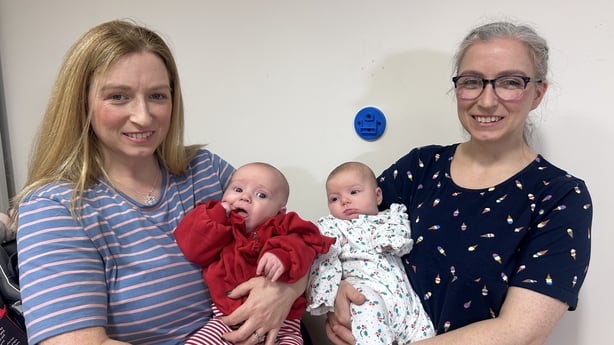
"I don't have to go into The Coombe for anything, which is brilliant, because as we know, parking at The Coombe isn't great, getting into town and traffic and all that, with the little baby feeding on demand, you have to stop when she needs to stop. So being here is much easier."
Her twin Yvonne who lives in Newbridge, and also has two children, said having the facility nearby relieves a lot of pressure post partum.
"The difference between ten minutes down the road versus the three or four hours it takes to go up to Dublin, do the meet up and then come back and having to get the other kids minded and all that kind of thing.
"Last week I didn't have anybody to look after my older two. There was no problem, you just brought them with you. It was brilliant."
Clinical Midwife Manager at Newbridge Postnal Hub Nessa O'Malley said the hubs are designed to ease the pressure on the hospitals’ emergency departments and reduce waiting times for follow up appointments post birth.
"Going back into the hospital sometimes can be daunting, because there's long waiting times in the hospital and there's a huge amount of people accessing the hospital.
"We're closer to the women, we're here consistently, on a weekly basis, so they can access drop-in appointments and schedule appointments, they can self refer to us.
"And we have a time set in each hub where they can just turn up and get a postnatal check for themselves and their babies as well."
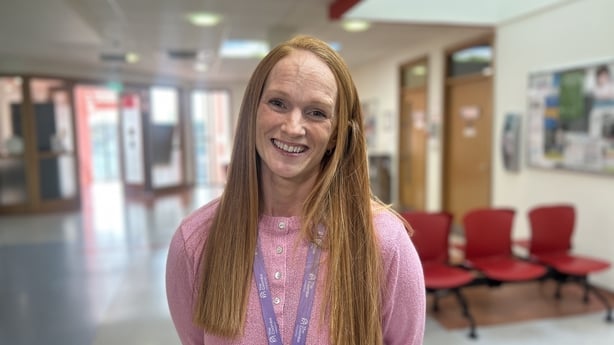
The expansion of the Community Midwifery Scheme comes as the Coombe's service celebrates 25 years in operation.
Hope Courtney, who has worked as a Community Midwife in West Dublin for the past year and a half, said the prenatal clinics and home visits that the service already carries out, foster a strong connection between mothers and midwives
"The Community Midwife Service is community based care for a lower risk and uncomplicated pregnancies. We cover a lot of areas of Dublin.
"We have a clinic in Dublin 12, in Tallaght, in Lucan and areas of Kildare like Celbridge, Naas and Newbridge, to try and make care more community based and more local for women.
"I do find that people can share more with you about kind of their personal life, other things in pregnancy and concerns, worries.
"People heal better at home, people recover better at home, there's less pressure than in the hospital.
"We can give them a little bit more one-on-one time than you might be able to give them on a postnatal ward, because your time with them is your time with them, you don't need to get called away, you don't have to do anything else.
"So the 45 minutes to an hour that I'm in somebody's house is the time that I'm there. It's more personalized care, and more specific for their needs."
Teacher Áine Walsh from Lucan in Co Dublin received a visit from Hope Courtney just days after her second child Dearbhla entered the world.
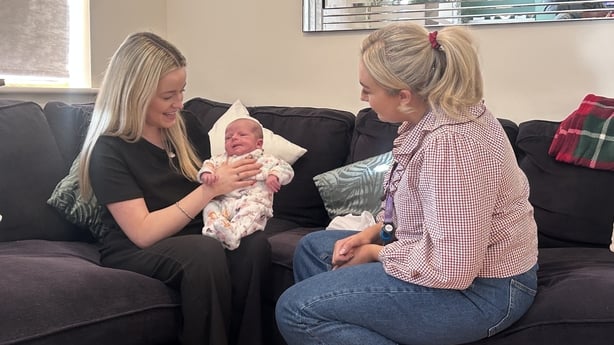
She said being cared for locally has made a big difference, in particular for this pregnancy and birth, where she is also caring for her three-year-old Cuan.
"Being able to link in with the same midwife, every appointment was so nice and I suppose we were able to kind of build up that rapport together.
"Any kind of issues, anxieties that I had, I didn't have to rehash at every appointment. Hope understood the kind of things that I was hoping to achieve with this birth and she was able to boost my confidence and keep me positive about everything as we were going along.
"I think that's invaluable when you are going through something like pregnancy and childbirth, because it is such a personal thing.
"I was able to stay very close to home for all of my appointments. I didn't have to be going in and out of the Coombe, only for those really important scans and things like that.
"Then when Dearbhla arrived, we were able to get home within 24 hours, and I had the confidence to know that I had a midwife coming to me for three days after we got home."