"Ground zero for the impact of budget cuts" - that's how UN Secretary-General António Guterres has described the situation in Cox’s Bazar, the world’s largest refugee camp.
With the Trump administration continuing to slash humanitarian budgets, the Rohingya refugees are facing an aid funding shortfall of 50% this year - leaving the already-vulnerable population at further risk.
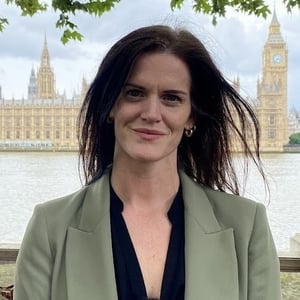
Reporter Kate Varley and cameraman Bram Verbeke visited Cox’s Bazar in Bangladesh to find out more about the potential impact of the cuts.
Ahshiya Begum is seven months old but weighs just 4.7 kilograms - little more than an average one-month-old in Ireland.
She is one of a significant number of infants classed as 'severely malnourished' in Cox's Bazar, Bangladesh, where young lives are shaped by forces far beyond their control.
Ahshiya’s 21-year-old mother Sajida Begum tells us she was forced to flee her homeland in neighbouring Myanmar after the military attacked her village and burned down her home.
Now she struggles to provide adequate care for her daughter in the camp, as Sajida herself has HIV, diabetes and dengue fever - a viral infection transmitted by mosquitoes.
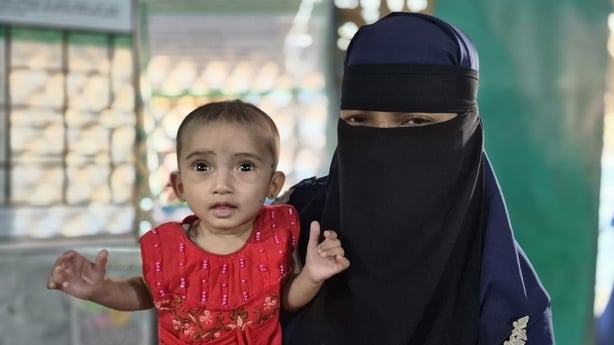
In recent weeks, Ahshiya has gradually started to gain weight thanks to support she's been receiving at a nutrition centre run by Irish NGO, Concern Worldwide. For her grateful mother, it is a much-welcomed lifeline.
Yet this vital lifeline is now under threat.
'Ground zero' for aid cuts
Since returning to office last January, US President Donald Trump has dramatically slashed humanitarian budgets.
His administration has also effectively dismantled the US Agency for International Development (USAID), which funded the majority of humanitarian and development assistance worldwide.
And while the US is the largest player, it is not alone. The UK and France are among a number of European nations that have also announced plans to reduce overseas aid.
For the Rohingya, trapped in the world's largest refugee camp and entirely dependent on aid, the cuts could be catastrophic.
This year alone, they are facing an aid funding shortfall of 50%.
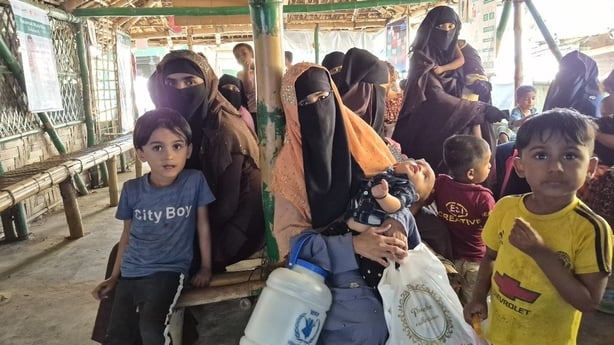
It is why UN Secretary-General is António Guterres has described Cox's Bazar as "ground zero" for the impact of these cuts, warning of a looming humanitarian disaster if immediate action is not taken.
Already, UNICEF has reported an 11% rise in the number of children with acute malnutrition between January and September this year.
And it could be about to get a lot worse: the World Food Programme has warned that it may be forced to cut food rations from $12.50 (€10.60) to $6 (€5.10) per person, per month.
"(We are bracing for a) high rate of malnutrition to appear that will lead to the death of the young children," said Sheikh Shahed Rahman, the Programme Director of Concern Worldwide in Bangladesh.
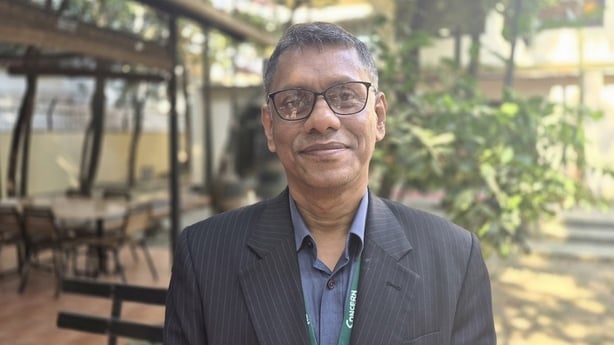
He cautioned that it would also likely impact "the service we are expecting to deliver to the pregnant and breastfeeding mothers."
UNICEF: 300,000 could be without education
Education too is being affected. UNICEF has warned that as many as 300,000 children in Cox's Bazar could be without access to any learning services next year.
For 13-year-old Nur Hares, who enjoys reading "history and books", the budget cuts would be devastating.
He has big ambitions for his future, which include becoming a "pilot, teacher and engineer".
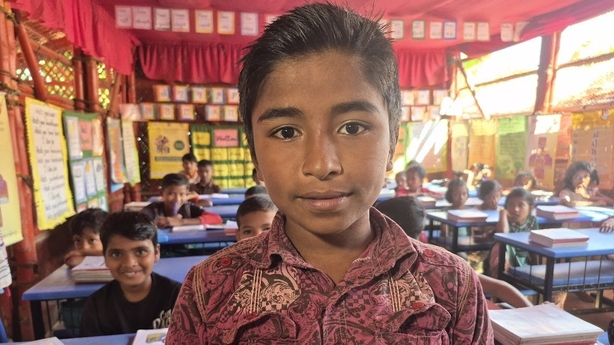
However, his school is only funded up until 31 December.
"We know it is hard for all of the UN agencies, we are downsizing dramatically because we just don't have the funding for the staff," acknowledged UNICEF’s representative to Bangladesh, Rana Flowers.
She also addressed some of the protection risks to children if schools are closed.
"It's not just child marriage that we're seeing," she said. "Child recruitment within the camps is something that we're very concerned about."
"School protects the kids from that, because they are occupied," she added.
Read more: Trapped and traumatised: Inside the world's largest refugee camp