
A joint statement signed by Ireland and more than 20 other European nations has called for adjustments to the European Convention on Human Rights to better address the challenges of migration.
It follows a meeting of ministers at the Council of Europe in Strasbourg, where member states agreed to look at how the ECHR is applied in a way that will "will recognise government's fundamental responsibility to safeguard national vital interests such as security and public safety."
The 75-year old agreement, which was signed in the wake of World War II, aims to protect human rights and political freedoms in law throughout Europe.
However, in recent years it has come under mounting criticism from some member states.
The UK and Denmark in particular have argued that the convention and rulings of the European Court of Human Rights are acting as a brake in the fight against illegal migration.
Now Ireland has joined the calls for the text to be modernised.
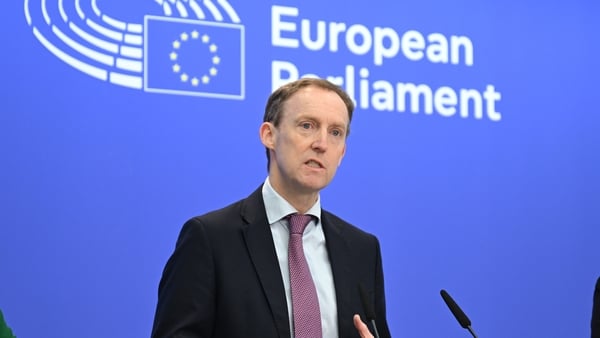
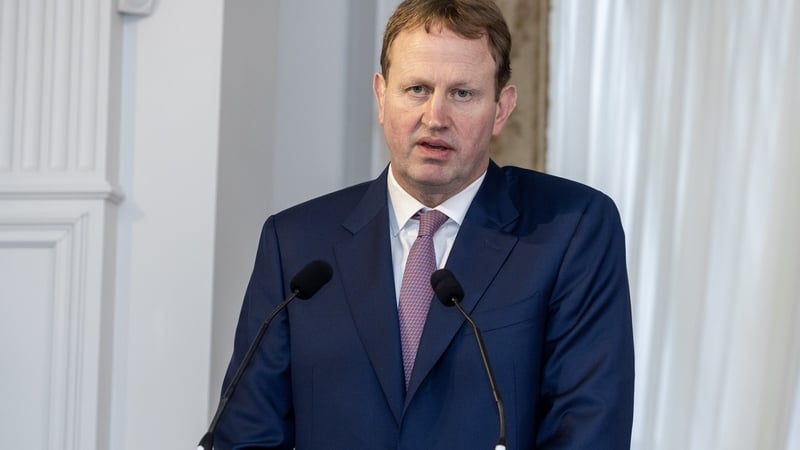
Addressing the summit, Minister for Justice, Home Affairs and Migration Jim O'Callaghan said: "We share the concerns expressed by our Danish colleague on behalf of a number of member state, Ireland included, regarding the challenges arising in relation to migration."
He stressed the need for an "an appropriate balance between individuals’ rights and the public interest" and also "innovative solutions to address migration."
Minister O'Callaghan also called for clarity around the interpretation of "inhuman and degrading treatment" in the Convention.
Statement signed by 26 of 46 nations
More details on the proposed reforms were contained in a joint unofficial statement signed by 26 out of the 46 nations, which was issued after the summit. Ireland is one of the signatories.
The joint statement called for Article 8 of the ECHR, which protects the right to a family life, to be "adjusted so that more weight is put on the nature and seriousness of the offence committed and less weight is put on the foreign criminal’s social, cultural, and family ties with the host Country."
While Article 3, which protects from torture, should be "constrained to the most serious issues in a manner which does not prevent State Parties from taking proportionate decisions on the expulsion of foreign criminals, or in removal or extradition cases."
The joint statement also stressed the importance of "a states’ right… to control the entry, residence, and expulsion of foreigners from their territories, which should guide the interpretation of the Convention."
The rest of the 26 signatories are the UK, Denmark, Italy, Albania, Austria, Bulgaria, Croatia, Czech Republic, Estonia, Finland, Hungary, Iceland, Latvia, Lithuania, Malta, Montenegro, Netherlands¸ Norway, Poland, Romania, San Marino, Serbia, Slovakia, Sweden, Ukraine.
Countries such as France, Spain and Germany did not sign the joint statement, instead endorsing the official line from the Council of Europe, which does not reference specific changes but instead confirms that further talks on the matter are due to take place.
During the meeting in Strasbourg, all countries, including Ireland, stressed their support of the convention overall, reaffirming their "deep and abiding" commitment to both the ECHR and the European Court of Human Rights.