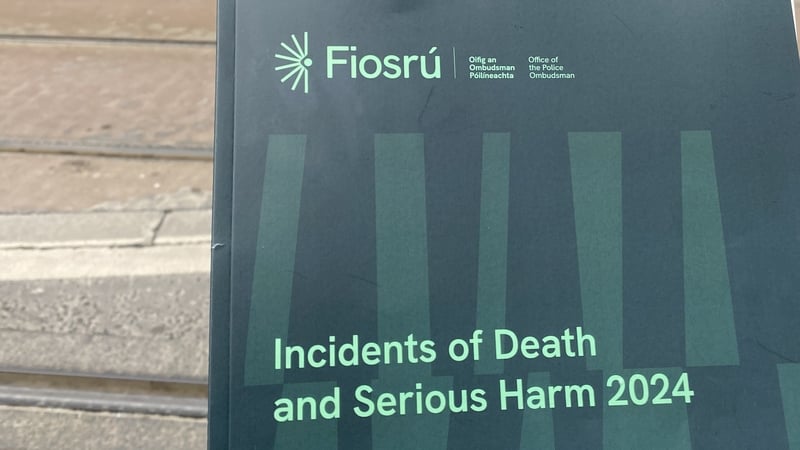

There were 21 deaths and 21 cases of serious harm referred to the Office of the Police Ombudsman Fiosrú last year.
The incidents involving 42 people were originally referred to Fiosrú's predecessor body GSOC.
Eight criminal investigations were initiated as a result, including two which identified an apparent criminal offence where a file was sent on to the DPP.
Of a total of 37 incidents referred by An Garda Siochána, 18 involved people with known mental health difficulties.
Alcohol was a factor in 19 referrals whilst 13 referrals involved drug use.
Taken all together, these accounted for more than three quarters of all referrals.
In four incidents, people were homeless or had a history of homelessness.
Road traffic incidents accounted for 13 referrals, including three deaths and 15 non-fatal injuries.
Incidents in or following garda custody accounted for eight referrals involving five deaths and three serious injuries.
Ten referrals involved apparent or attempted suicides, including nine deaths.
The six remaining referrals involved other garda contact before the person died or was seriously harmed, involving four deaths and two serious injuries.
Men accounted for 37 of the 42 people referred.
14 disciplinary investigations were opened, with two resulting in recommendations to the Garda Commissioner for disciplinary proceedings.
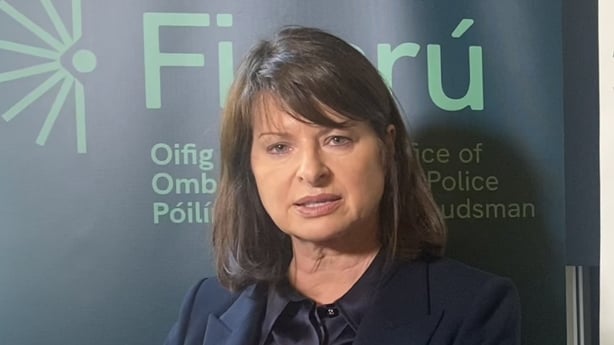
Fiosrú says it uses specially trained investigators who are often accompanied by family liaison specialists.
It makes recommendations to the Garda Commissioner over potential internal disciplinary proceedings or whether files should be sent to the DPP.
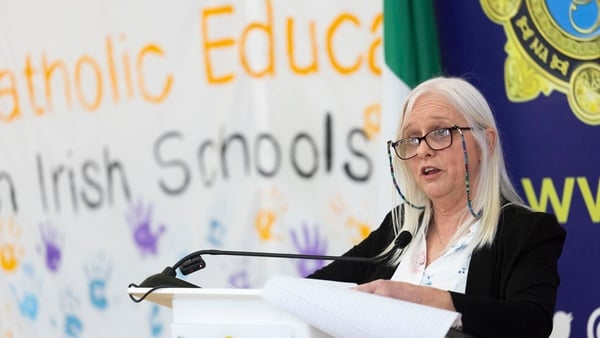
The Police Ombudsman Emily Logan said the cases demonstrated the complexity of situations being dealt with by frontline gardaí, and that behind every one of the cases was a person and a family dealing with trauma and loss.
She said it raised questions as to whether a wider co-ordinated response is needed across health, addiction, housing and social services to help gardaí deal with people who are vulnerable or in crisis.
15 preliminary examinations were discontinued following independent assessment.
3,000 complaints and calls dealt with by Fiosrú each year
Fiosrú says it deals with up to 3,000 complaints and calls each year but the incidents documented in today's report are exceptional.
Ms Logan said there were 2,226 complaints in 2024 to its predecessor GSOC, but these cases involving serious injury or death in today’s report were all referred to it by An Garda Síochána.
When it comes to investigating road traffic incidents involving gardaí or a garda pursuit, she said investigators looked at all he information and evidence available including CCTV.
"We obviously go for the strongest evidence available, but we often, certainly I, as a result, would sit and watch CCTV of a pursuit, and there are very strong, rigorous rules … as to the graduated ability of people to drive in certain ways as gardaí, and for people to be trained and drive in pursuit situations," she said.
She said her office had to examine whether a pursuit was proportionate for the context that the gardaí are in.
In one example quoted in the report, two people were injured with a fractured vertebrae and a fractured eye socket following a two-minute garda pursuit, in which a vehicle ended up losing control.
In this instance, the report found there was no evidence of any breach of discipline or criminal behaviour by gardaí.
Giving further examples, she said of those who had died last year after interacting with gardaí, one individual was fatally stabbed hours after being in garda custody.
Others had taken their own lives following an allegation in relation to child sexual assault, and another in relation to possession of child abuse images and another in relation to domestic violence.
"What you do see is the complexity, both of the policing context, but also the complexity of our staff and our investigators in terms of the nature and the circumstances of those investigations," said Ms Logan.
"Next year’s report will also look at extending the definition of what is called serious harm in the legislation in the future, to include any act or omission by a garda member, where there has been a a sexual offence, or where there's something called 'abuse of power for a sexual purpose'."
'Important that people come forward'
Ms Logan urged people to continue to contact Fiosrú with any issues or complaints, saying that formed the bulk of its work.
"It is important that people come forward," she said.
Whilst she couldn’t comment today or any individual cases, she said her office must investigate in a way that can withstand the criminal justice process.
"We have to take it step-by-step so in the course of an investigation, information can emerge. Witnesses that didn't initially get spoken to can be spoken to later on, and it's important that we test and look at absolutely all of the facts and all of the evidence to make sure we do the best job that we can."
On body-worn cameras used by gardaí, she said that internationally their use had been known to support oversight investigations.
"But we're also making sure that we understand that there are some negatives around that, around whether the body-worn camera is turned on or turned off," she said, and in relation to civil liberties.
She said she had already been contacted by the Garda Commissioner in relation to giving Fiosrú’s comments on it experience so far and it was still early days, with a public consultation underway.
Pilot project underway in Limerick
Commenting on the report, Professor Yvonne Daly said: "Of the 37 referrals referenced in the report, there's only eight of them that didn't involve some level of mental health issues, addiction issues"
She said there was currently a pilot project underway in Limerick,.
"There's a really good pilot study running whereby members of the gardaí have been specially trained, and they're working with mental health specialists, clinical nurse specialists and social workers to attend relevant 999 calls," she said.
"When they get a 999 call, which involves the level of crisis of that nature, the gardaí will go along with the medical specialists and the social workers to attend that call, so that the right agency is there at the right time.
"We're not leaving gardaí to deal with these high-level medical mental health issues."
She said the pilot stated in January, and around midway through the year, there was an interim report which suggested that it had engagements with about 200 different people.
"They've diverted over 30 people from emergency departments, diverted three people from arrest, and been able to sort of apply the right intervention in the moment," explained Professor Daly.