


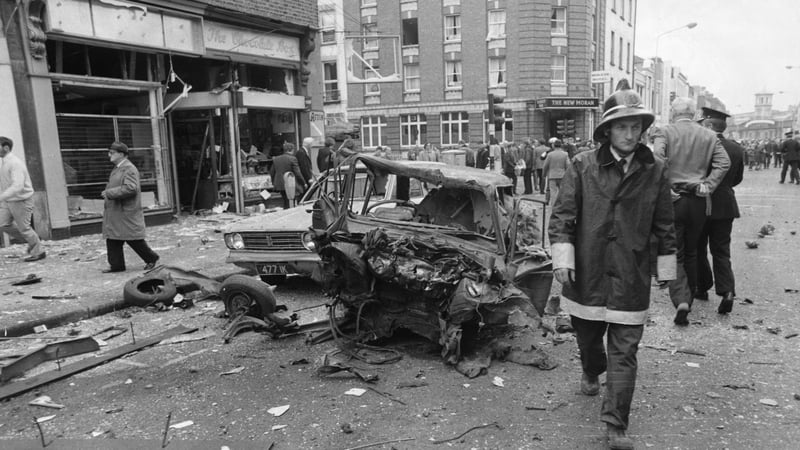
A major report dealing with some of the most controversial aspects of the Troubles has found no evidence of collusion on the part of the British state in the 1974 Dublin-Monaghan bombings.
Among the other issues the Kenova Final Report addressed was the role of the British Army's top agent in the IRA.
The report was commissioned by the PSNI in 2016 following a direction of NI's Public Prosecution Service.
The bombings in Dublin and Monaghan on 17 May 1974 claimed the lives of 34 people.
There had long been a suspicion that the UVF, which claimed the attack, would not have had the necessary expertise to carry out such a co-ordinated attack in two places on the same day.
"The review has not identified any evidence or intelligence which would indicate that British Security Forces colluded with the UVF to carry out the attacks in Dublin or Monaghan, nor has any evidence of state collusion been identified," the report says.
It also says it found "no specific intelligence" which, if acted upon, could have prevented the atrocity.
It said the UVF possessed the necessary materials, knowledge and expertise to carry out the bombing without any support from the British security forces.
The report says the UVF in Belfast planned and carried out the double bombing, with the help of the organisation in Mid-Ulster.
Operation Denton was launched in March 2020 after a judge ruled that there should be an independent review into the activities of a group referred to as 'the Glenanne Gang' and allegations of collusion.
The gang is said to have consisted of members of the loyalist paramilitary group, the Ulster Volunteer Force, and members of the RUC and Ulster Defence Regiment.
In addition to the Dublin and Monaghan bombings, it has also been implicated in the Miami Showband massacre in 1975, as well as bomb attacks in Belturbet, Dundalk, Castleblayney and at Dublin Airport.
The group has been linked to 127 sectarian murders in the 1970s and 1980s.
The report also looks at the role of the British Army's top agent in the ranks of the IRA, code-named Stakeknife.
It found he produced "vast" amounts of often valuable intelligence in his role as part of the IRA's Internal Security Unit and that he worked as an agent for almost two decades.
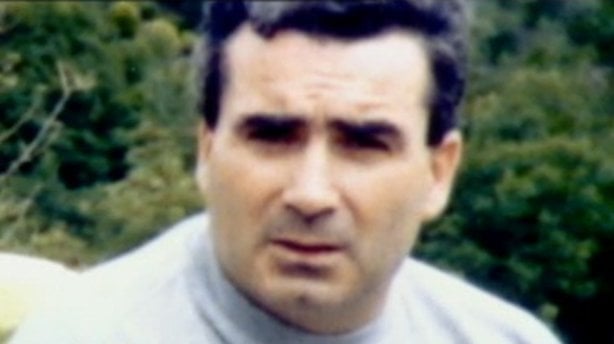
The internal security unit's job was to find, abduct, torture and execute people it suspected of being informers.
Stakeknife is widely believed to have been west Belfast man Freddie Scappaticci, who died in England in 2023 aged 77, having fled there and changed his name.
The report does not name Stakeknife, who has previously been linked to 14 murders.
Kenova's Lead Investigator Iain Livingstone said he had been prevented from doing so by the British government.
It continues to adhere to a policy of Neither Confirm Nor Deny (NCND) when it comes to the issue of agents.
Mr Livingstone said there been exceptions to this practice in the past and one ought to be made again.
"We in Kenova believe there is a compelling ethical case for the UK government to derogate from the NCND policy regarding the agent Stakeknife's identity.
"It is in the public interest that Stakeknife is named," the report said.
The report said that Scappaticci had told his wife and another female associate that he was Stakeknife.
Watch: UK government urged to name Stakeknife as Kenova Final Report published
The Operation Kenova report said its investigators had submitted files to the Public Prosecution Service, which contained strong evidence of criminality on the part of Scappaticci including involvement in abduction, torture and murder.
He died before prosecution decisions had been taken.
The report sets out in detail how Stakeknife was protected by his army handlers who considered him a highly valuable asset.
On several occasions he was flown out of the country on holiday, on a military aircraft with a fake military ID, even though his handlers knew he was wanted by police for conspiracy to murder.
On many occasions, the report says, the information he provided was not used to arrest suspects or save lives, in order to protect the source of the intelligence.
The Kenova team has previously said that more lives were probably lost as a result of Stakeknife's activities than were saved by the information he provided.
Watch: Stakeknife protected by British handlers, report finds
Freddie Scappaticci fled Northern Ireland in 2003 when newspapers named him as Stakeknife.
He relocated to England where he died 20 years later having changed his identity.
A court later ordered that his will be sealed for 70 years, the first time the courts had granted such an order for anyone except members of the British Royal family.
