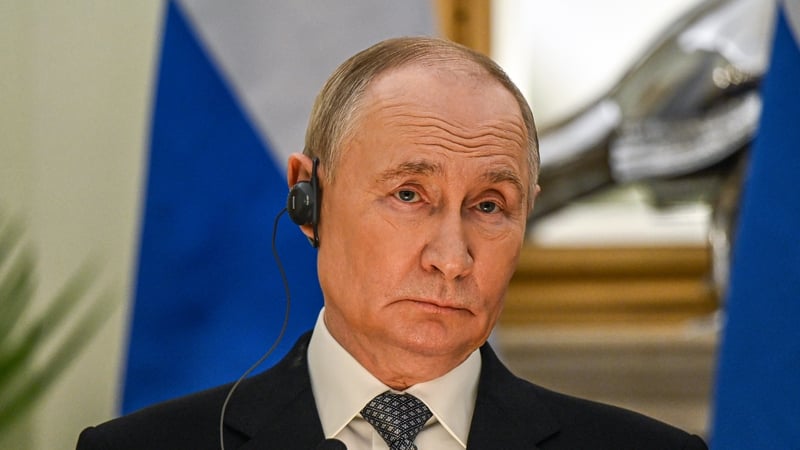

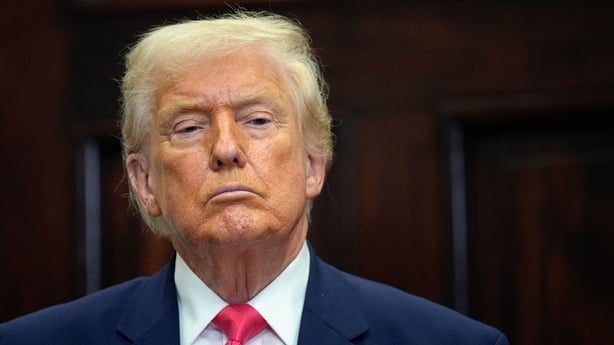
For the sixth time this year, US President Donald Trump sent his special envoy Steve Witkoff to Russia this week.
And just like before, he received cordial smiles from his Russian hosts but no compromises on ending the war in Ukraine.
Mr Trump said Mr Witkoff and his son-in-law Jared Kushner, the US president's other envoy on the mission, had a "very good" meeting with Russian President Vladimir Putin and other senior officials.
It sounded just like the US president's description of previous US-Russian meetings this year.
The Russian side said the talks were constructive but also painted a different picture of the five-hour discussion.
"Compromises have not been found yet," said Yuri Ushakov, a senior Russian foreign policy advisor.
Mr Ushakov also said that some elements of the US draft peace plan to end the war in Ukraine were "not suitable" for Russia.
Strangely, Mr Trump did not send US Secretary of State Marco Rubio, an accomplished and savvy diplomat, to Moscow with Mr Witkoff and Mr Kushner, two businessmen, given that all three had sat down with senior Ukrainian officials in Florida just days earlier.
During that meeting, Ukraine's negotiating team, now led by former defence minister Rustem Umerov, tried to rebalance a Russia-friendly 28-point plan, proposed by the US days earlier, and to make sure their country is not forced to give up territory and settle for a smaller army, among other key concessions.
It was that revised draft, a whittled-down version of the original US plan plus Ukraine's red lines and input from a European counterproposal, that the two US envoys presented to Mr Putin and his team in Moscow.

AFP has reported that US and Ukrainian officials were due to hold fresh talks in Miami yesterday, suggesting that the US side still wants to pursue the framework of the draft plan that Russia largely opposed.
Mr Trump still says that Russia’s leader wants to end the war.
The Kremlin may want to end the war, but, on its terms alone, and that means drawing up a peace deal that gives away one-fifth of Ukraine and leaves it militarily and politically weaker to resist a future Russian invasion.
And this week Mr Putin made two statements that summed up his approach to talks.
First, on Tuesday, he delivered a veiled threat against Europe, saying that if the continent wants war with Russia, then Russia was ready.
The implied message was that Europe should back off and not interfere in Russia-US efforts to reach a deal over Ukraine.
To say that Europe wants to go to war with Russia is the stuff of fantasy but that is how senior Russian officials are talking right now, blaming Europe’s increased defence spending for increased tensions.
Russia’s ambassador to the UK gave an interview to Sky News Arabia this week along the same lines.
The other big statement from Mr Putin came on Thursday when, during an interview on Indian television, he vowed that Russian forces would take Donbas if Ukraine did not withdraw its forces from the region.
That statement was a reminder, if ever it was needed, that Russia will not divert from its maximalist demands in negotiations, regardless of any Ukrainian or European counterproposals to draft plans drawn up by the Americans.
Contrast the Russian leader’s rhetoric with Ukrainian President Volodymyr Zelensky’s historic speech to the joint houses of the Oireachtas last Tuesday.
The Ukrainian president spoke of a chance for achieving "real peace".
"We can achieve what many still believe to be impossible, not just silences instead of bombs, not just clear skies instead of Russian drones and missiles, not just a pause between strikes but lasting things, guaranteed security and true justice," he said.
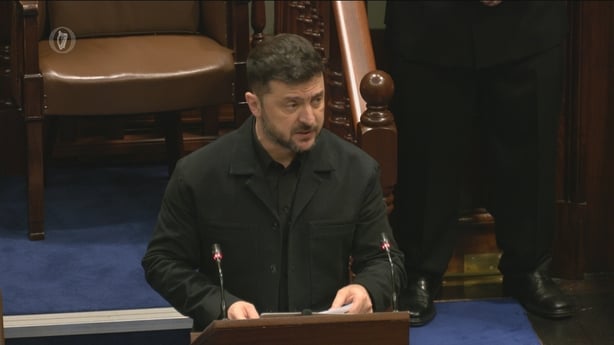
Mr Zelensky’s speech was full of gratitude and courage. There was even a hint of hope when he said that Ukraine is now "closer to peace than ever".
But after Mr Putin's comments on Thursday on his intention to take Donbas by force, that peace still seems far away, not closer.
Russia continues to drag out these negotiations, sticking to its hardline demands while its forces encroach slowly and bloodily through eastern Ukraine.
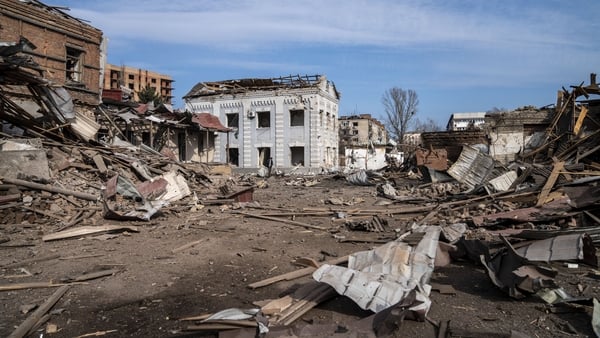
This week, Russia’s defence ministry released video footage claiming to show Russian troops in the centre of Pokvorsk, a sparsely inhabited city in the east of Ukraine that has been ruined after more than a year of Russian shelling, and which Moscow claims to have seized.
Ukraine’s army said that their units are still fighting in the city.
Russia's goal, Mr Zelensky told delegates at an Ireland-Ukraine Economic Forum at Iveagh House later last Tuesday, is for the US to become disinterested in the process.
There could be something in that assessment.
At various points in this 10-month process, Mr Trump has voiced his frustration at Mr Putin's approach to talks.
He may soon reach that conclusion again.
Few positive steps towards a peace settlement have been reached since Mr Trump first picked up the phone and called his counterpart in Moscow last February.
The mid-level talks in the summer between Ukrainian and Russian officials in Istanbul delivered three mass prisoner-of-war exchanges but little else.
The big issues of territory, Ukraine’s NATO membership bid, the size of Ukraine’s army and what to do with frozen Russian assets remain on the table.
A suggested Trump-Putin meeting in Budapest in October was shelved and no meeting is currently planned, confirmed Mr Ushakov on Wednesday.
That suggests there is still a very wide gap between what Russia is demanding and what the US can comfortably stand by.
"The aggressor must be held accountable for what was done. This has gone on far too long to simply close our eyes and turn the page on Russia," Mr Zelensky told the joint houses of the Oireachtas on Tuesday.
Yet, the chief architect of that act of aggression, Mr Putin, was in Delhi at the tail end of this week to meet Indian Prime Minister Narendra Modi.
Far from being pressured into coming to the negotiating table, the Russian leader has managed to stall yet another US push to end the war and, in the same week, come way with enhanced trade deals with India.