In the last of a three-part series on rural depopulation and migration in the GAA, RTÉ Gaelic Games Correspondent Marty Morrissey visits Dublin and Offaly.
We have all the heard the argument about splitting Dublin in two.
It became quite prevalent when the Dublin footballers were winning 14 Leinster Championships in a row from 2011, and the first six (and five) in a row of consecutive All-Ireland senior men's titles, between 2015 and 2021.
However, once the Dubs' dominance of Leinster was halted this year by Meath, the suggestion of splitting the county in two ceased immediately.
They have been hugely successful but just because the city is a growing metropolis, that does not mean that Dublin has nothing to be concerned about. The problems may be different to rural GAA clubs but nevertheless, they are significant.
Unlike south Kerry, Dublin does not have a population problem, but it certainly has a major facilities problem.
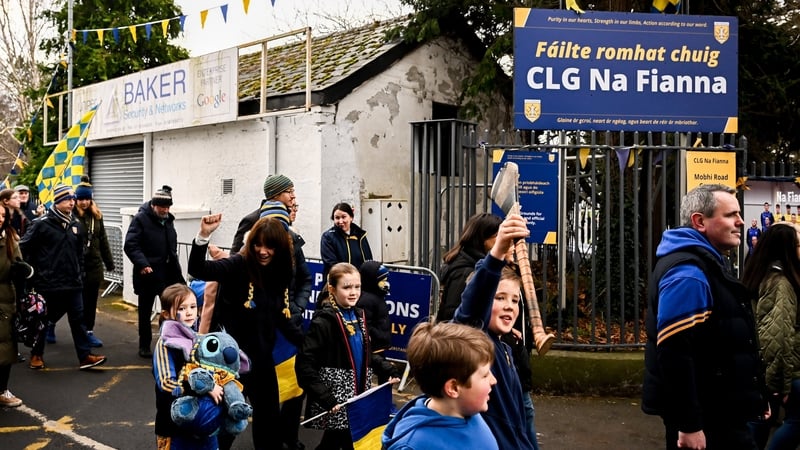
Less than 30% of the pitches the GAA play on in Dublin are owned by the GAA clubs. For example, the grounds of reigning All-Ireland club champions Na Fianna are owned by the Department of the Defence - though they have a very long lease - while clubs like Raheny and Cuala do not have a pitch of their own.
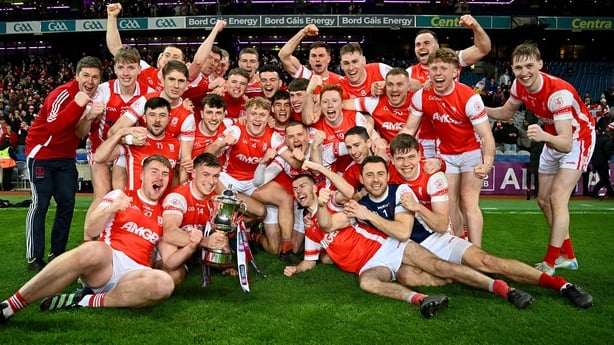
On that basis alone, what Cuala achieved by winning the Dublin, Leinster and All-Ireland club titles in both hurling and football is mind-boggling and a credit to the people of Dalkey.
Dublin County Board appreciate the relationship they have with the four local authorities, the Dublin schools and colleges, and the cooperation of the parishes of Dublin for the use of their pitches.
Dublin GAA remain hopeful that within a few years, the land they have acquired at the Spawell in Templeogue and Hollystown Golf Club near Blanchardstown can be developed to provide up to four playing pitches.
Chairman of Dublin GAA Ken O'Sullivan told RTÉ News: "We have the numbers but not the facilities. So the county board is investing in two huge facilities, in two community hubs.
"We have Hollystown in north Dublin, and we hope to break ground next March. That will give us four pitches, including ancillary facilities, and we will have the same in Spawell about two years later."
There is a notion that Dublin clubs are growing by deliberately attracting some of the best footballers in the country to the capital. But the growth seems more organic than a lot of people believe. Membership has grown 25% in the last seven years and not through the transfer market.
The organic growth is primarily down to the work of the Games Promotions Officers throughout the city and county, and the volunteer men and women who are passionate about their local area and club.
In the last of a three-part series on rural depopulation and migration in the GAA, RTÉ Gaelic Games Correspondent @MartyMOfficial visits Dublin and Offaly. https://t.co/48BjW6kVY5 #GAA pic.twitter.com/Oi58A5xocb
— RTÉ GAA (@RTEgaa) December 3, 2025
The Dublin County Board's transfer policy involves a number of layers of approval, in order to protect the integrity and ethos of the GAA club.
There is no parish rule, as applies elsewhere, which means that a player can join any club they want in the Dublin area. But the 2024 transfer figures for Dublin make interesting reading.
Last year, 329 player joined clubs in Dublin, but 376 left, of which 181 were heading abroad. Within Leinster, 87 players transferred into Dublin and 81 out.
Looking at the counties bordering the capital that ratio was 12 in:9 out (Kildare), 9:7 (Louth), 19:17 (Meath), 5:4 (Offaly) and 13-9 (Wicklow).
The movement of players out of Dublin is clearly related to housing availability and affordability. It is still a bit cheaper to buy a house in Meath or Offaly.
Traffic is a serious problem in the Dublin commuter belt as anyone who travels on the M50 will know only too well.
Some Offaly clubs expanding, while others feel left behind
Edenderry in Co Offaly, is only 56kms from Dublin and an attractive commuter base. In 2006, the local GAA club town had nine teams. In 2025, they have 52.
The current population of Offaly is 83,000 but it is projected that 100,000 people will be living in the Faithful County in 2050.
Within the county, the town clubs like Tullamore and Edenderry continue to expand, while the smaller clubs feel unloved and left behind.
Watch: Demographics crisis is GAA's 'biggest challenge'
Colm Cummins is a former secretary of Offaly GAA and he says that "our biggest concern is the fall in population. Between 2010 and 2020, the birth rate fell by 25%.
"It’s a particular concern for rural clubs in Offaly, many of whom are under pressure already and the stats will show that over the next ten years that pressure will increase."
From a GAA perspective, there is a serious imbalance. The problem in Kerry or Galway is not the same as the problem in Dublin.
The population boom in Dublin is expected to expand beyond its present 1.4 million. It is a socio-economic dilemma that has a dotted line to housing, jobs, planning permissions, government strategy and lifestyle choices.
Will the GAA have to change its way of doing things? Perhaps certain competitions will have to be 13-a-side rather than the obligatory 15 against 15 because of a sheer lack of population in a county?
Will the changing demographics persuade Croke Park to change the shape of the hurling and football championships at inter-county level?
Mark Duncan is a GAA historian and he sees it in black and white terms.
"I think everything has to change in the GAA," he says. "I think in the coming years, the administrative and organisational structures that we developed in the late 19th and early 20th century are going to be completely ill-suited to 21st-century Ireland.
"It also means our approaches to club development has to change, how we go about promoting our games, and of course how we allocate our resources going forward also."
History has shown that the association has always responded when big decisions had to be made. But this feels a bit different.
The sense of belonging to club, parish, county are at the core of the GAA. Time will tell us how they will deal with these multi-layered challenges.
Part 1: Depopulation reaching crisis level for GAA in south Kerry
Part 2: Cork clubs coping with city ageing and population booms
We need your consent to load this rte-player contentWe use rte-player to manage extra content that can set cookies on your device and collect data about your activity. Please review their details and accept them to load the content.Manage Preferences