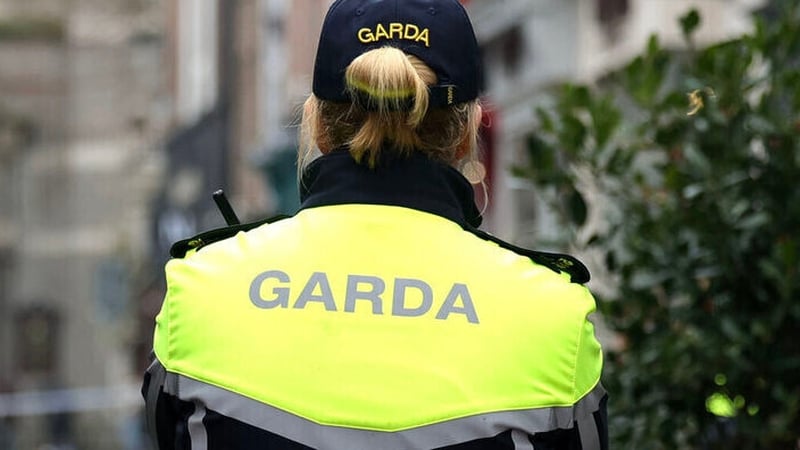

A new pilot project will see tasers issued to 128 frontline uniformed gardaí.
The scheme will take place in Dublin Central, Waterford and Kilkenny.
It will operate for six months alongside the continued roll-out of body worn cameras. Under the programme, tasers will only be issued to those equipped with cameras.
Tasers are used by police forces across the world, but so far in Ireland only a select few have them - members of the garda specialist armed support unit.
Those who support the project point out that an average of 299 gardaí were assaulted each year between 2014 and 2024.
However, the plan has been criticised by the Irish Council for Civil Liberties (ICCL) as deeply concerning, saying international evidence suggests the use of tasers can escalate a situation, particularly when people are experiencing mental health crises.
Minister for Justice Jim O'Callaghan informed the Government of the plan today.
Tánaiste Simon Harris said tasers in certain instances can play an important role.
Speaking as he arrived for this morning's Cabinet meeting, he said that "brave men and women who put on their uniform every day are often faced now with increased levels of abuse on the streets, levels of attacks".
Mr Harris said gardaí have always been largely unarmed and added: "We wish that to be continued, but tasers in certain instances can play an important role."
We need your consent to load this rte-player contentWe use rte-player to manage extra content that can set cookies on your device and collect data about your activity. Please review their details and accept them to load the content.Manage Preferences
However, the Irish Council for Civil Liberties said it was deeply concerned about plans to equip frontline gardaí with tasers.
In a statement, ICCL Executive Director Joe O'Brien said: "Ireland has a proud tradition of over 100 years of unarmed gardaí serving and supporting local communities.
"Giving tasers to frontline gardaí is a complete step change from that tradition and is being done at speed and without presenting the evidence which the Minister and Garda Commissioner feel warrants their introduction.
"At ICCL, we are unclear what precise issues the Minister and Garda Commissioner feel tasers will resolve, why they believe this to be the case, and how they will run and analyse this pilot project."
The ICCL said that tasers are dangerous weapons and their introduction would completely change the relationship between gardaí and local communities.
It said: "International research shows that tasers can cause devastating physical injuries and psychological trauma, include cardiac arrhythmias, muscle damage and electric burns."
The Irish Council for Civil Liberties said that, "internationally, tasers have been repeatedly used against people experiencing mental health crises and in extreme cases have led to death. Tasers are not an effective de-escalation tool in all situations. In fact, international evidence has shown that they can escalate a situation, particularly when people are experiencing mental health crises."
Mr O'Brien added: "There appears to be a pattern of Government equipping gardaí with new tools on a pilot basis, then moving swiftly to a national roll-out, without independent assessment of whether the tool is working to achieve its intended purpose.
"The body worn cameras pilot has become what ICCL warned against – an opening to introduce new technology nationwide, without publishing pilot findings or carefully weighing up the evidence for and against.
"We in ICCL are clear: tasers are not the Christmas gift gardaí need."
Vice President of the Garda Representative Association Niall Hodgins said the deployment of tasers to frontline gardaí is "very welcomed".
Speaking on RTÉ's News At One, Mr Hodgins said: "We have been calling for them for a number of years… today is a good news day for the guards."
"The great thing about these tasers is that they can very much contribute to the deescalation of the more violent and aggressive encounters that our members are experiencing year-on-year," he added.
Mr Hodgins said there were nearly 1,000 incidents of attacks on garda members last year, with 300 of those deemed as "serious".
"Even without firing, it [tasers] can seriously contribute to the reduced risk of injury to our members and can be a very effective tool on very resistant individuals, who unfortunately, we are coming up against every day in our line of work," he said.
Mr Hodgins said the six-month pilot of the tasers will "seriously increase" both safety and tactical options in "the very high stress options we have to deal with".
"Our members in the frontline are facing these antagonists day in, day out and it is their courage… which is taking action in the face of fear.
"What we would say, is if mistakes are made within that six-month pilot… we will review it, we will sit down as we have done before with the riots we experienced in Saggart, Coolock and the Dublin city riots," he said.
"If mistakes are made, well then we can address them."