


Irish Farmers' Association President Francie Gorman has said Tánaiste Simon Harris should clarify immediately where Fine Gael stands on the Mercosur trade deal.
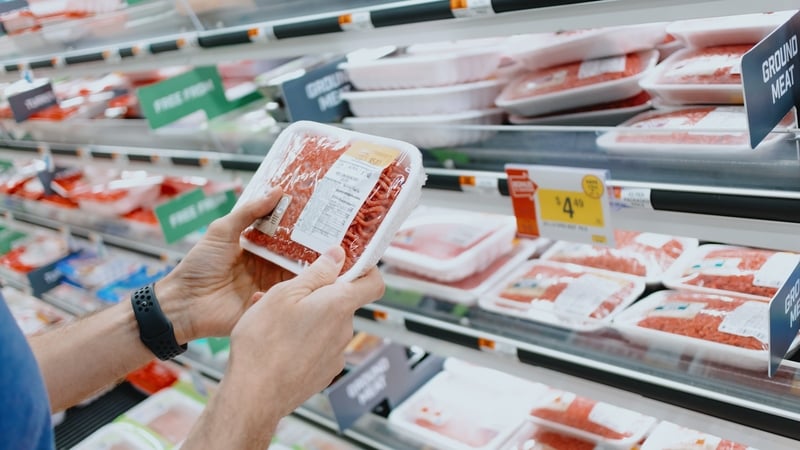
The banned hormones were detected in shipments that arrived into Europe earlier this month.
Authorities in a number of countries have removed affected products from sale, and issued recalls where necessary.
EU countries impacted by the situation include Austria, Belgium, Cyprus, Croatia, Czech Republic, Germany, Greece, Italy, the Netherlands, and Slovakia.
The United Kingdom (including Northern Ireland) is also among the countries affected.
Yesterday the IFA said the recalls of Brazilian beef raise questions about controls in Brazil.
Speaking today, Mr Gorman said the recall of Brazilian beef by the EU authorities in the last month is a very serious matter for the public health of European citizens.
Mr Gorman also said that farmers would be concerned to hear Fine Gael MEP Regina Doherty speak in favour of the deal on RTÉ's Today with David McCullough as "the official position of the Irish Government has been that it is working to oppose the deal."
He said that "Regina Doherty made a great play of the work under way on safeguards, but this latest revelation shows they are redundant.
"The so-called safeguards make no reference to public health. The findings of the investigation carried out by the IFA and the Irish Farmers Journal last month bear out the complete lack of controls that exist in the production systems in Brazil. The EU authorities cannot have any faith in the control systems in Brazil. Ignoring this is putting public and consumer health at risk," he said.
The IFA President said all imports should be stopped and food imports removed from the trade deal.
"In the meantime, there is an obligation on the Fine Gael leader to re-affirm his party’s position as set out in the Programme for Government," he concluded.
Mercosur deal is not just about beef - Doherty
Fine Gael's Dublin MEP Regina Doherty said that the Mercosur deal is not just about beef.
Speaking on RTÉ's Today with David McCullough, she said; "beef is a tiny, tiny part of what is overall potentially a very, very good deal for Ireland.
"There will be 700 million new customers for our pharmaceutical industry, for our machinery industry, for our medical equipment, for dairy, for whiskey.
"There'll be real great opportunities for businesses across the country of Ireland, including our farmers", she said on the same programme.
She said that there are concerns "that have been ventilated for many, many months and still haven't been satisfied.
"And so, the other thing that I would say is that you'd be forgiven for thinking that beef was only going to come from Brazil when we signed this deal.
"With 260 tonnes of Brazilian beef in the European Union last year and probably the same amount this year.
"What the Mercosur deal will do is, number one, limit the amount of tonnage of beef, so therefore hopefully protecting the market, particularly for those people like Irish farmers, French farmers, Polish farmers, that it's really, really important to because we put so much essence into the quality of our production and our beef.
"But second of all, because of the concerns that farmers have raised, the Commission has come up with new SBS standards and checks to make sure that we're going to strengthen the controls on the ground."
Ms Doherty said the withdrawal this morning of products that are on the shelf is because the SBS checks are working.
She explained that the SBS checks do not check every single consignment that leaves a country.
"And that's true of every other country that we do trade with around the world. It's true of Northern Ireland, it's true of the UK, it's true of all of the other third countries that we have.
"And we are already doing business with the countries that we're proposing to do a free trade deal with, which is what so-called Mercosur.
"The new consignments, restrictions, the strengthening of the SBS standards, the safeguards that we're discussing at our committees this week are an attempt by the Commission to reassure farmers who have raised concerns, and rightly so, because it's their income and it's their protection of their livelihoods and the standards that we cherish in Ireland.
"Those new safeguards will provide those extra measures of protection. And if it doesn't work, then there will be penalties.
"And that's not to say we expect it not to work, but as you can see this morning, not everything is infallible but what really is reassuring is that those consignments were identified near immediately and there have been recalled and be taken off our shelves and so we know that those SBS checks are working."
System 'just doesn't work', says Independent Ireland MEP
Independent Ireland MEP for Midlands Northwest Ciaran Mullooly said farmers' concerns are down to health and safety and traceability about any beef that may come into this country under the deal, "particularly from Brazil".
Also speaking on Today with David McCullough, he said that in the past "we were told left, right, and center of the dangers" of hormone growth promoters in cattle "and we dealt with it."
However, he said, those illegal growth promoters are still on sale in Brazil,
"And worse again, the Farmers Journal proved that last week with their survey, worse again, they've got through this great system the European Commission told us about in recent weeks.
"They got through it. They got through the abattoir test in Brazil. They got into Europe.
"And what have we got in the last couple of days? A recall of meat products right across Europe, proving that the system just doesn't work".
He said that the system is supposed to work at abattoir level in Brazil.
"That's what we told by the commission for the last two years. The rigorous tests were talked about, the rigorous concerns at that stage, they didn't work.
Mr Mullooly said that "there's a cultural problem here. They went across 3,000km.
"They went to 14 different shops. They weren't even asked for an identification themselves, a cattle, a card number, a herd number for an animal.
"There's no culture in Brazil of logging the use of antibiotics in animal feed or in animal prescriptions.
"And you know what happens as a result? It goes into the food chain".
He said "it is undeniable that that has serious implications for all of us down the line, because the overuse of antibiotics is bad news for public health."
He added; "if we have it in the food chain coming through, it will be disastrous.
"And the problem is for Irish farmers, we can watch the health concerns, and if the politicians say we're not interested, we'll also watch our industry fall apart because our beef trade will suffer.
"The Brazilian farmers just simply don't have the same cost base".
The European Commission is pushing for the ratification of Mercosur, which would create the world's biggest free-trade zone and significantly increase EU exports to Mercosur countries - Argentina, Brazil, Paraguay and Uruguay.
Mercosur countries would be able to export up to 99,000 tonnes of beef into the EU at a much-reduced tariff rate of 7.5%, as well as 180,000 tonnes of poultry.
Several EU member states, notably Ireland and France, are opposed to its ratification, citing the potential to massively distort key agricultural markets.
Additional reporting: Aengus Cox
