EU climate chief Wopke Hoekstra has ruled out revisiting financial pledges or being "lured into a phony conversation about trade" after a draft agreement was released at the UN COP30 summit.
"As always in this phase of the negotiations, this is a mixed bag," Mr Hoekstra said at the climate summit in Belem, Brazil, after the draft text was published.
"We're not going to open up the hard-fought compromise of last year in terms of financing" or have a "phony conversation about trade measures," he added.
Brazil is hoping to land an early agreement on some of the most contentious issues at the COP30 climate summit after unveiling a bold negotiation strategy that had delegates working into the early hours of this morning.
The two-week summit in the Amazon city of Belem has brought together governments from across the world to strengthen the complex UN framework that underpins global action to halt rising temperatures and cope with the damage they cause.
Host nation Brazil wants a deal agreed in two stages: one package tomorrow, including items that were a week ago deemed too thorny to even include on the formal agenda, and another wrapping up any outstanding issues by Friday.
At the outset of COP30, it was unclear whether there would be an attempt to negotiate a final agreement for the end of the summit.
"I think it's a daring move. It could work, although it’s also a risk because why would parties move if they know there still is time," said one European negotiator.
Read the latest stories from COP30
The draft reflects the stark division between a coalition wanting a "roadmap" on a fossil fuel phaseout, and a bloc led by oil-producing countries opposing any such effort.
It proposes an optional "workshop" to discuss "low carbon solutions," or a high-level ministerial roundtable on pathways to help countries "progressively overcome their dependency on fossil fuels".
A third option proposes no text at all.
Guterres returns to meet Lula
UN Secretary-General Antonio Guterres has returned to Belem and will meet Brazilian President Luiz Inácio Lula da Silva tomorrow.
Mr Lula said the meeting was designed to "strengthen climate governance and multilateralism".
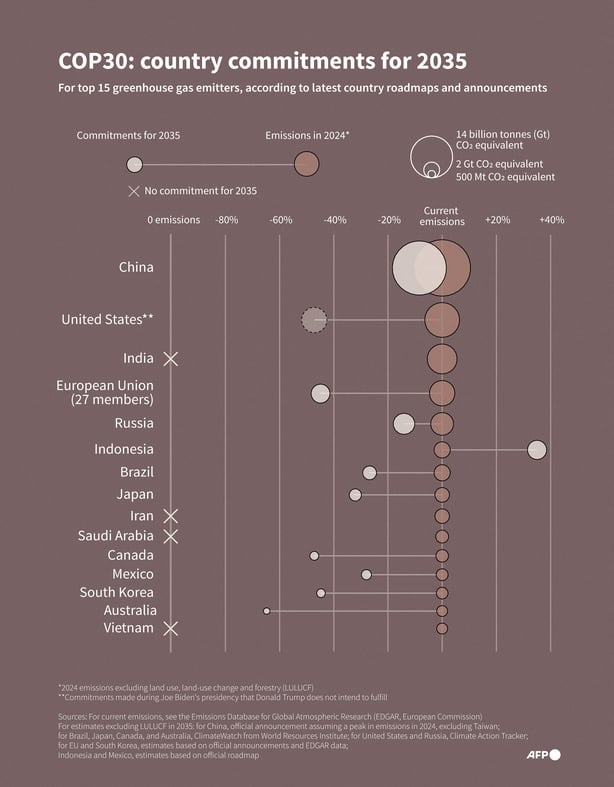
The toughest topics include pinning down how rich countries will provide finance to poorer countries to switch to clean energy, and what must be done about a gap between promised emissions cuts and those needed to stop temperatures rising.
Some nations, including Brazil, want a roadmap to help countries implement an agreement reached at COP28 in 2023 to phase out the use of fossil fuels.
Confounding expectations set by recent COP summits - all of which have run way past their scheduled end - Brazil's COP30 president Andre Correa do Lago said yesterday that he had the support of attendees to push hard for an early outcome.
Talks ran past midnight and are scheduled to run late again tonight.
Differences remain unbridged
Two negotiators and two third-party observers, who are permitted to sit in on the talks, separately described to Reuters a broad range of disagreements that were yet to be resolved.
Issues like the provision of finance have long pitted developed countries, many of which are juggling tight public finances and competing domestic priorities including security, against the most vulnerable nations, like small island states under existential threat from rising seas.
Some of these differences were captured in a draft text published by the COP30 presidency, which presented a wide range of options for the final wording on the key issues, giving little sign where a final deal would land.
One observer told Reuters that delegates were struggling to advance towards deals.
"They have boxed all the lightning rod issues in one room, and every time a discussion gained momentum, someone else steered it away by bringing up something else," they said.