


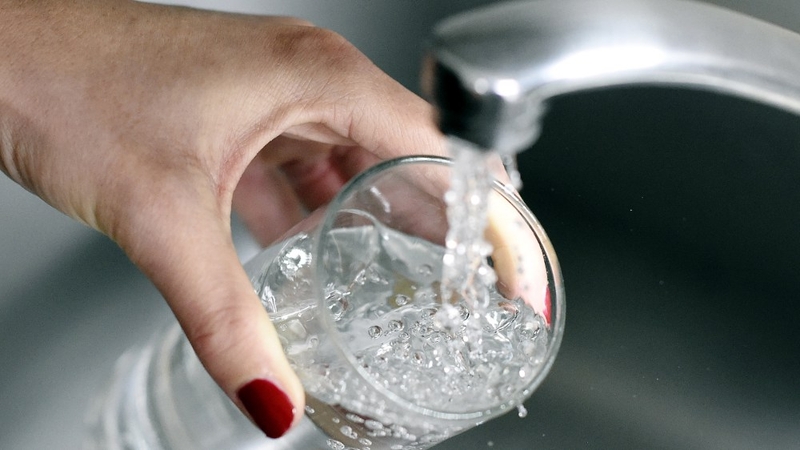
Utah is set to become the first US state to ban the use of fluoride in public water systems after Utah Governor Spencer Cox said he would sign legislation to that effect.
The use of the mineral, which is added to water to strengthen tooth enamel and promote dental health, has been a hot-button political issue in some states for decades.
The Utah ban, set to begin in early May, follows the appointment of US health secretary Robert F Kennedy Jr, who opposes the addition of fluoride to public water systems and has said Republican President Donald Trump will call for an end to its use.
"It's not a bill I felt strongly about; it’s not a bill I care that much about, but it’s a bill I will sign," Governor Cox, a Republican, said in a weekend interview with Utah television station ABC4.
Hawaii does not use fluoride in its public water systems but does not have any specific statewide ban against the practice.
Utah Representative Stephanie Gricius, a Republican and chief sponsor of the bill, said it allows pharmacists to prescribe fluoride for those wanting the mineral's protection for their teeth.
"I believe in individual choice when it comes to what prescriptions we put into our bodies and fluoride is federally regulated as a prescription," Ms Gricius wrote in an email.
"Community water fluoridation and informed consent, which is foundational to good health care, cannot coexist," she said.
Ms Gricius noted that just two of Utah's 29 counties currently add fluoride to water and that by allowing citizens to obtain fluoride tablets from a pharmacist, her bill makes it easier for citizens in the entire state to obtain fluoride should they choose to do so.
The American Dental Association had sent a letter to Governor Cox urging him to veto the bill.
The association noted that about 50% of Utah residents reside in those two counties that currently add fluoride to water.
It cited Utah Department of Health and Human Services data showing that areas of the state without fluoride in the water have experienced an increase in dental disease, whereas those with it have seen decreases.
The association also pointed to US Centers for Disease Control and Prevention estimates showing that fluoride-treated water saves about $6.5 billion each year in dental treatment costs nationally.
Those opposed to the use of fluoride in water say it is associated with numerous health issues, including certain cancers and lower cognitive ability among children.
The American Cancer Society on its website says the general consensus among scientific reviews examining possible links between fluoride and cancer show no strong evidence connecting the two.
However, the society says more studies are needed.
In January, researchers at the US National Institutes of Health who analysed 74 studies from ten countries found IQs were lower in children with higher fluoride exposure.
The results "support concerns for vulnerable populations living in communities with fluoridated water," an editorial that accompanied the NIH report said.
A second editorial, however, detailed multiple weaknesses of the NIH analyses and warned that public policy on fluoride should not be affected by the study.
A federal judge in California last year ordered the US Environmental Protection Agency to strengthen regulations for fluoride in drinking water, saying the compound poses an unreasonable potential risk to children at levels currently typical nationwide.
The EPA under former President Joe Biden appealed that ruling.
About 63% of all Americans have fluoride in their community water systems, according to CDC statistics as of 2022, the most recent data available.
In most of the world, fluoride is not added to the public water supply.
Some countries add fluoride to table salt. In some regions, fluoride levels in water are naturally high.
