


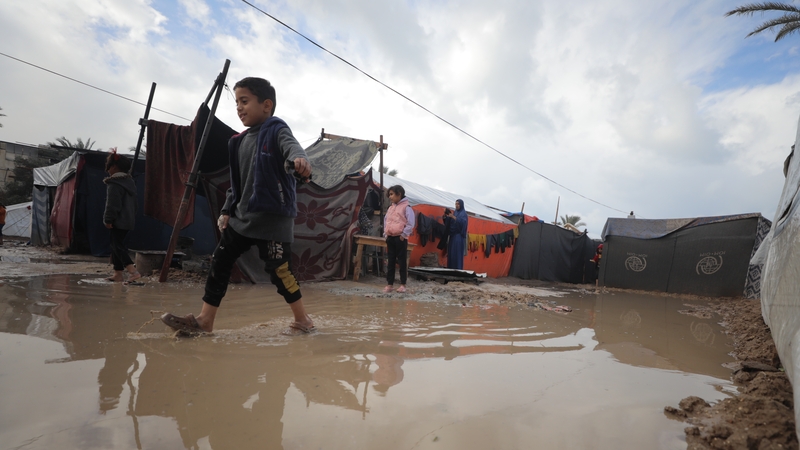
The UN has denounced that infants and others were freezing to death in Gaza, where it said an estimated 945,000 people still need help to shelter from winter conditions.
It comes as Palestinian health authorities have said that more than 110 people have been killed in Israeli strikes on the territory over the past two days.
With children dying of hypothermia, the United Nations' migration agency said it was deeply alarmed by the "devastating impact" of winter rains and freezing temperatures on displaced Palestinians, which were "adding to the unparalleled humanitarian catastrophe" in Gaza.
Heavy rains and flooding have overwhelmed displacement sites and makeshift shelters, while families are left exposed to harsh conditions, struggling to repair tents damaged from months of use, the International Organization for Migration (IOM) said.
"Vulnerable people, including at least seven infants, have died from hypothermia, and these tragic deaths underscore the urgent need for shelter and other help to get to the people of Gaza immediately," said IOM director general Amy Pope.
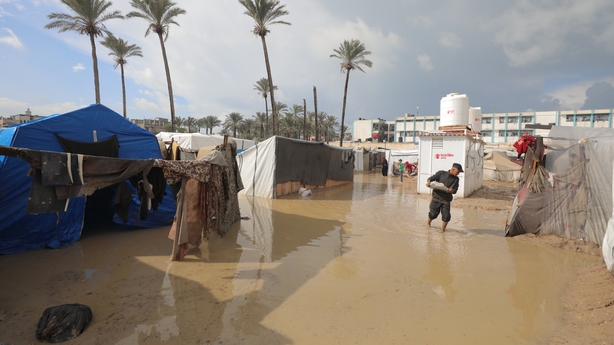
The agency said access constraints had "severely hindered" aid delivery, with only 285,000 people receiving shelter support since last September.
As of mid-December, the Shelter Cluster - a coordination group of UN, international and local humanitarian organisations - estimated that at least 945,000 people still urgently needed winter assistance, IOM said.
There is a dire need, it said, for thermal clothing, blankets and tarpaulins to seal off shelters from the rain and cold.
The IOM said it had more than 1.5 million winter supplies such as tents and bedding kits ready at warehouses.
However, "severe access restrictions prevent them from reaching those in need".
"The people of Gaza deserve safety, shelter and dignity," it said.
The IOM called for a ceasefire and unimpeded humanitarian access, along with the release of all hostages.

Meanwhile Israel said it has carried out airstrikes on dozens of Hamas targets in the enclave over the past 24 hours, it said, pressing attacks that Palestinian health authorities said had killed more than 110 people in two days.
The surge in operations and casualties comes amid a renewed push to reach a ceasefire agreement in the 15-month-old war before US President-elect Donald Trump takes office on 20 January.
Israeli mediators were dispatched yesterday to resume talks in Doha brokered by Qatari and Egyptian mediators.
The Gaza health ministry said more than 40 people were killed on Friday after 71 were killed a day earlier including in Al-Mawasi, an area in central Gaza previously declared a humanitarian safe zone by Israeli authorities.
The Israeli military said it had hit around 40 Hamas gathering points as well as command and control centres.
It said it had taken numerous measures to reduce the risk of harming civilians, including using precise munitions, aerial surveillance and other intelligence.
It accused Hamas of placing fighters in civilian areas including buildings formerly used as schools, where it said troops had found a number of weapons.
Hamas rejects accusations it deliberately uses the civilian population to shield fighters.
The Israeli military told civilians in the area of al-Bureij in central Gaza to evacuate ahead of an operation it ordered following rocket attacks from the area.
It said residents should move to the humanitarian zone for their own safety.
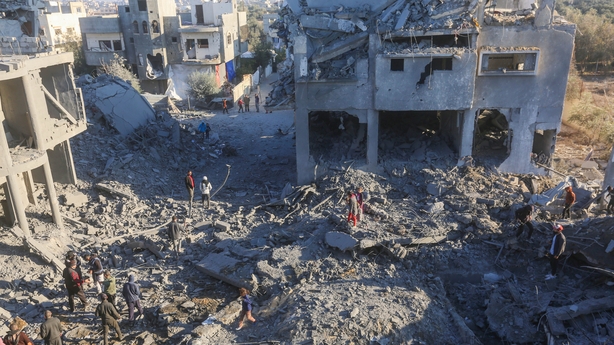
Elsewhere, Israeli troops have been battling Hamas militants holding out in towns around the northern end of the enclave for the past month and continued to find weapons stores and underground infrastructure, the military said.
Israel launched its assault on Gaza in response to the Hamas attack on 7 October 2023, in which militants stormed border communities from Gaza, killing around 1,200 people and seizing around 250 hostages according to Israeli tallies.
Its Israeli military campaign, with the stated goal of eradicating Hamas, has levelled swathes of the enclave, driving most people from their homes and has killed 45,658 Palestinians, according to the Gaza health ministry.
Severe winter weather has caused bitter hardship to hundreds of thousands who are sheltering in makeshift tent encampments.
Stalled diplomacy
The United States, Egypt and Qatar have been trying to mediate a deal for a ceasefire and hostage release for a year with no success and are making another push this month before Mr Trump's inauguration.
Ceasefire efforts have continually stumbled on a fundamental disagreement over how to end the conflict.
Hamas says it will accept an agreement and release the hostages only if Israel commits to ending the war.
Israel says it will agree to stop fighting only once Hamas is destroyed.
US President Joe Biden has repeatedly called for a ceasefire agreement.
Mr Trump said that if there is not a deal to release the hostages before his inauguration, "all hell is going to break out".
Israel's military has entered nearly every part of Gaza but is still fighting Hamas militants who are waging guerrilla warfare across the ruins of the tiny enclave.
Over the autumn, Israel's military resumed intense combat in northern Gaza, which it has repeatedly told all civilians to leave, while still continuing heavy strikes in the south.
In late December single-day death tolls announced by the Gaza health ministry included 48 on 28 December, 58 on 22 December and 77 on 20 December.
The toll rose by 1,124 in December, compared to 1,170 in November and 1,621 in October, according to ministry figures.
Israel's military said strikes yesterday targeted Hamas militants in the southern city of Khan Younis and the Masawi camp for displaced people, which it designates as a humanitarian zone.
Asked about yesterday's reported death toll, a spokesperson for the Israeli military said it followed international law in waging the war in Gaza and that it took "feasible precautions to mitigate civilian harm".
