
When historians look back at this tumultuous year, it’s likely it will be seen as the moment the world as we knew it ended.
In other words, the post-war liberal order - usually defined by the US-led transatlantic security alliance, free markets, open trade and a multilateral system with democratic values at its core – is no more.
"2025 could be the year that the system that came into view in the aftermath of the Second World War comes crashing to the ground," said David Milne, history professor at East Anglia university.
But perhaps we should have seen this coming, even before US President Donald Trump returned to the White House, analysts said.
"It was cracking, and he's just gone and taken a giant hammer and smashed it to pieces," said Elizabeth Ingleson, professor of history at the London School of Economics.
This was the year the White House slapped punitive tariffs on trading partners, threatened to annex sovereign territory in Panama and Greenland, bombed boats in international waters, and largely seemed better disposed to illiberal Russia than the democracies of Europe.
But instead of seeing this as a break from the past, we should look at the past 80 years as an aberration in the long sweep of American history, according to Mr Milne, "given that placing American interests first has been something that’s been venerated since the time of George Washington".
"I think those critics of Trump who compare him to Hitler or Mussolini or whichever fascist it is, and particularly non-American sort of comparators," he added, "underestimate how profoundly American the traditions are that Trump is essentially drawing from".
Certainly, the institutional underpinnings of the US-led global order, set up in the ashes of World War, are now under immense strain.
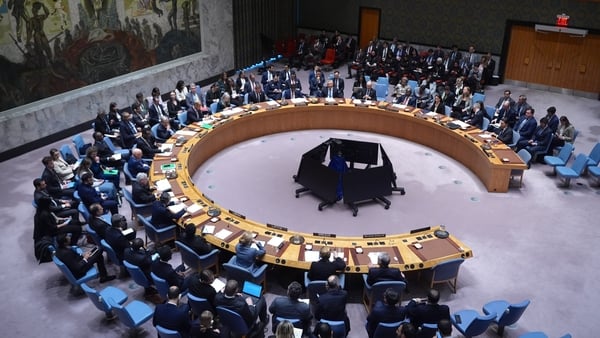
As member states clawed back funding, the United Nations was forced to slash its overall budget, lay off nearly a fifth of its work force, shrink peacekeeping missions and shutter emergency aid programmes.
The UN Secretary General called it "a race to bankruptcy", while some observers only half-jokingly speculated whether the UN's 80th birthday, celebrated in 2025, would be its last.
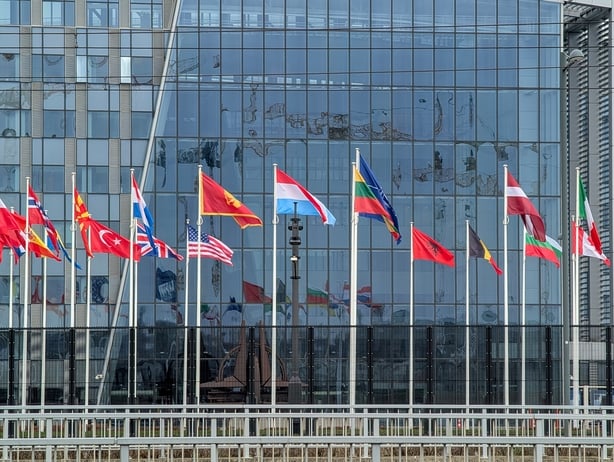
This year too, the North Atlantic Treaty Organisation (NATO) which bound the United States and Europe together in a promise to defend each other's interests, was also relegated to the dustbin of history – at least in the form Europe had grown used to.
And then there's the scorn.
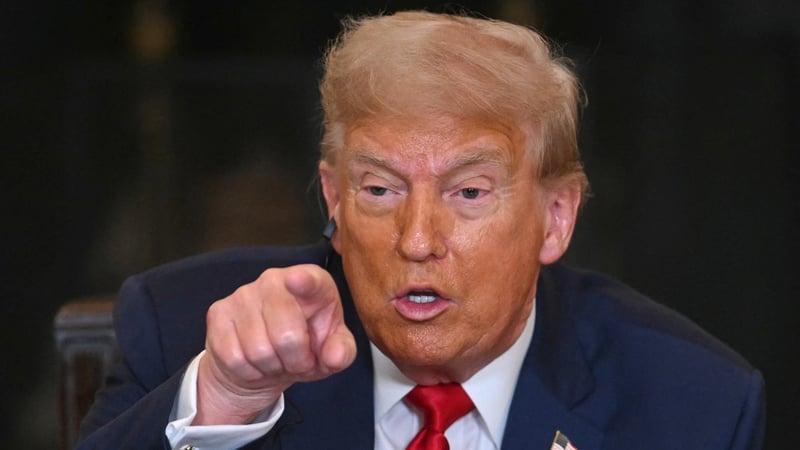
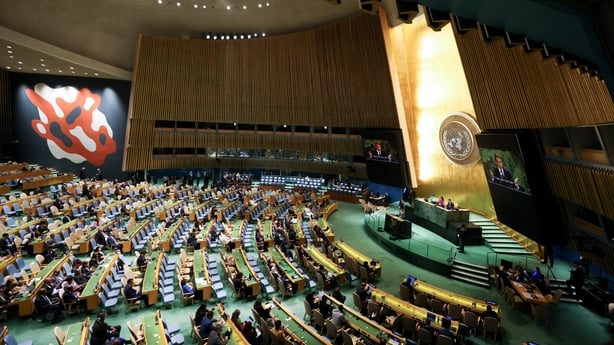
"Your countries are going to hell," the US president told European leaders at the UN General Assembly in September, citing migration and green energy policies.
He later rounded on Europe for its "decay", criticised "delinquent allies" for not spending enough on their own defence and released a US National Security Strategy that labelled Europe at risk of "civilisational erasure".
And he wasn't the only one having a pop at America's traditional allies.
Jamie Dimon - the hugely influential head of JP Morgan, which is the world's most valuable bank with assets of more than €3 trillion - said Europe was in "deep trouble", due to overregulation, posing a risk, he said, to US prosperity.
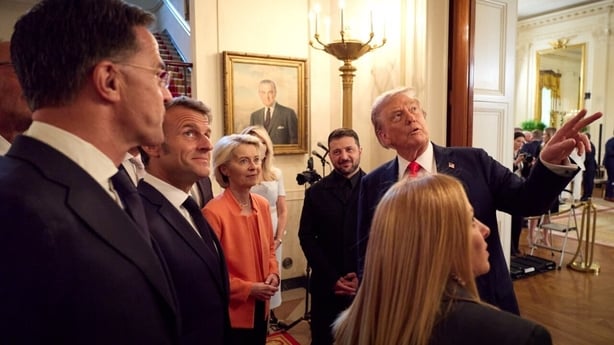
Couple that with sustained pressure on Ukraine from Washington throughout the year to concede to Moscow's maximalist demands - only held at bay by frenzied European diplomacy - and it's no wonder that German Chancellor Friedrich Merz was, by December, declaring the end of 'Pax Americana'.
As the Americans pursue their own interests "very, very forcefully," he said, Europe needed to get used to the idea of being on its own.
Mr Merz said no amount of nostalgia for a bygone era would make any difference. Presumably he means an era when the US would come to Europe's defence.
But as European nations cast around for partners in an increasingly complex geopolitical landscape, there were fewer left who share the values - like human rights - that were enshrined at the heart of liberal order after 1945.
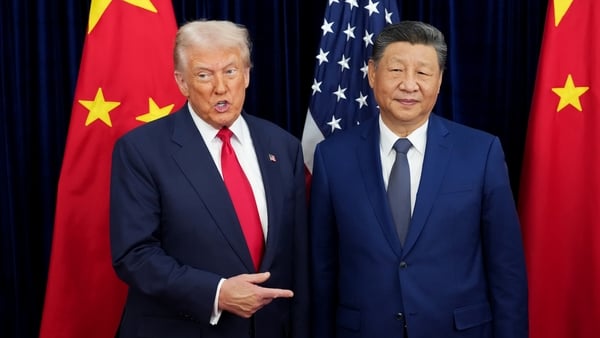
The authoritarian front between Moscow and Beijing has hardened as China - the world's second largest economy and the only power to rival US hegemony on the global stage - continues to back Russia's war effort on the European continent.
In July, China's foreign minister Wang Yi told the EU foreign policy chief Kaja Kallas that China "cannot afford" for Russia to lose its war in Ukraine, because that would allow the US to shift its entire focus to China.
Inside international institutions, China has long sought to reframe the human rights debate around development and state sovereignty rather than universal individual rights like free speech and freedom of association, which Beijing sees as Western constructs.
And this year Washington's "war on woke" designed to strip institutions of "diversity, equity and inclusion programmes", clashed with the UN's human rights agenda, especially on race, gender and climate issues.
And so, in discussions on the election of the next Secretary General - Antonio Guterres' term ends next year - some UN insiders speculate it's likely to be someone who won't stand in the way of a more illiberal worldview, espoused by Moscow, Beijing and, increasingly, Washington - three permanent members of the security council.
For Tim Marshall, author of 'Prisoners of Geography' - a book that argues mountains, rivers and seas determine geopolitics - there's a certain inevitability to all of this and it predates even the first election of Donald Trump.
"All systems, whether Pax Romana or the Concert of Europe [19th Century Europe's system of alliances] eventually break," he told RTÉ News.
"The end of the Cold War began the process of breaking the post WWII order," he said.
But at that moment - some 30 years ago - the liberal order seemed victorious.
It was the end of history, American political scientist Francis Fukuyama famously wrote as the Iron Curtain came down, the Soviet Union collapsed and the seeds of westernisation were scattered across former communist states.
Liberal democracy had won, so the theory went, and everyone could now put the ideological divisions of the past behind them, unite behind universal values like freedom of expression and happily get rich together.
American fast-food chains proliferated across the globe in the ultimate symbol of globalisation.
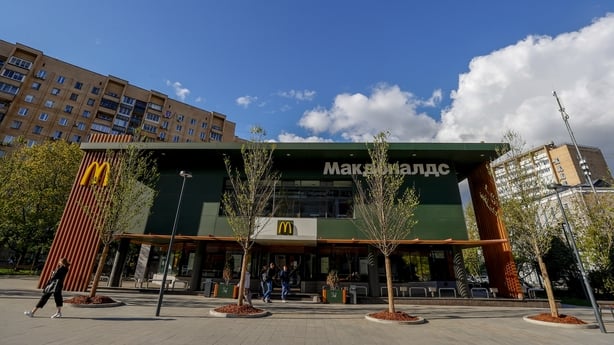
And as the Golden Arches rose above Moscow's Pushkin square, western lawmakers held fast to the notion - articulated then by New York Times columnist Thomas Friedman - that any two nations hosting a McDonald's were unlikely to go to war, such was the calming power of capitalism.
I recall overhearing a quip from one member of the US Senate Foreign Affairs Committee on Capitol Hill around that time. "They are too fat to fight," was his take on the 'McDonald's peace theory'.
In a sign of the times, McDonald's pulled out of Russia following the full-scale invasion of Ukraine in 2022.
Even China, the final major Cold War frontier had flung open its doors to foreign investment and trade. Now that capitalism, albeit with Chinese characteristics, had been embraced, political liberalisation would surely follow.
And while this all might seem naïve now, it was very much in vogue back then.
"Some fooled themselves into believing tyranny was permanently vanquished and the shadows thrown on the continent by war would disappear in the radiant sunlight of democracy," Tim Marshall wrote in the Sunday Times.
But fault lines in the international system were already appearing long before the Cold War ended, driven by economics, as much as politics.
Policymakers in democratic countries don't spend enough time examining the unintended consequences of their own decisions, argues Ms Ingleson from LSE, author of a book on the transformation of global trade called 'Made in China'.
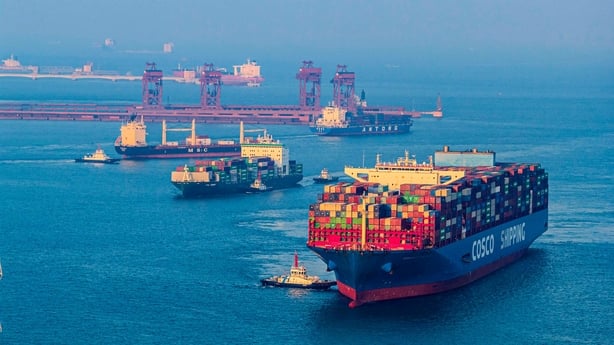
In the late 20th Century, as the economy globalised, jobs moved to countries that could do the work cheaper.
"I think one of the assumptions underpinning US policy is that labour - US workers and US manufacturing workers specifically - are less important to the larger geopolitical story," she told RTÉ News.
"It's precisely that assumption that drove US policy for decades but is also the thing that has now catapulted Donald Trump to power," she said.
Mr Trump was able to diagnose the problem in American society, which is a "sense of dislocation as manufacturing left American shores".
"But it's not that China stole jobs," she said, "it's that US policymakers prioritised capital - they prioritised corporations and businesses over working people".
From that point, analysts draw a direct line to Mr Trump through the missteps of US post-Cold War foreign policy, like the illegal invasion of Iraq and the failure of US politicians - especially the Democratic party which traditionally counted on American blue-collar workers as their base - to recognise the impact of rising inequality on American society.
There's a tendency among academics and commentators to speak of the liberal international order as the natural state, as if the advantages that accrue from it are taken for granted, according to David Milne of East Anglia University.
"But if you ask the average American what the liberal rules-based international order is, and how it benefits them, you'd draw a blank," he said.
Perhaps the same could be said for the average European.
So, if the global order as we knew has indeed collapsed, what comes next?
That’s a question I put to David Milliband, former UK foreign secretary, now head of the International Rescue Committee, an aid organisation headquartered in New York that recently dubbed this moment a "New World Disorder".
"We shouldn’t pretend there was a golden age after 1945," he said.
"The rights that were instantiated in international law, for example, for civilians caught up in conflict, were not always honoured and there were breaches of those rights," he said, "but they did establish a benchmark against which state and non-state actors would be judged."
It's those benchmarks that are being eroded, he said, and the world was only beginning to examine what's being left behind.
"That's what the New World Disorder defines," he said, "and I think it's very hard to see the outlines at the moment of what will replace it."
For Amitav Acharya, author of 'The Once and Future World Order' - which traverses 5,000 years of world history - we can expect a "multiplex world", where the centres of power shift away from Washington and Europe to emerging powers elsewhere.
It will be a "world less dependent on the US or the West", he told RTÉ News, "more decentralised, where globalisation and cooperation will be shaped more by non-Western nations".
And that, he argues, is a good thing.