
The head of the Government's emergency management group has said that lessons have been learned on how best to respond to severe weather events in the wake of Storm Éowyn.
The system caused significant damage and disruption last January. At one point, 750,000 customers were without power.
There were extensive internet and water outages as communities, particularly isolated ones, struggled to reconnect.
National Director for Fire and Emergency Management Keith Leonard acknowledged that the storm and its aftermath were a difficult period for many households.
"I think that's one of the key takeaways ... particularly for vulnerable people, elderly people, people who live alone, who are out without electricity for a long time.
"Our local authorities have done a huge amount of work in the last six months to try and address how we support people who find themselves in those situations."
As part of that work, around 400 hubs have been identified across the country that can be used for communities in the event of another big storm.
"The idea is, if a big event, like an Éowyn hits again, people can go there, and there'll be a generator on site ... and you will have the availability of hot meals, showers, charging facilities, and also a place where people can get information on what's happening in the response," Mr Leonard said.
"There are lessons identified from Storm Éowyn.
"I think one of the key things is critical infrastructure, which is effectively our water, our electricity, our communications, and our essential services across the country.
"They were badly impacted, and definitely building out for the future, building resilience into those systems is a key lesson.
"ESB Networks have put a winter plan in place ... and they're also looking at the trees that impact across the networks.
"They're going to work with forestry, with agriculture, with local authorities to try and make sure that trees that may cause vulnerabilities are dealt with over the next number of years.
"That work is already under way.
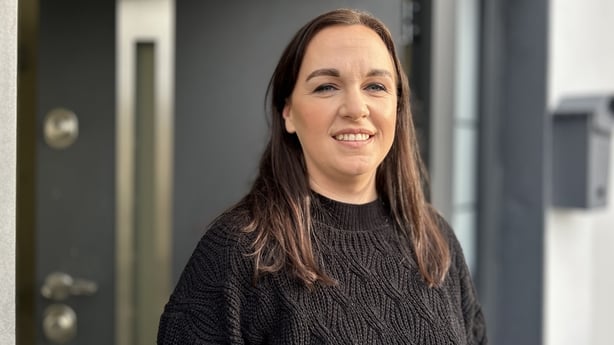
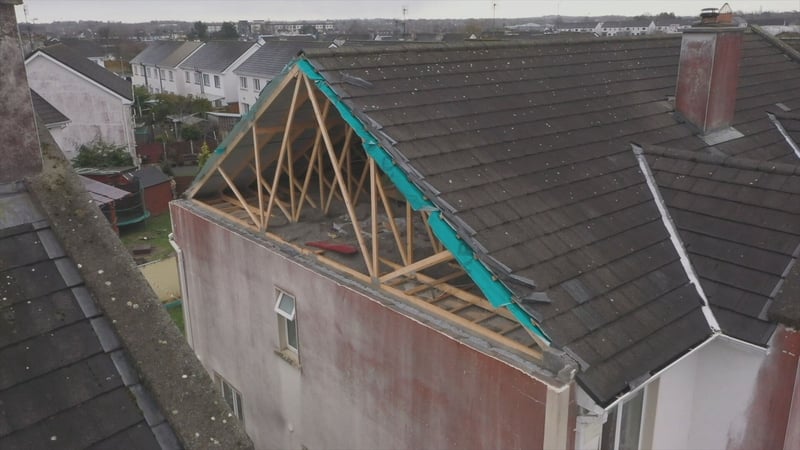
"Nothing prepares you for the side of your house falling off," said Emma Egan, from Ballinasloe in Co Galway, recounting the early hours when Éowyn hit.
"I remember thinking 'what's the number you ring when your house falls off?' because there's a number for fire, and there's a number for all these things, but what's the number when your house falls off, there is none, like, there's no number," she said.
Almost 12 months after the storm hit, the memories remain vivid, Emma said, and it will be a night that she will not easily forget.
Her husband, Shane, was in England with their eldest boy to attend a Manchester United match - a Christmas present - and she and their two youngest were in bed with the wind howling outside.
"I felt the crash … It was like an earthquake. I'm lying in bed, crying, because I was afraid.
"At this point all the wind was coming in through the house, the wardrobe doors were actually slamming."
It was the next morning when she realised the extent of the damage.
"I woke up to banging on my front door. It was my neighbour. He said your house fell off.
We need your consent to load this rte-player contentWe use rte-player to manage extra content that can set cookies on your device and collect data about your activity. Please review their details and accept them to load the content.Manage Preferences
"I looked up and seen it. Oh my God. I just stood there staring at it. I was frozen, completely frozen."
The gable end of the roof had blown down and there was a lot of damage inside the house with water, carpets and wardrobes destroyed. Luckily though, there were no injuries.
The Egan family moved in with Emma’s mother as they planned their next steps and the repairs.
They were in for another shock though as their insurance company told them they were underinsured, meaning the family would have to foot some of the thousands of euro bill.
Emma said they were also told that they were not eligible for any of State support.
Neighbours stepped in and an appeal was set up, raising around €15,000.
It was April before the family moved back in.
"The whole community came around. It was the community that really got us through the whole thing, they were brilliant.
"Maybe not everybody would be as lucky as we were with our community. That was the biggest lesson I learned - check your insurance."
A year on, sitting in her kitchen, Emma is content that the side of her home that was repaired will be able to withstand another Storm Éowyn-type event, but it is clear that it made its mark.
She said that if her youngest son "hears a storm is coming, he gets very afraid because he's thinking, 'is it going to happen again?"
As well as homes, businesses too faced the brunt of Éowyn.
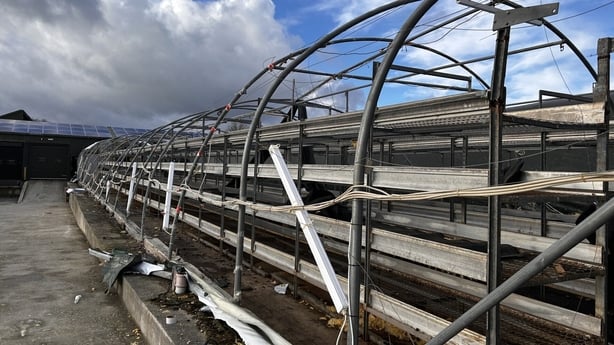
Just outside Athlone in Co Westmeath, Reilly Mushrooms still bears its scars.
"It's been difficult, to be honest, there was a lot of damage done.
"We spent a lot of money and put a lot of time and effort into rebuilding and improving the structure of the farm since - something we could have done without, to be honest," Joe Reilly said.
Two out of the 14 growing tunnels were ripped to shreds, crops destroyed.
He said the damage was "significant" and stretched into the "hundreds of thousand of euro", which the company had insurance to cover.
Throughout, Joe said, production kept going and orders were met.
"We've learned a lot from it, and we move forward with 16 growing rooms here on the farm.
"Fortunately, most of them weren't too badly damaged, so we were able to keep producing and keep the orders filled, and keep the show on the road. But could have done without it."
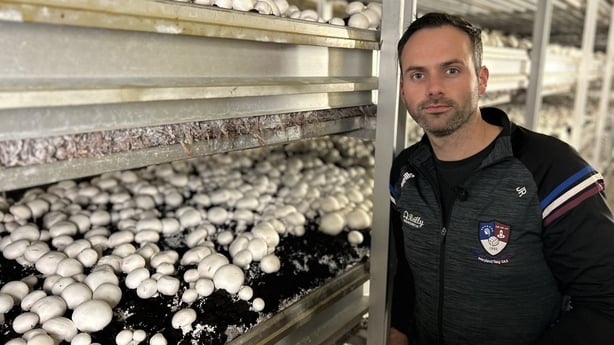
Such was the damage throughout the country, tradesmen were in great demand.
"The knock-on effect of the storm, overall, throughout the country, was that we weren't the only ones hit.
"Lots of people were also getting the materials, getting the labour, so there was just a bit of a delay and a backlog on that."
As the family prepare for the new year, they are also trying to futureproof against any other powerful storms that may come there way.
Joe said: "We faced plenty of storms before, but none as strong or anywhere like Storm Éowyn.
"As we were rebuilding, we were aware that we could face similar storms, and we were very mindful of that as we were rebuilding and strengthening our existing buildings.
"So we've strengthened where possible to leave us better prepared for any significant weather," he said.