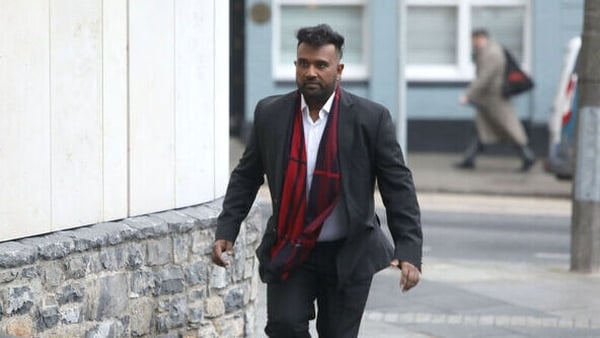
Secondary school teacher Enoch Burke is preparing to spend Christmas in prison for the first time since his dispute with the school where he used to work began.
Mr Burke has been imprisoned for repeatedly breaching a court order directing him not to trespass at the school. A decision on whether his dismissal from his position should be upheld is due early in the new year.
Our legal affairs correspondent, Órla O'Donnell has been looking back at the legal saga and at what might happen next.
Enoch Burke has now spent almost 550 days in prison in four separate periods since September 2022.
The dispute with Wilson’s Hospital School, where he taught, began in May that year, when the then principal asked teachers to use a new name and they/them pronouns for a pupil.
Issues arose when Mr Burke objected to this on the grounds of his religious beliefs. He objected at a staff meeting, in emails and subsequently, publicly, towards the end of a school service in June 2022 before confronting the principal at a dinner afterwards.
Wilson’s Hospital decided to initiate a disciplinary process and suspended Mr Burke. However, Mr Burke continued to attend the school, despite the suspension. The school sought an injunction against him, beginning a legal battle which shows no sign of coming to an end any time soon.

At the core of the case is Mr Burke’s claim that he has been punished for holding certain religious beliefs versus the school’s claim that he was suspended and subsequently dismissed because of his conduct.
Mr Burke claims none of the judges who have dealt with his case have ever fully addressed the issue and he says the courts should never have granted the injunctions against him, which he is now in prison for breaching.
'A complete disconnect'
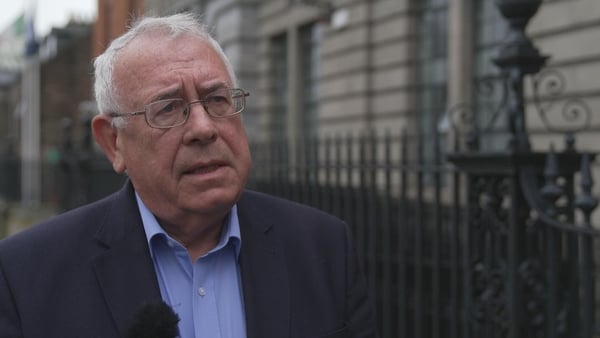
Senior Counsel, Bernard Dunleavy who specialises in commercial cases and civil disputes, says he has never seen anything like it. He says there appears to be "a complete disconnect" between the reason Enoch Burke was sent to jail and the reason Mr Burke believes he is in jail.
He says he has never come across someone in these circumstances who has not been able to grapple with the reason why they find themselves in such a position.
Mr Burke kept turning up at the school and refused to stop trespassing, despite the injunctions granted against him, fines totalling hundreds of thousands of euro levelled against him and the school’s employment of security guards to keep him out.
Mr Dunleavy says this makes him extremely unusual amongst those who are found to have breached court orders. He points out that in most cases, the prospect of "being in the company of a garda, or before a judge" is enough to make people rethink their actions and swear to obey a court order.
Before being jailed again in November for breaching the order to stop trespassing, Mr Burke repeatedly insisted he was attending at his place of work and had a right to be there. A disciplinary appeals panel (DAP) finally heard his appeal against his dismissal earlier this month after delays caused partly by Mr Burke’s successful challenge to the composition of the panel.
He has continued to be paid his full salary pending the outcome of the appeal. The panel has ten school days to make a decision, meaning it is due by 9 January at the latest.
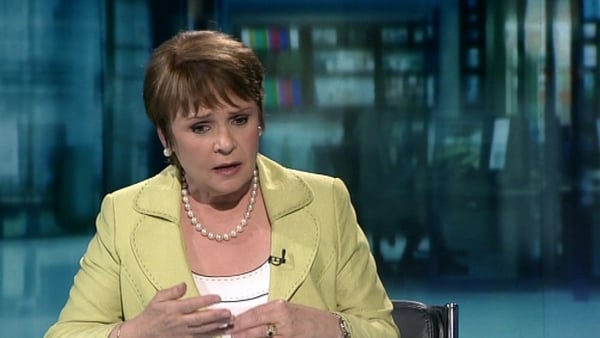
Solicitor Terry Gorry points out that the panel does not make a decision on Mr Burke’s future. It issues a recommendation as to whether the school’s decision was correct or whether Mr Burke is entitled to a review of the case.
Ultimately the final decision is up to the Board of Management. After that, Mr Gorry says it will get "interesting" as Mr Burke reacts. But he says he doubts very much whether the DAP’s recommendation will be "the end of it".
Mr Gorry says the DAP could recommend that Mr Burke’s dismissal should be upheld. Alternatively, it could recommend that the disciplinary action should not proceed at all or that it should be amended to impose a less serious penalty, or it could recommend that the Board of Management should reconsider the matter.
Mr Gorry points out it would be difficult, in his opinion, for the board to consider reinstating Mr Burke given the amount of water that has flowed under the bridge in the last three years.
If the DAP were to recommend upholding Mr Burke’s dismissal, Mr Gorry says Mr Burke would have options such as seeking a judicial review of the process in which he could challenge the procedures adopted by the panel. The school can decide to accept or reject the recommendation of the DAP but must set out its reasons in writing.
The legal saga surrounding Mr Burke and his family has highlighted the limitations faced by the courts in enforcing its own orders and maintaining order in court.
The latest judge to deal with the matter, Mr Justice Brian Cregan, asked the Attorney General to consider bringing criminal contempt proceedings against Enoch Burke as well as his mother, Martina, sister, Ammi and brother Isaac, because of the way they have behaved in court during the hearings before him.
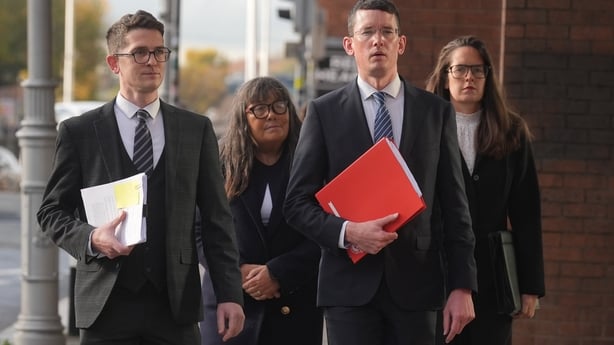
The Attorney General declined to do so "at this time".
Just before the legal term ended for Christmas, High Court President Mr Justice David Barniville felt the need to issue a notice stating that disruptive behaviour in court would not be tolerated, setting out the sanctions available to the courts to address the issue.
'Unspoken truth'
Mr Dunleavy says the Burke case has highlighted the "unspoken truth" evident to anyone who observes the courts on a regular basis - that the courts only function "because most citizens do not behave like Mr Burke".
He points out that most citizens obey court orders even if they are unhappy or dissatisfied with the orders or with the outcome of a case. "By and large", he says, "people respect court orders and that’s what enables the judicial process to function the way it does".
Mr Dunleavy says the courts have little option but to jail Mr Burke until he purges his contempt. Otherwise, he says public confidence in the justice system could be undermined. And he says, if you make an exception for Enoch Burke, "where does it end?"
We need your consent to load this rte-player contentWe use rte-player to manage extra content that can set cookies on your device and collect data about your activity. Please review their details and accept them to load the content.Manage Preferences
Mr Burke himself told the High Court this month, that his case would not go away and would not be swept under the carpet even if, he said "we may wish that it would, with all our hearts".
He has asked the Supreme Court to examine and rule on two Court of Appeal judgments which he says are at odds with each other about the reason for his dismissal. And the High Court is due to deal with the case again on 14 January.
Mr Dunleavy says there is unlikely to be an end to the matter, unless "a third party" intervenes with Mr Burke or unless there is "a change in circumstances".
It remains to be seen if 2026 will bring such an intervention or a change.