


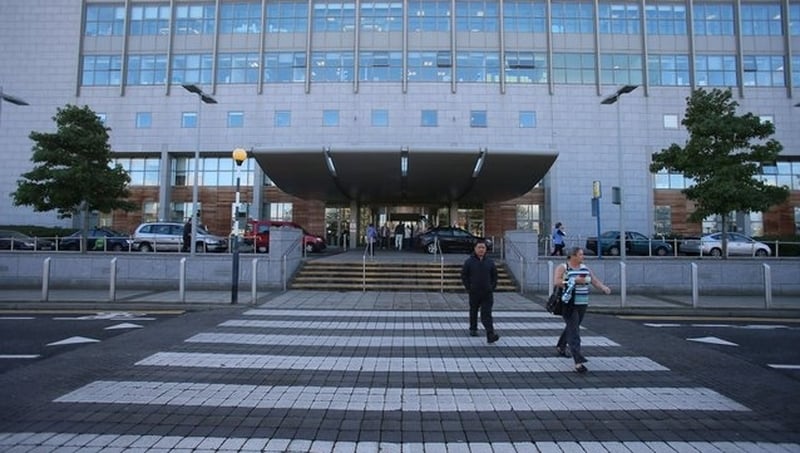
An inquest has heard that no post-mortem examination was carried out on the body of a woman who died suddenly and unexpectedly due to a "miscommunication" among staff at a Dublin hospital.
Coroner Aisling Gannon told a sitting of Dublin District Coroner's Court that the body of Olive Doyle was released for burial without an autopsy being carried out as intended following her death at St Vincent’s University Hospital in Dublin on 4 November 2023.
Ms Gannon said a post-mortem examination had been requested and directed to take place by the coroner service in Dublin, but it was not conducted due to a "miscommunication" within SVUH which had resulted in the deceased’s body being released to her family "in the normal way".
However, the coroner acknowledged that not having the benefit of a post-mortem examination gave rise to questions.
Ms Gannon said a review carried out by SVUH accepted that a post-mortem examination should have been carried out and that lessons had been "gleaned" which should prevent a recurrence of the error.
The inquest into the death of Ms Doyle - a 74-year-old married mother-of-four from Bray in Co Wicklow - heard that only a report of a locum consultant oncologist who treated the patient for a malignant melanoma was available as evidence about the cause of death.
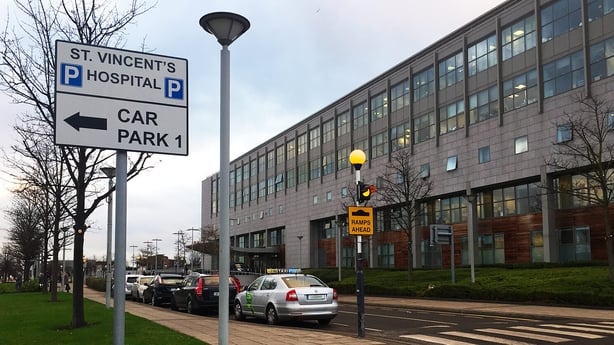
The report by Dr Yasar Ahmed claimed Ms Doyle, who had a number of other medical conditions including chronic obstructive pulmonary disease, hypertension and osteoporosis, died from pneumonia and COPD due to severe multiple steroid toxicity arising out of treatment for malignant melanoma.
Dr Ahmed gave evidence that he believed the potential benefits outweighed the risks in starting Ms Doyle on immunotherapy for the cancer notwithstanding her pre-existing medical conditions.
The consultant said he had discussed the potential side effects with the patient.
When she started the treatment, Dr Ahmed said Ms Doyle suffered a severe reaction which would normally only occur in 9-10% of patients.
He said that the reaction occurred much sooner with the deceased than most patients.
The inquest heard the patient required admission to SVUH on 13 October 2023.
Dr Ahmed said the failure of Ms Doyle to respond to steroids used as a first line treatment for such a severe reaction to the immunotherapy only occurred in 1% of patients.
However, he said it was a "rare but recognised" complication.
Dr Ahmed also apologised to Ms Doyle’s family after they complained that a lack of communication by hospital staff meant they did not appreciate the deterioration in her condition in the three days before her death.
He stated the lack of communication was an oversight rather than intentional.
Cross-examined by counsel for Ms Doyle’s family, Evanna Fitzgerald BL, Dr Ahmed said he was concerned about the patient’s condition when he was going on leave on 30 October 2023, but that her deterioration while he was away had been "alarming".
Asked if he believed that there was a risk to the patient’s life at that point, he replied that his concern was more that Ms Doyle might require a prolonged stay in hospital before she would recover.
Dr Ahmed admitted he was surprised to learn that the patient had passed away.
Ms Doyle’s family also expressed dissatisfaction that the patient was moved to seven different wards over 23 days in the hospital.
At the outset of the hearing, Ms Fitzgerald said it was important to say that Ms Doyle’s family were left with many unanswered questions about how and why she died.
However, Ms Fitzgerald stressed that they did not want to take an adversarial approach to the inquest or any other forum.
She said Ms Doyle was "a placid person who would not have wanted that".
The inquest heard that the deceased had met her husband, Michael, on St Stephen's night in 1967 in what was "love at first sight" and they had enjoyed "a truly loving and lasting relationship for 56 years."
Ms Doyle was predeceased by her son, Colm, who died from a brain tumour in 2021.
She was described as "a placid lovable and very positive person who had great empathy" whose family were devastated by her sudden loss.
Ms Fitzgerald said they were anxious the matter would be brought to a close with the inquest.
She explained the deceased’s husband, who attended the inquest with a large group of relatives, did not wish to give evidence.
However, she said the report by Dr Ahmed did not quite correspond with Mr Doyle’s recollection of events.
The family also complained that they had not been informed that the patient had suffered a cardiac arrest a few hours before her death.
The inquest heard Ms Doyle’s relatives were also concerned that they had not been made fully aware of the implications of their mother’s indication that she did not want to follow the recommendation of doctors for transfer to ICU care in preference for less invasive treatment after she became unwell.
Ms Fitgerald said the deceased’s relatives found themselves in "an unusual situation" and there were a number of issues over which they wished to express dissatisfaction.
However, Ms Gannon said the inquest was not an appropriate forum to raise such matters as an inquest cannot apportion any blame.
The coroner said it was not entirely unusual to proceed with an inquest without a post-mortem examination as some cases were completed based on medical records of the deceased.
Ms Fitzgerald informed the coroner that it was the family’s wish that an open verdict would be recorded given the "lack of evidence on the pathology side."
She indicated they would be opposed to any finding that Ms Doyle’s death was due to natural causes.
Ms Gannon said she was conscious there was "a dearth of information" and would not be in a position to consider a detailed narrative verdict.
The coroner said she believed a short narrative verdict would be the most appropriate finding and she would deliver the wording of it to the family in the near future.
