


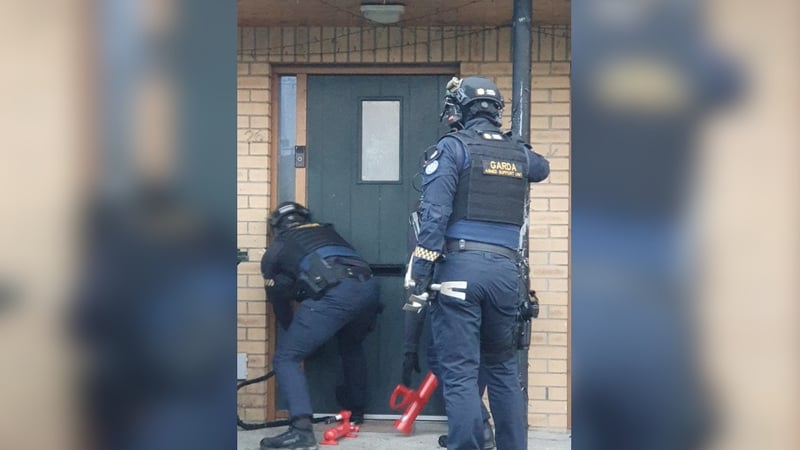
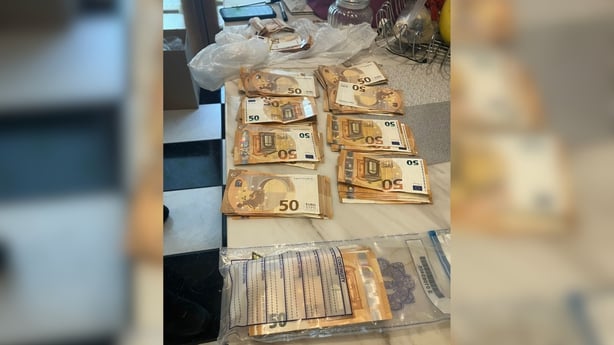
Two people have been arrested after tens of thousands of euro in cash and cryptocurrency, as well as dozens of smartphones, computers and a Rolex watch were seized in a garda operation targeting suspected organised fraudsters.
Twelve searches were carried out across counties Dublin, Kildare and Waterford yesterday and Tuesday by gardaí working alongside Europol and other international law enforcement agencie.
Gardaí said that during the searches, more than €42,000 in cash and €10,000 in cryptocurrency was seized.
In addition to this, 82 smartphones, 25 computers, nine tablet devices, and a Rolex watch were also seized.
The searches involved gardaí from the National Economic Crime Bureau, as well as the armed support unit, dog unit, cybercrime bureau and immigration bureau.
They were carried out as part of Operation Stargrew, which targets individuals suspected to be involved in organised fraud where bulk "Phishing" or "Smishing" text messages are sent out.
The messages are designed to deceive people into providing their personal data and credentials for the purposes of fraud, with many purporting to be from banks and service providers.
Gardaí say two males were arrested during the course of the operation, one of whom has been charged and will appear before the courts at a later date.
One of the males arrested has been charged, and will appear before the courts at a later date.
It comes as international law enforcement agencies this week severely disrupted one of the world's largest phishing platforms, known as LabHost.
The year-long operation resulted in the compromise of LabHost’s infrastructure.
The platform, previously available on the open web, has been shut down, and now displays a law enforcement splash page.
LabHost allowed users to deploy phishing websites that are then used to steal victims' data and credentials for the purposes of defrauding them, either directly or through resale of the information harvested by the phishing site.
It is suspected that there are approximately 116 users of the LabHost service who have a connection to Ireland.
Gardaí have identified in excess of 150,000 instances of a person responding to a phishing link, and this link is suspected to be associated with the 116 users.
