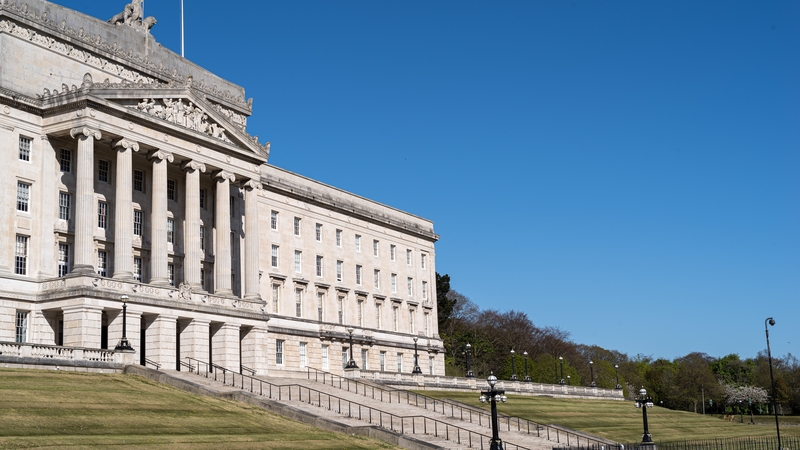

A vote on whether to adopt a new EU regulation at Stormont has been lost after it failed to attract cross-community support.
The regulation would establish a scheme to offer geographical indicator status to craft and industrial goods, similar to the existing one for food products such as Parma ham and Comber spuds.
It limits their production to certain areas and to a defined standard and is considered a useful marketing tool which can add value.
While 49 of the 81 MLAs who voted, backed adoption of the regulation, the motion failed to receive any support from unionists.
As the vote required cross community backing it was deemed to have been defeated.
It will now fall to the UK government to decide whether to approve the regulation for Northern Ireland.
A UK minister can only do so if they can argue there are exceptional circumstances, or the new regulation will not have a significant impact on internal trade.
Eighty-one MLAs voted in the Stormont debate of whom 49 voted in favour.
Thirty-three nationalists including all Sinn Féin and SDLP MLAs and several independents backed it.
Sixteen other MLAs - including the Alliance grouping, also voted in support.
Thirty-two unionists voted with none of them supporting the motion.
A 'sham fight'
DUP MLA Jonthan Buckley said the regulation would add "56 pages of EU law to the Windsor Framework" and create a new regulatory border that would impact internal UK trade.
Sinn Féin MLA Philip McGuigan said the debate was a marked contrast to the images of the first and deputy first ministers jointly selling the advantage of Northern Ireland as an investment location in the US last week with its access to both UK and EU markets.
He described the motion as a "sham fight" which only "serves the purpose of undermining the good work of last week" and might confuse potential investors who were now seeing a mixed message coming from Stormont.
The DUP made the case that giving the assembly the right to debate the introduction of new EU regulations addresses the "democratic deficit" whereby Stormont MLAs had no say in EU law which applied in Northern Ireland.
Ulster Unionist leader Doug Beattie said there had been no scrutiny of the implications of the EU regulation.
"How on earth can we vote in favour of something that we have not scrutinised properly?"
SDLP MLA and opposition leader Matthew O'Toole said there was already precedents for all-island geographical indicators for Irish whiskey and Irish grass fed beef.
He that said in future such a status could be carved out for something like Irish linen, but if the regulation was not adopted, its Northern Ireland producers could not benefit.
"This is not the end of the world one way or the other, it's a good thing for our craft producers," he said.
"It gives them a potential advantage, a potential recognition and a leg up in the European Single Market and possibly beyond."
He said the UK government had already published an explanatory note that the adoption of the regulation would not have a significant impact.
Mr O'Toole later described the DUP veto of the new law as "sheer cynicism".
Speaking on RTÉ's Drivetime, Mr O’Toole said that with the new regulation there was "a small but pretty significant potential benefit, and if it doesn’t go through, a potential downside for our craft producers".
"As we all know craft production is really important to our tourism offer and local economies on the island of Ireland," he added.
He said there could be real-world consequences to the veto and it could damage the ability to market the products.
"Why is the DUP taking away an opportunity for them, for us, to participate in this protection which will allow us to market these products to an EU market of half a billion. It’s sheer cynicism from the DUP," Mr O'Toole said.
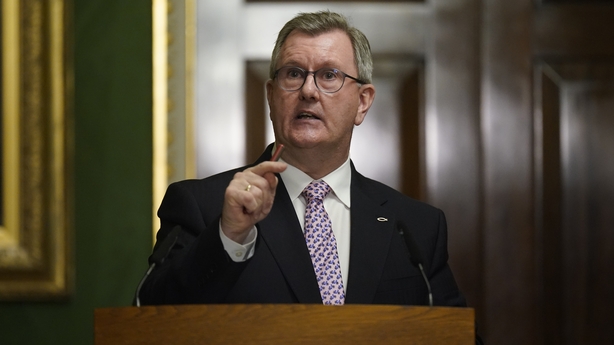
Earlier today, DUP leader Jeffrey Donaldson said around £12bn worth of goods are currently sold to the UK each year, which is significantly bigger than Northern Ireland's EU market.
Speaking on RTÉ's Morning Ireland, Mr Donaldson said: "On the basis of our assessment, we feel that we should utilise the mechanisms that were agreed between the EU and the UK government, which created for the first time a democratic say in these matters."
As Northern Ireland is a small market there is a possibility that firms would not be prepared to accept the cost of such a move, effectively meaning such products would not be available.
The SDLP said the DUP position was little more than a "stunt" which could negatively impact businesses who wanted to avail of the scheme.
"With the North being full of amazing family-owned producers in crafts, including textiles, ceramics and woodwork losing participation in this scheme would be a real loss to a part of our economy that is critical to our broader tourist offer and international reputation, especially if the rest of the island is participating."
Mr Donaldson dismissed the comments and said the DUP would assess each new EU law on its own merit.
"There is a democratic scrutiny committee that has now been established at Stormont, thanks to the negotiations that were undertaken by the DUP. And it is the role of that committee to assess the potential impact that any such law will have. So we will take it on a case by case basis," he said.
The UK government can override the view of the assembly if it takes the view that there are exceptional circumstances or if the introduction of the EU regulation would not materially divert trade or affect the free flow of goods in the UK internal market.
The UK has already published an explanatory memorandum about the regulation coming before the assembly.
It has said it expected low uptake from a limited number of small or medium-sized businesses.
It also assessed that with a similar British trademark scheme already in operation there would be "few" products that could be marketed in Britain but not in Northern Ireland.
The DUP is keen to show its critics within unionism that its negotiations with the UK government over a return to Stormont gave MLAs a much greater say over the application of EU law in Northern Ireland.
The party is under a degree of pressure with news that the Traditional Unionist Voice headed by Jim Allister has agreed a "partnership" with the UK Reform Party to stand agreed candidates in Northern Ireland in an upcoming UK general election.
That could jeopardise a number of existing DUP seats.