


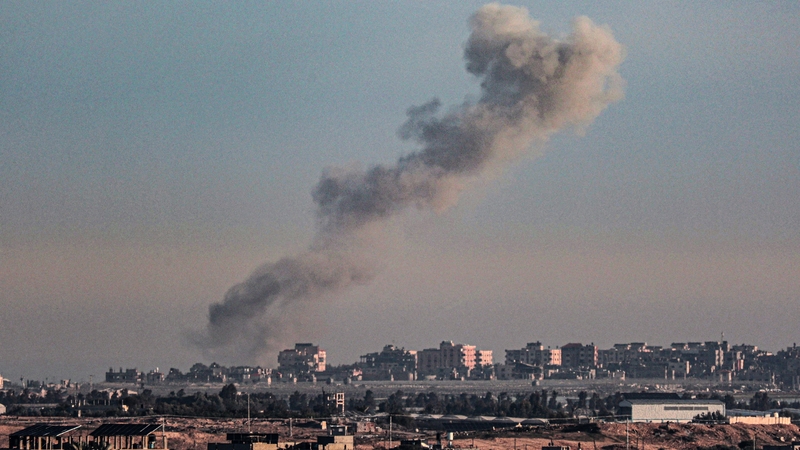
Israel's army said its forces had raided a Hamas training facility in Gaza where militants prepared for the October 7 attack on Israel.
The facility in the Palestinian territory's main southern city of Khan Younis contained models of Israeli military bases, armoured vehicles, as well as entry points to kibbutzim, the army said in a statement.
Soldiers also raided the office of Mohammad Sinwar, a senior commander in Hamas's armed wing, the Ezzedine al-Qassam Brigades.
He is also the brother of Yahya Sinwar, the head of Hamas in Gaza who is believed to be the mastermind behind the 7 October attack.
During the raid on the Al-Qadisiya compound in Khan Younis, the forces encountered several militants who fired at them, the army said.
The militants were "neutralised" by sniper fire, tank shelling and air strikes, it added.
Hamas's unprecedented attack on Israel resulted in the deaths of about 1,160 people in Israel, mostly civilians, according to the AFP news agency's tally based on official figures.
Militants also seized around 250 hostages, and Israel says 132 remain in Gaza including at least 27 believed to have been killed.
Vowing to eliminate Hamas, Israel launched a massive military offensive that has killed at least 27,365 people in Gaza, mostly women and children, according to the Hamas-ruled territory's health ministry.
Clashes in Khan Younis and Gaza City
Over today, Palestinian gunmen kept up attacks against Israeli forces in the enclave's two main cities, just weeks after they were overrun by troops and tanks, in a sign Hamas still maintains some control ahead of any potential truce.
Nearly four months into the war, there was persistent fighting in Gaza City in the north of the densely populated enclave, and in Khan Younis to the south.
At the weekly Israeli cabinet meeting, Prime Minister Benjamin Netanyahu said 17 of Hamas' 24 combat battalions had been dismantled.
The rest, he said, were mostly in the southern Gaza Strip - including Rafah, on the enclave's Egyptian border.
"We'll take care of them, too," he said, according to a statement from his office. Hamas does not publish its losses.
The prospect of a push into Rafah has piled pressure on the hundreds of thousands of Palestinian civilians who have fled their homes elsewhere and are sheltering there.
It also worries Cairo, which has said it will not admit any influx of Palestinian refugees in what it describes a bid to prevent any permanent dispossession.
An Israeli official told the Reuters news agency, however, that the military would coordinate with Egypt, and seek ways of evacuating most of the displaced people northward, ahead of any Rafah ground sweep.
Palestinians reported Israeli tank shelling and air strikes there, including one that killed two girls in a house.
As mourners bade farewell to the dead children, a relative, Mohammed Kaloub, said the air strike hit a room full of women and children in Rafah's al-Salam neighborhood.
"There is no safe place in Gaza, from the wire fence to the wire fence (borders from north to south), there is no safe place," he said.
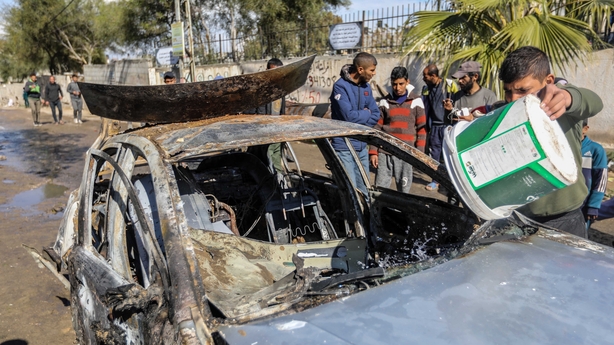
Palestinian health officials said eight people were killed in separate Israeli air strikes on Deir Al-Balah areas in the central Gaza Strip.
Deir Al-Balah is the second city in the enclave where Israel has not yet deployed tanks.
After conducting partial pullouts from Gaza City in the past few weeks that enabled some residents to return and pick through the rubble, Israeli forces have been mounting incursions. Netanyahu described these on Sunday as "mopping-up operations".
Before dawn today, air strikes destroyed several multi-storey buildings, including an Egyptian-funded housing project, residents said.
The military said it killed seven Hamas gunmen in northern Gaza and seized weaponry.
Israel's Army Radio said troops in the area were trying to penetrate two Hamas bunkers, a mission it said could take two weeks amid clashes at the sites.
"Gaza City is being wiped out," one resident who asked not to be named told Reuters. "The (Israeli) pull-out was a ruse."
'Neutralising tunnels'
In Khan Younis, overnight Israeli shelling killed three Palestinians, medics said. Residents reported street fighting raging in western and southern areas of the city, where Israel said a soldier was killed in a Palestinian attack on Saturday.
Troops in Khan Younis seized a Hamas compound and killed several gunmen, the military said. Netanyahu said Israeli forces in the city were "neutralising" Hamas tunnels that run throughout Gaza, enabling gunmen to hole up and launch ambushes.
"This demands more time yet," he told his ministers.
Gaza health authorities, who do not differentiate between militants and civilians in their tallies, said more than 27,300 Palestinians have been confirmed killed since the war began.
They say that 70% of those killed have been women and children. Thousands more are feared lost amid the ruins.
Israel says it has killed some 10,000 gunmen in its campaign to annihilate Hamas after the 7 October attack by the group, which is sworn to Israel's destruction.
In the rampage, 1,200 people were killed and 253 taken hostage, according to Israeli tallies.
More than 130 hostages are still in Gaza, and their possible release by Hamas is among issues under discussion in Egyptian- and Qatari-mediated negotiations, that are backed by the United States, to secure a truce.
Hamas has demanded an end to the war. Israel rules that out but is open to a temporary truce.
Egyptian President Abdel Fattah al-Sisi hosted French Foreign Minister Stephane Sejourne in a meeting on Sunday that Sisi's office said emphasized Egypt's collaborative efforts to establish a ceasefire and deliver humanitarian aid to Gaza.
Push for a deal
International mediators are making a full-court press to seal a proposed truce deal thrashed out last week in Paris.
But a top Hamas official in Lebanon, Osama Hamdan, said yesterday that the proposed framework was missing some details.
Hamas needed more time to "announce our position", Hamdan said, "based on... our desire to put an end as quickly as possible to the aggression that our people suffer".
US Secretary of State Antony Blinken will make his fifth crisis visit to the Middle East in the coming days to push for the truce proposal, the State Department has said, and French Foreign Minister Stephane Sejourne is also making a pass through the region, according to a spokesman.
A Hamas source has said the proposal involves an initial six-week pause that would see more aid delivered into Gaza and exchanges of some Israeli hostages for Palestinian prisoners held in Israel.
Hamas's Qatar-based leader Ismail Haniyeh has said any ceasefire must lead to "a full withdrawal" of Israeli troops from Gaza.
Domestic pressure
The Israeli government's inability to secure the hostages' release, as well as the intelligence failures that allowed the 7 October attacks to happen in the first place, have led to harsh criticism of Prime Minister Benjamin Netanyahu's government.
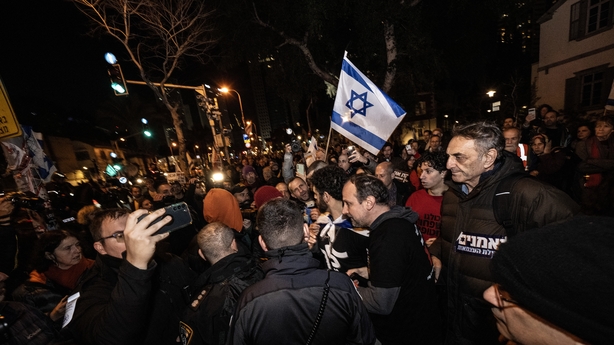
Hundreds rallied last night in Tel Aviv at protests calling for early elections and to demand action to free the remaining hostages.
Demonstrations were also held in the northern Israeli port of Haifa and near Netanyahu's Jerusalem residence.
Fresh Yemen strikes
The war has sent regional tensions soaring, with a surge in attacks by Iran-backed groups in solidarity with Gaza triggering counter attacks by key Israel ally the United States.
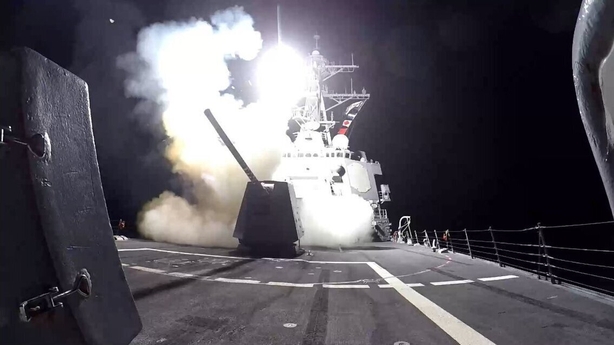
US forces also struck an additional anti-ship missile in Yemen this morning that the US Central Command said was ready to be launched towards the Red Sea.
The joint air raids came after a separate wave of unilateral American strikes against Iran-linked targets in Iraq and Syria that were carried out in response to the killing of three US soldiers in Jordan on 28 January.
The Israeli army, meanwhile, said yesterday that it had struck more than 3,400 Hezbollah militant targets across southern Lebanon since the start of the war, as well as more than 50 targets linked to the Iran-backed Hamas allies in Syria.
