An expert in fire investigation has told the Stardust inquests that he has concluded that some of the emergency exit doors in the nightclub were not open during the early stages of the fire.
The hearings into the 48 deaths in the 1981 disaster, today began hearing evidence from a fire specialist who also said he will be detailing whether the fire could have been caused by an electrical fault.
The court heard how Dr Will Hutchinson has been a fire investigator and forensic scientist for the last 23 years and has attended more than 1,500 fire scenes in that time, including ones in industrial buildings and nightclubs.
He told the court he would be addressing a number of questions, including where and how the fire started, how it progressed, the response of the management and employees of the club and the response of the emergency services.
He also told the court that there are new methods of fire investigation which were not in place at the time of the Stardust blaze.
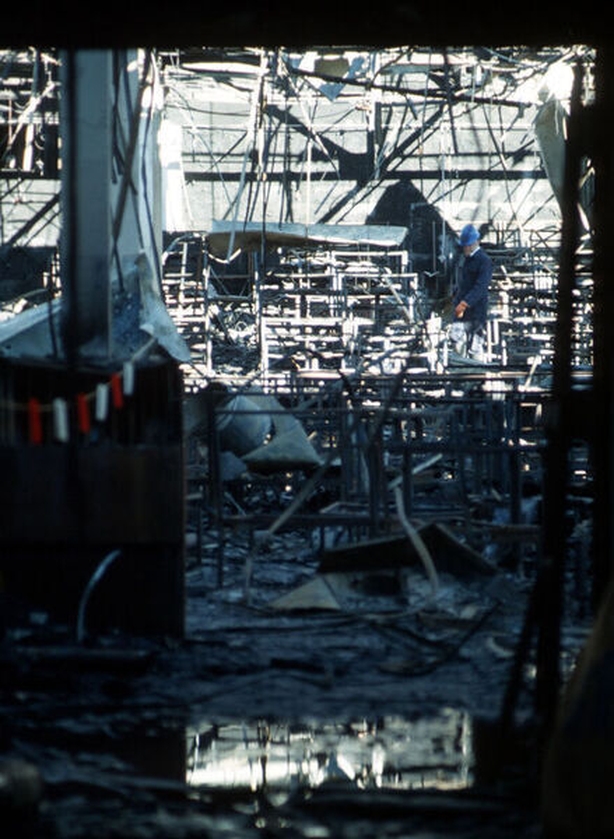
Nowadays investigators would use small tools like trowels, as opposed to shovels, to go through the debris Dr Hutchinson said, adding it would not be unusual to spend days on site.
Six exits
Dr Hutchinson detailed his findings on the six emergency exits.
He said the doors at fire exit one were undamaged and indicated they were open at the early stage of the fire. He noted there were witnesses who said they were able to escape through them.
He said exit two, which were the two main doors at the main entrance and was favoured by the majority of patrons fleeing the fire, had "some damage" which would suggest that they were not immediately open or were at some point closed during the fire.
Dr Hutchinson said the adjoining "pass doors" at the main exit were badly damaged and indicated they were closed during the fire.
Referring to photos taken in the aftermath of the blaze, he said bolt damage to the doors at exit three indicated that someone had to force them open with the bolt in place. He also noted a chain and padlock hanging off a panic bar.
He said, looking at the damage, it either had been previously damaged or the door was locked and "unopenable" at the time of the fire and had to be forced during the fire.
Dr Hutchinson also said the DJ’s van, which was parked up against the door outside, would have made it more difficult for people to get out and potentially result in a "build up" of patrons.
On exit four, he showed a photo taken from the outside and noted the door on the left was relatively undamaged by burns and said he would assume that it was open at the time of the fire.
But he said the door on the right was "badly damaged" and would assume it was not open during the early stages.
Referring to a photo of exit five, he said he assumed the door on the left was not open from the early stage of the fire because of burn damage.
Dr Hutchinson also said the door on the right was badly damaged and said he assumed it was not open at the early stages of the fire. He went to say that it was an exit "that was certainly used".
He said the doors at exit six showed no sign they were subject to intense heat and were open from an early stage of the fire.
Dr Hutchinson also told the court that there were a number of sockets throughout the club including one in the west alcove.
He said that will come under further scrutiny when it is considered whether or not a fire could have originated from an electrical fault in the alcove.
He also said the seats used in the club were made of polyurethane foam, which was "inexpensive" and provided "good cushioning".
However, he said it was beginning to be recognised by the early 1980s, that the foam did present a significant fire risk, although at the time there was no legislation in place to prohibit its use.
Dr Hutchinson also said that he disagreed with an expert report carried out after the fire that if the roller blinds, partitioning off the west alcove, were not all raised up when they were, then there would have been sufficient time for an orderly evacuation.
In court today, Dr Hutchinson said the blinds would have acted as a delay to an earlier discovery of the fire.
He said they would not have done much to prevent the fire and smoke.
The court was told that Dr Hutchinson, employed by Jensen Hughes, was retained by the coroner's team to provide expert evidence.
Among the other questions he is due to comment on are issues relating to the Stardust’s building design and escape measures and whether these adequately minimised the risk of harm in a fire as well as any prior warnings that might have prevented the fire.
He will also discuss whether some of the dead might have been saved by different actions taken on or before the night of the fire.
At the start of proceedings today, the coroner, Dr Myra Cullinane said part of the reason the Attorney General directed these fresh inquests to be held was because of an "insufficiency" of inquiry at the original inquest into the cause of the fire.
The coroner also said the evidence the jury would be hearing would be "quite technical".