

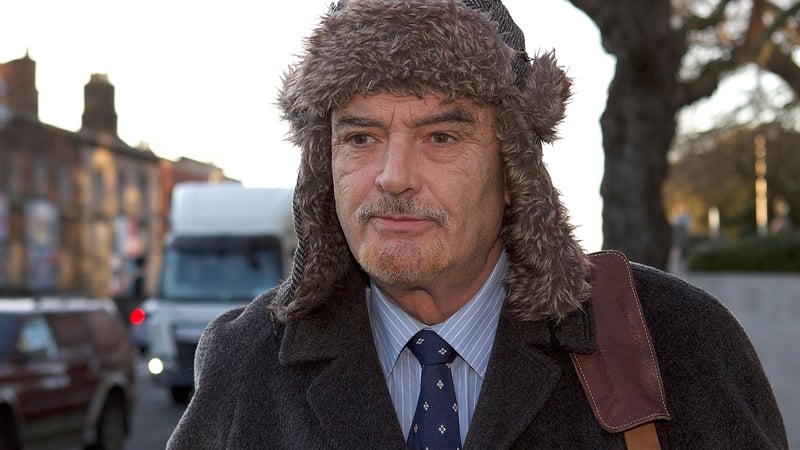
Sophie Toscan du Plantier's uncle has said that Ian Bailey - who died yesterday and was the chief suspect in her murder - evaded justice and refused to disclose the truth to a judge in France about his her death.
Speaking on RTÉ’s Morning Ireland, Jean Pierre Gazeau said that the cold case investigation into Sophie's death must continue, because it is possible that new evidence or testimony may be found following Ian Bailey's death.
Mr Gazeau said that he never met Mr Bailey, but that he occasionally received messages from him.
He added however that he and Sophie’s family have always refused to have contact with him.
Mr Gazeau said the Irish State failed to arrest, convict or extradite Mr Bailey, adding that his family were sure of his guilt, and pointing out that he was convicted in a French court.
In addition, he said, there was a lot of circumstantial evidence, he said.
Ian Bailey was a human being, he said, and may his soul rest in peace.
Speaking on the same programme solicitor Frank Buttimer - who represented Ian Bailey - said that when he met him about 27 years ago, his immediate reaction was that he "was in no way involved" in the murder of Ms Toscan du Plantier.
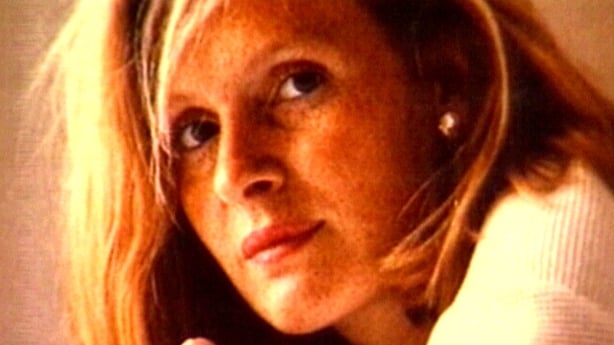
He said that Mr Bailey contributed to the narrative that he was the "prime suspect" in the murder through his behaviour.
Mr Buttimer said that Mr Bailey was a "complicated individual" and he will "never forget him".
"He did not describe himself as a 'self-declared prime suspect'. He became that because he did describe himself as 'the prime suspect’, then he becomes this very convenient thing, which is called the ‘self-confessed prime suspect’, which is an ideal status for the police to attribute to him," Mr Buttimer said.
"In other words, it was if he was portraying himself as this prime suspect on a confessional basis in the context where the police in Ireland knew that they did not have sufficient evidence to put him on trial and knew that there were fundamental flaws in relation to the evidence which they had generated and which was quite frankly a puff of smoke as subsequently determined by the review that was carried out initially by the DPP as far back as 1997 then 1998," he said.
"And subsequently, in a rather devastating document dated 2001, again a review of the so-called evidence against the unveiling, which really quite frankly wiped the floor with the evidence against them, and there that matter ended."
Mr Buttimer added: "So, the whole perception of Ian Bailey significantly, I have to confess, generated by himself in the manner in which he spoke about his own case and his own circumstances, which really didn't help him.
"But the whole idea of his status was a creation to ensure that somebody was identified as the offender in this awful case and it became a self-perpetuating state of affairs."
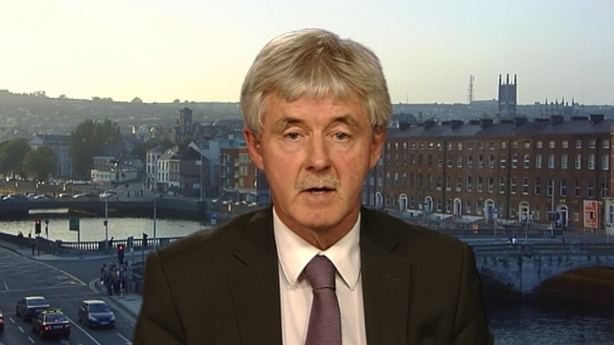
In relation to Mr Bailey speaking to the media about the case, Mr Buttimer said he "found some of the stuff that was going on a little bit frustrating."
"I have to agree again that he brought a lot of his attention and so on upon himself. But all of that was because it was his method of reacting to what had been done to him."
"Different people I no doubt react in different ways to circumstances. The circumstances in which he found himself, but were absolutely challenging for him, really hard to sort of process what was going on and it became this kind of spiral of mental problems that he had with regard to what had been done to him and his method of reaction, which I didn't always find you know, very wise myself, was to do it the way he did it.
"But I always understood because I knew him quite well. I walked down the street with him. Everybody would stare at him. Everybody would associate him in some fashion or other, innocent or not."
Mr Buttimer said: "I can promise you I will never forget him."
"I remember him as the most complicated individual. I never knew him before this event in 1996, so I can't measure him or compare him then to what I've learned about later."
He said: "That's going to take a while to process, but I can promise you I'll never forget him."
Ian Bailey's former partner Jules Thomas has said that she feels "nothing" following the news of his death.
The Welsh-born artist, who was with Mr Bailey for 30 years before separating in 2021, said she had not had an emotional connection with him "for a long time", and that it was not on her mind.
She said his failing health – several heart attacks in recent times – were not anything she concerned herself with.
Asked whether some will believe that her former partner goes to his grave knowing more about his role in the death of Sophie Toscan du Plantier, she said: "Some people get convinced of all sorts of rubbish and I'm not really interested in anything that doesn’t affect me. One thing I know is that he was innocent of it.
"It's not about believing he did it or not, I know he was innocent of Sophie’s murder.
"The endless attention and speculation is bound to have had an influence on his declining health, but that's all I can say."
Ms Thomas, who came to West Cork from the UK in the early 1980s, met Ian Bailey while he was working in a fish processing plant in Schull.
He moved into her farmhouse in 1991 as a tenant initially before they became partners.
Mr Bailey assaulted Ms Thomas on a number of occasions between 1993 and 2001, and pleaded guilty to the attacks in court.
'Inquest isn't necessary'
Separately, the office of the coroner for west Cork confirmed that Ian Bailey's death has been certified as being from natural causes. No inquest will take place into the circumstances surrounding his death.
An inquest is held in cases where the cause of death is other than from natural causes.
Mr Bailey collapsed on the street in Bantry shortly after 1pm yesterday.
He received CPR from a number of first responders before National Ambulance Service paramedics arrived at the scene.
He continued to receive CPR en route to Bantry General Hospital but was pronounced dead there a short time later.
He died from a suspected cardiac arrest.
It's understood that a postmortem examination will not be conducted on Mr Bailey's body.
"Following investigations, we are satisfied Mr Bailey died from natural causes. Therefore, an inquest isn't necessary," the West Cork Coroner's Office told RTÉ News.
Additional reporting: Paschal Sheehy
