


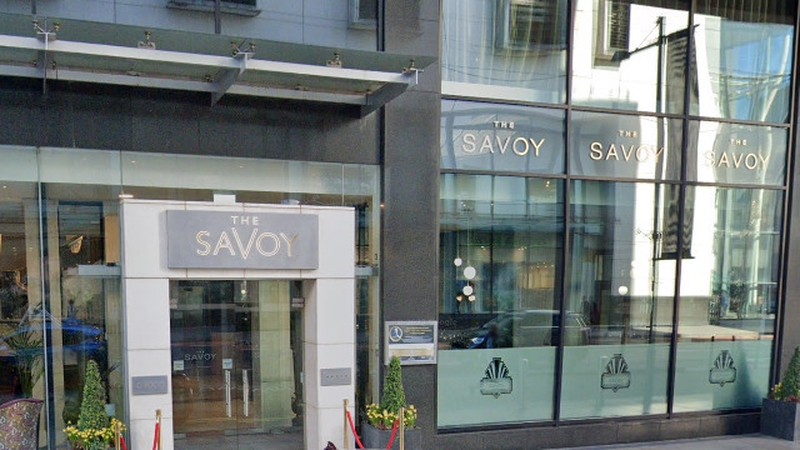
A five-star hotel has been ordered to pay €1,000 in compensation to a Traveller woman after turning her and her new husband away on their wedding night because they could not produce a credit card.
Mary Jane Sheridan told the Workplace Relations Commission it was meant to be the happiest day of her life – but that she saw the staff were "talking between themselves" as she and her husband arrived and had a "feeling" they would be refused.
Her husband, Thomas Gammell, said his wife was left in tears when reception staff told them the hotel "would not make an exception on [our] wedding night".
The Savoy Hotel in Limerick City would not take a cash deposit and told him his debit card was "no good," Mr Gammell said.
"Even now [my] wife gets upset over the event, which was supposed to be a celebration," he told the tribunal.
The newlyweds were giving evidence earlier this year in a joint hearing of their discrimination complaints under the Equal Status Act 2000 against Labarre Ltd, trading as the Savoy Hotel.
The hotel denies their complaints, but is now subject to one compensation order in favour of Ms Sheridan after the WRC upheld her complaint. The tribunal has yet to publish its decision on her husband's complaint.
Mr Gammell said he would have "happily left a deposit", but said that the hotel’s staff were "completely unhelpful" and wanted him to leave.
Thomas Wallace-O’Donnell BL, appearing for the hotel firm instructed by Dundon Callanan Solicitors, put it to Mr Gammell that the requirement to have a credit card was "nothing to do with being a Traveller" and that the hotel had published its "clear" policy on its Booking.com page.
"It was a policy when one was a Traveller but if one was not, a solution would be found," Mr Gammell said.
When Mr Wallace-O’Donnell put it to him that his brother, the best man, was "abusive" on the phone to staff after the newlyweds were turned away, Mr Gammell said counsel should put himself in the best man’s position.
"The only job he had as the best man was to book a room and [we] were thrown out through no fault of [our] own," he said.
The couple’s solicitor, Anthony Feeney of Fergus A Feeney Solicitors, said it was a case where an "apparently neutral provision" in the form of the credit card disadvantaged members of the Travelling Community as a class of people.
He said the 80% unemployment rate among Travellers meant few could meet the minimum income requirements to obtain a credit card.
Mr Feeney added that the credit card rule was "disproportionate and unnecessary" given that there were other options open to the hotel to take a security deposit – arguing further that a cash deposit or a hold on funds with a debit card gave "the same if not greater protection".
Mr Wallace-O’Donnell said there was a "socio-economic aspect" to the credit card policy and that it was "perhaps unfair that some would not be able to stay because they have no credit card".
However, he argued that was "not related to the membership of Traveller Community".
In her decision, adjudicator Ewa Sobanska accepted the evidence of hotel staff that there were "no exceptions" to the credit card policy – but said there was no evidence on the "asserted" past losses the respondent was relying on to justify the credit card policy.
"The application of the policy of refusing accommodation based on a failure to present a credit card is not found to be appropriate and necessary," she concluded, making a finding that the hotel group had indirectly discriminated against Ms Sheridan.
