


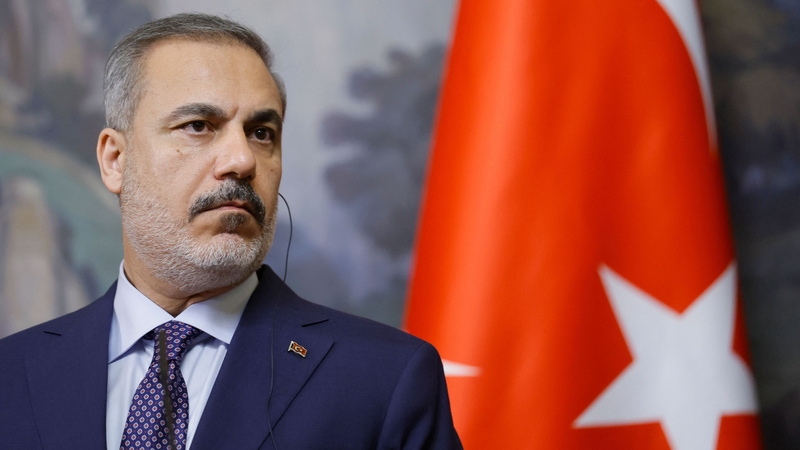
Turkey's foreign minister has insisted that reviving a UN-backed deal to ship Ukrainian grain across the Black Sea remains "critical" for food security.
Hakan Fidan said that he had used a meeting with his Russian counterpart to underline the deal's "critical role for global food security and stability in the Black Sea".
He was speaking during a joint media appearance with Sergei Lavrov.
Mr Fidan travelled to Moscow to prepare an informal summit between presidents Recep Tayyip Erdogan and Vladimir Putin in Russia's Black Sea resort city of Sochi, which is expected to take place next week.
Last month, Russia pulled out from the grain agreement that Turkey helped to broker.
Both Ukraine and Russia have since laid plans to start shipping grain outside the framework of the deal.
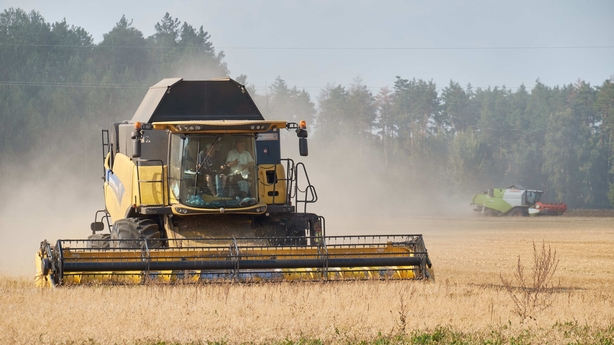
Turkey wants the warring sides to return to the agreement and to use it as a basis for broader peace talks.
"I reiterated our belief that revitalising the initiative will restore stability," Mr Fidan said of his talks with Mr Lavrov.
Moscow claimed that the previous agreement had imposed indirect restrictions on its grain and fertiliser exports by limiting access to global payment systems and insurance.
Mr Lavrov repeated Russia's longstanding position that it will return to the deal once its demands are met.
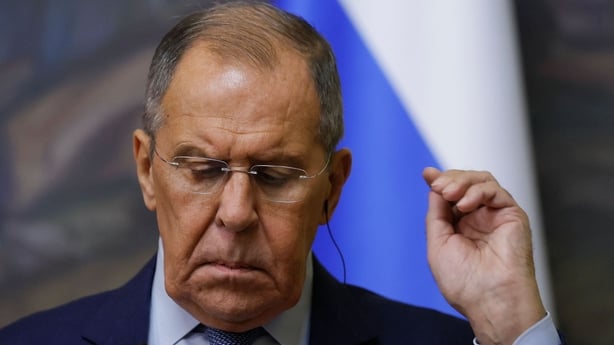
The Russian Foreign Minister said that he sees no sign that it will receive the guarantees it requires before resuming a deal, but insisted that it would act immediately if Western promises to Moscow were fulfilled.
Mr Fidan said that Turkey wanted to begin a "process focused on understanding and answering Russia's demands".
The agreement had helped Ukraine to export more than 30m tonnes of grain and foodstuffs in the year it remained in effect.
This helped to push down global food prices that soared in the wake of Russia's military operation in Ukraine and ease levels of hunger in Africa and parts of the Middle East.
