
A new study from the Irish Heart Foundation has found that more than a quarter of heart failure patients feel abandoned after being discharged from hospital.
Almost three-quarters say that their psychological needs to help them cope with the chronic disease are not being met.
The charity is meeting a delegation of TDs and Senators in Leinster House today to express alarm over what they say is an under-prioritisation in care.
In the survey conducted by the IHF, 74% of those who participated said their psychological support needs are not being met, half are not getting the cardiac rehabilitation they need and almost 40% of working-age patients do not have a medical card or a GP visit card.
It found that 45% reported a significant fall in income.
The survey included almost 200 heart failure patients and was conducted during the middle of last year.
Heart failure happens when the organ stops working as well as it should and finds it harder to pump blood around the body efficiently.
There are more than 10,000 new cases here each year and the IHF estimates that at least 90,000 people are living with the condition, with an additional 250,000 impending cases.
The five-year mortality rate of 36% is higher than for most cancers.
At today's meeting in Leinster House, the IHF is calling for a national heart failure registry, an expansion of services to tackle the psychological impact of the disease and a right to a medical card for all heart failure patients.
Director of Advocacy with the IHF Chris Macey said that awareness and understanding of the chronic disease among the public and policymakers is low and that patients around the country are struggling with a variety of unmet needs.
Terrified of leaving children motherless
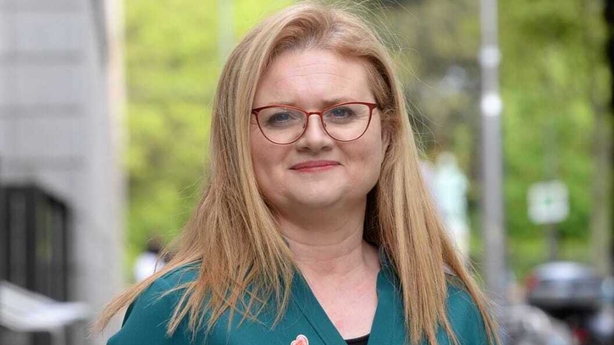
Pauline O' Shea from Ardnacrusha, Co Clare is the Advocacy Campaign Manager with the Irish Heart Foundation. In 2012 at the age of 38, just a few weeks after having her third child, she was diagnosed with heart failure.
Speaking to RTÉ's Morning Ireland, Ms O' Shea said that although she was in her 30s, a doctor told her that she had the heart of a 70-year-old.
"He actually also said some of my heart was dead and that I had heart failure," Ms O’Shea said.
"I didn't know what the term meant, but I presumed that it meant I just had a few days to live or a few weeks. I just didn't think I was going to last any length of time.
Ms O’Shea said that when she came home from hospital she was afraid of everything.
"I was afraid I was going to die all the time. Even just moving from one room to another, I would almost be haunted by this perpetual worry that I might die because my heart function, I was told, was very low," she said.
Ms O’Shea had an ICD - which is a device to defibrillate the heart - installed in her body, which she said heightened her fears.
"I was particularly terrified in relation to being a mom of three young children. Whatever about me coping with my own mortality, I was absolutely terrified that I would die and leave them motherless," she said.
"It was dreadful. Supports did not exist for me. The idea was you've got the medical care you need for your heart, you know, there's nothing really else we can do for you."
Ms O’Shea said that 11 years after her diagnosis of heart failure, she is now passionate about trying to help other patients.
"It is such a lonely journey of what feels like pure abandonment. You're trying to navigate your mortality and you're doing it all on your own."
'A very common condition'
A consultant cardiologist at the Mater Hospital in Dublin has said there are many causes of heart failure, and the prevalence is rising.
Professor Emer Joyce said there are a variety of causes, many of them are very common conditions, such as high blood pressure, diabetes, and obesity.
Speaking on RTÉ's Morning Ireland, she said this is a "very common condition".
She added that around 2% of the Irish populations, similar to the populations in other developed countries, have symptomatic heart failure.
"That translates into approximately 100,000 patients with symptomatic heart failure, but it's important to say that that's based on data that is now over a decade old," Professor Joyce said.
"One of the things that the Irish Heart Foundation is trying to prioritise, is getting some new comprehensive contemporaneous data, really as the first step to tackle this challenging condition."
Professor Joyce also said that psychological support for heart patients is not being met, as highlighted in the survey that was carried out.
"75% of them told us that they do not feel their psychological needs are met. I think heart failure in general has been suffering from a lack of awareness, both in the public and among policymakers, that's multifactorial," she added.
Professor Joyce said that heart disease has a "huge psychological burden" and that heart failure "can be extremely costly, because heart failure isn't a condition where you see your doctor once a year".
"It is a condition with a high degree of follow up, both through your GP, through a heart failure nurse clinic, through your cardiologist. And alongside the follow up, there's prescription needs, there is a blood test needs," she said.
"So, there there's a huge resource need."
Additional reporting: Sally-Ann Barrett