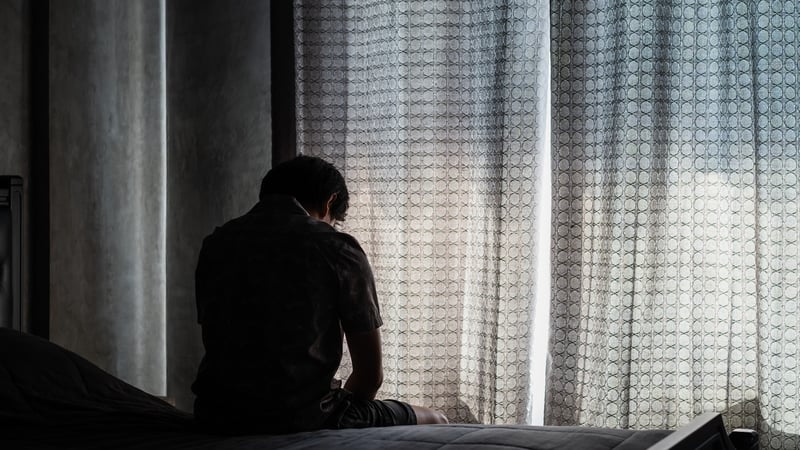

The proportion of young people who have ever experienced suicidal ideation increased by approximately 40% from 2012 to 2019, according to the latest Statistical Spotlight report.
The report published by the Department of Children, Equality, Disability, Integration and Youth, also found almost two in every three young people reporting that they thought about taking their own life in 2019.
The Spotlight Series collates information from a variety of sources like the OECD, Irish Universities, the Growing up in Ireland survey, the Central Statistics Office, the Health Service Executive and the Mental Health Commission.
The tenth report provides data on some of the protective factors and risk factors impacting children and young people's mental health in Ireland.
It also examines the prevalence of mental health disorders among children and young people aged 10 to 25.
Anxiety and depressive disorders accounted for almost two-thirds (63%) of mental disorders for young people in Ireland in 2019.
The second most prevalent was ADHD (16%), followed by conduct disorders (10%).
In 2012 and 2019, the prevalence of very severe anxiety and depression symptoms was higher among adolescents with low levels of support from a special adult and among young people who identified as Lesbian, Gay, Bisexual, Asexual and Pansexual.
From 2017 to 2019, Ireland consistently had a higher prevalence of mental health disorders than the EU 27 average across all age groups.
Spain had the highest prevalence of mental health disorders across all age groups and years, which ranged from 21-24%.
However, Ireland had the joint highest prevalence of mental health disorders among the 20-24-year-old age group from 2017-2019, which ranged from 21-22%.
Poland had the lowest prevalence among the 15-19 and 20-24 age groups from 2017-2019 (11-12%).
The share of Irish 15-year-olds who experienced any act of bullying at least a few times a month increased between 2015 and 2018.
Around 9% of students responded that 'other students left me out of things on purpose' in 2018 compared to 6% in 2015.
In 2012 and 2019, self-esteem; optimism and life satisfaction levels in adolescents in Ireland were highest among those in first year of secondary school and lowest among those in sixth year.
The report says that while optimism levels among adolescents in Ireland decreased between 2012 and 2019, optimism about the future among 18-24-year-olds improved between 2011 and 2016 - consistently higher than the EU average.
While life satisfaction levels among adolescents in Ireland reduced between 2012 and 2019, life satisfaction among 16-24-year-olds in Ireland significantly improved between 2013 and 2018 and also remained higher than the EU average.
The study also looked at the impact of Covid-19 on the mental health of young people.
Both 12-year-olds and 22-year-olds felt that they had missed out on mental health support services due to the pandemic.
The most commonly reported difficulty during the pandemic for both 15-17-year-olds and 18-24-year-olds was missing friends, followed by school/college problems, and the effect on their physical and mental health.
Those most likely to mention mental health concerns included disabled people and those with illnesses; users of mental health services; and LGBTI+ young people.
Almost half of all 15-17-year-olds and 18-24-year-olds reported that their mental health had worsened since the beginning of Covid-19 restrictions, with females more likely to report a decline in their mental health than males.
The number of children in receipt of clinical psychology services in Ireland increased by over 150% between 2019 and 2020, while the number of children in need of services increased by half during this time.
The percentage of 15-24-year-olds in Ireland that ever attended a psychiatrist, psychologist or psychotherapist consultation increased between 2015 and 2019 and was almost twice as high among females in 2019.
The number of children admitted to Child and Adolescent Mental Health Service (CAMHS) units increased by almost a third between 2017 and 2021. The number of child admissions to adult mental health units decreased by almost two-thirds.
Just under 97% of CAMHS bed days were used in 2017, which rose to 99.6% by 2021 and the number of CAMHS referrals seen by mental health services increased by a fifth during this time.