


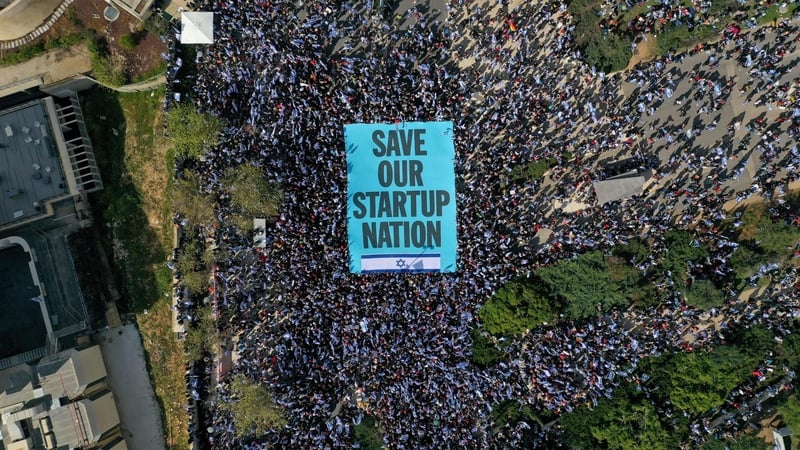
Israel's Prime Minister Benjamin Netanyahu put a controversial judicial overhaul on ice yesterday, after months of turmoil and mass protests.
Here are some of the key moments of the country's worst domestic crisis in years:
4 January: Reforms unveiled
Israel's Justice Minister Yariv Levin unveils plans to reform the judicial system which would give politicians more power over the courts.
The proposed measures include giving parliament the power to overrule some Supreme Court decisions, and the government a greater say in the appointment of judges.
Mr Levin claims the court's power to strike down legislation is a "danger" to democracy.
Critics accuse Mr Netanyahu, who is on trial on corruption charges he denies, of trying to use the reforms to quash possible judgements against him.
Opposition leader Yair Lapid says the proposal "endangers the entire legal system of the State of Israel".
7 January: First mass protests
Thousands of people in Tel Aviv demonstrate against the reforms and other policies of Mr Netanyahu's administration, one of the most right-wing governments in Israeli history.
Some protesters carry placards warning: "Democracy in danger".
12 January: Top judge speaks out
In rare public remarks, Supreme Court President Esther Hayut calls the reform package "an unbridled attack on the legal system, as if it were an enemy".
21 January: Demonstrations spread
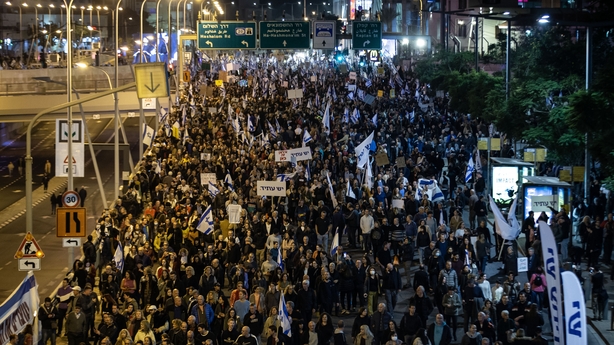
The number of demonstrators grew to the tens of thousands and protests spread from Tel Aviv to other cities, including Haifa and Jerusalem.
24 January: Tech workers join in
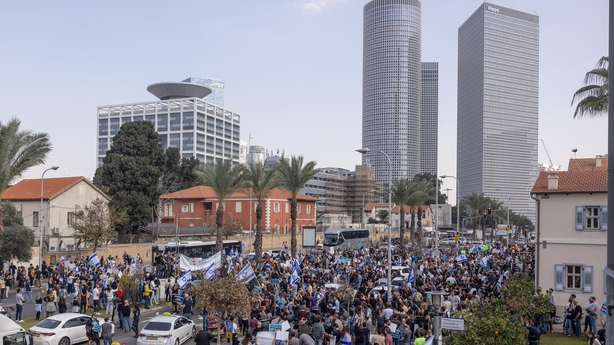
Hundreds of Israeli high-tech workers join the protests.
They claim the government's controversial plans will hurt the sector, a cornerstone of Israel's economy, by undermining the rule of law and pushing away investors.
12 February: President's appeal
President Isaac Herzog, who has a largely ceremonial role, warns Israel is "on the verge of legal and social collapse" and urges Mr Netanyahu not to introduce the reforms.
21 February: UN urges rethink
United Nations human rights chief Volker Turk urges Israel to pause the reforms, saying he is concerned that "if passed, these changes risk weakening human rights protections for all".
Mr Netanyahu denounces the appeal as an "absurdity".
1 March: Police crackdown
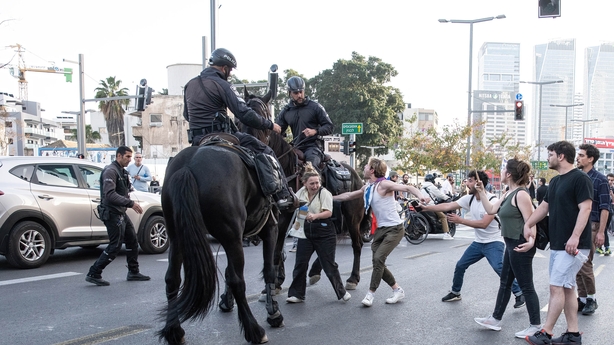
Police in Tel Aviv use stun grenades, water cannons and officers on horseback to disperse protesters who attempt to block roads and railways in what organisers call a "day of disruption".
Mr Netanyahu warns he will not "tolerate anarchy".
6 March: Fighter pilots protest
37 Israeli air force pilots announce a boycott of military training in protest of the reforms.
15 March: German 'concern'
German Chancellor Olaf Scholz expresses "great concern" over the reforms during a visit by Mr Netanyahu to Berlin, calling on the Israeli government to compromise.
19 March: Biden call
US President Joe Biden in a call with Mr Netanyahu also urges "compromise".
He tells the Israeli leader that the judicial reforms must respect the democratic values that Mr Biden calls a "hallmark" of the US-Israeli relationship.
25 March: Minister breaks ranks

Israel's Defence Minister Yoav Gallant breaks ranks with Mr Netanyahu by calling on him to halt legislation.
He cites "a clear, immediate and tangible threat to Israel's security" as the unrest spreads to security agencies.
An estimated 200,000 people demonstrate in Tel Aviv.
Mr Netanyahu fires Mr Gallant a day later.
27 March: Reform paused
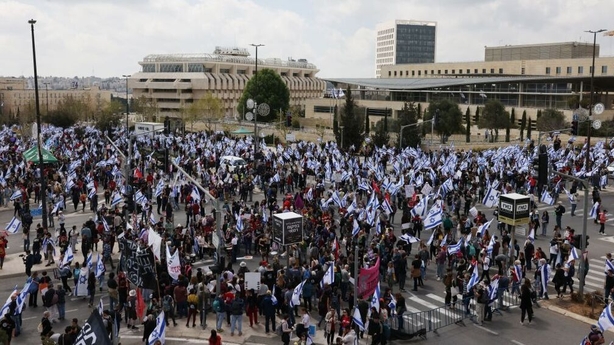
In an address to the nation, Mr Netanyahu announces he is pausing the reform measures "out of a sense of national responsibility" and to allow time for dialogue.
This prompts Israel's top trade union leader Arnon Bar-David to call off a general strike announced earlier in the day which had disrupted flights and hospital care.
Israel's controversial legal reform plans: What are the proposals?
